Malvern Panalytical Mastersizer Range in Additive Manufacturing
Explore a solution for laser diffraction measurement for additive manufacturing end-users and laboratories.

05 Nov, 2026. 4 minutes read
Why Distribution Matters
Flowability and packing requirements show why particle size is important. However, particle size distribution (PSD)—the relative volume of different particle sizes within a batch, ranging from the finest to the coarsest particles—is a more important metric than the median or average particle size.
Clear specification of particle size distribution is important because it provides more information about a powder batch than median particle size. Two batches with an identical median particle size can have vastly different distributions: one can have a very narrow distribution and another lots of extreme fine and coarse particles, while “averaging out” at the same value. Rather than a single measurement, PSD describes a powder batch using percentiles, cumulative distribution curves, or other formats, giving a clear indication of the uniformity or variance within a batch.
Most powder datasheets specify the following percentiles:
D10: Indicates that 10% of particles are smaller than the specified diameter; this is the fine end of the distribution
D50: Indicates that 50% of particles are smaller than the specified diameter and 50% are larger; this is the median
D90: Indicates that 90% of particles are smaller than the specified diameter; this is the coarse end of the distribution
Knowing the particle size distribution of powder is also important because most applications, including additive manufacturing, perform best with a specific PSD that is neither too wide nor too narrow. One risk of a wide distribution is the segregation of fine and coarse particles: when a batch has very fine and very coarse particles, smaller particles end up falling through the voids between larger ones, causing unwanted stratification and inconsistent thermal behavior. However, some variation in particle size is beneficial, as the filling of voids by fine particles helps to improve packing density.
Measurement Methods: Laser Diffraction vs Sieving
As we have seen, characterization of powders is important in additive manufacturing because an acceptable particle size distribution leads to smooth equipment operation and defect-free printing. However, supplier datasheets are not always sufficient, and there are situations in which AM users need to measure the PSD of powders themselves, such as when:
The supplier datasheet lacks sufficient precision for the application
There is apparent variation between batches
Regulatory compliance requires in-line/on-line material characterization
The manufacturer is developing its own powders
The manufacturer is using recycled powders
Different techniques can be used to measure powders, each with its own advantages. The most precise method—deployed in industries with the tightest regulatory requirements—is laser diffraction, which involves analyzing how a powder sample scatters a beam of light. Larger particles scatter light at narrow angles with high intensity; smaller particles scatter light at wider angles with lower intensity. By analyzing the light, Mie Theory can be used to accurately size the particles in the sample. Advantages of this technique include wide material compatibility, the ability to work with wet or dry samples, and real-time monitoring on production lines.[1]
A very different method for particle size measurement is sieving. This involves passing a powder sample through a series of sieves with mesh openings of decreasing size, usually with the assistance of vibration. The result is that the coarsest particles are caught by the upper sieves and the finer particles by the lower sieves; the powder on each sieve can then be weighed to provide a fairly accurate analysis of the particle size distribution. Sieving is simple and affordable, though it is time-consuming and generally limited to the measurement of coarse bulk powders.
Other methods of particle characterisation include dynamic light scattering (DLS), another laser technique used to measure nanoparticles, and static imaging, which involves dispersing a powder sample on a glass slide then capturing high-resolution images to obtain particle size and shape information. Shape information matters because spherical particles improve flowability and packing density. Static imaging offers the highest shape resolution, making it essential for detecting subtle shape variations in high-value materials.
Equipment for Routine Characterization Workflows
Additive manufacturing end-users and laboratories can incorporate measurement equipment into their existing workflows. This helps ensure that powders have an appropriate particle size distribution and allows the operators to adjust printing parameters like laser power and layer thickness to suit the exact specifications of the powder batch. Using on-site measurement tools also means that AM users do not need to send samples for third-party testing.
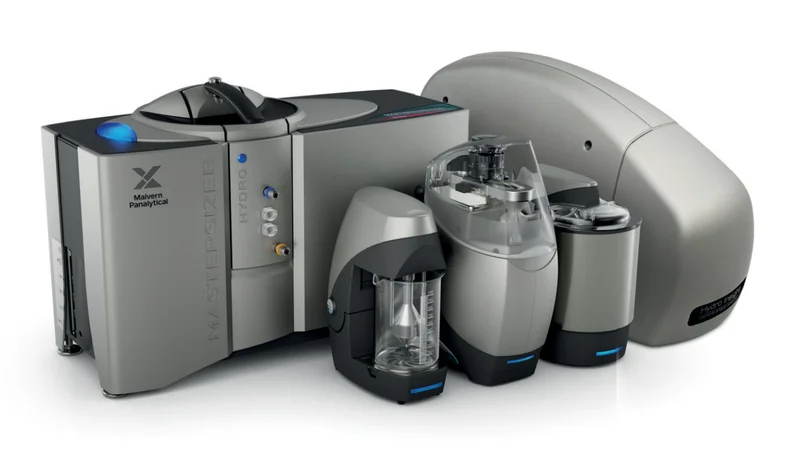
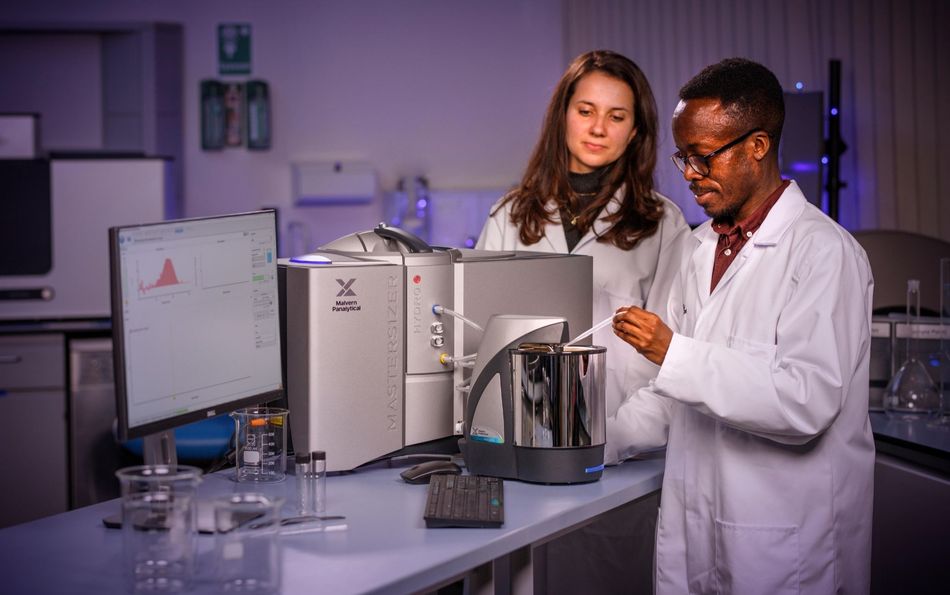
A proven solution for laser diffraction measurement is the Mastersizer range from market leader Malvern Panalytical. The system provides complete particle size analysis of metal, polymer, and ceramic powders and offers features like Adaptive Diffraction, a wide dynamic range, and intelligent software. The most advanced model in the range, Mastersizer 3000+ Ultra, can analyze powder particles measuring between 0.01 µm and 3500 µm. For shape analysis, the Mastersizer can also be fitted with the Hydro Insight dynamic imaging accessory.
While sieving presents a viable solution for some applications in additive manufacturing, the use of laser diffraction equipment such as the Mastersizer permits much smaller sample sizes, provides fast results, and is far more accurate for the characterization of fine powders. All of these factors can contribute to improved consistency and part quality on the AM production line.
References
[1] Ma Z, Merkus HG, de Smet JG, Heffels C, Scarlett B. New developments in particle characterization by laser diffraction: size and shape. Powder Technology. 2000 Aug 21;111(1-2):66-78. https://doi.org/10.1016/S0032-5910(00)00242-4
Additional Resources
Malvern Panalytical. Characterizing metal powders for Additive Manufacturing [Internet]. 2018 Nov 28 [cited 2026 Jul 17]. https://www.malvernpanalytical.com/en/learn/knowledge-center/insights/analytical-tools-for-characterizing-metal-powders-for-additive-manufacturing
Webinar: How to replicate a sieve analysis method on the Mastersizer 3000. https://www.malvernpanalytical.com/en/learn/events-and-training/webinars/w180725sievetomastersizer
Laser Diffraction versus Sieving Comparison. https://www.malvernpanalytical.com/en/learn/knowledge-center/insights/laser-diffraction-vs-sieving
Webinar: A comparison of sieves and laser diffraction for particle size analysis. https://www.malvernpanalytical.com/en/learn/events-and-training/webinars/w170516sieveslaserdiffraction
Top 10 reasons to migrate from sieving to laser diffraction for routine particle size measurements. https://www.malvernpanalytical.com/en/learn/knowledge-center/whitepapers/wp121128tenreasonsmigratefromsieving
Webinar: Exploring the value of particle characterization for additive manufacturing and the best tools for the job. https://www.malvernpanalytical.com/en/learn/events-and-training/webinars/w241119-particlecharacterization
Determining the particle size distribution of metal powders using wet and dry dispersion on the Mastersizer 3000. https://www.malvernpanalytical.com/en/learn/knowledge-center/application-notes/an200814particlesizemetalpowdersmastersizer3000
Resources for Additive Manufacturing. https://www.malvernpanalytical.com/en/learn/knowledge-center/insights/resources-for-additive-manufacturing