M2M Communication in Healthcare: Wireless Connection via SIM Cards in Telemedicine
M2M SIM cards enable secure wireless connectivity for telemedicine and IoT healthcare devices, supporting remote patient monitoring, reliable data transfer, and flexible nationwide roaming.

16 Jan, 2026. 4 minutes read
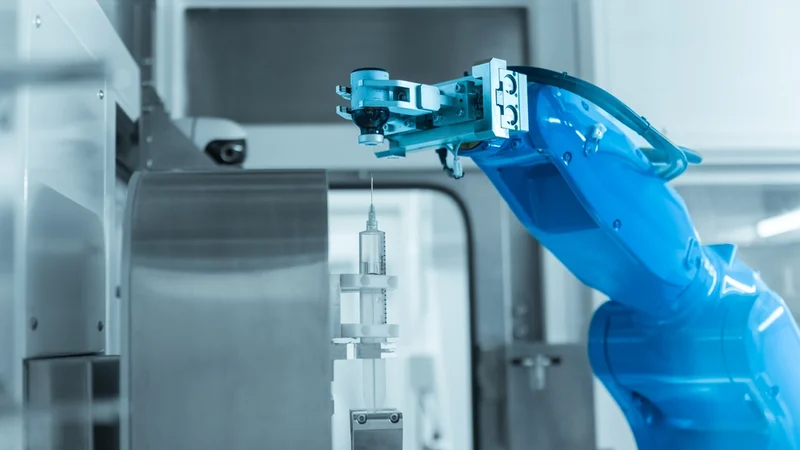
This article was first published on
en.whereversim.deWhether for AI-supported analyses, remote patient monitoring, or general process improvement in hospitals, telemedicine technology, the IoT and devices networked within it are transforming our healthcare. M2M SIM cards are an important component of telemedical networking applications.
Modern Health Economy: M2M Applications in the Healthcare Sector
Machine-to-machine communication (M2M) refers to the automated exchange of data between devices, among themselves or from a device to a central system. However, not only devices but also robots, vehicles, machines, and production systems can collect and share data thanks to M2M technologies and wireless communication.
M2M applications in medical technology include, for example, ECG devices and emergency vehicles. These transmit data without human intervention so that information is available on another end device when required. M2M solutions are also increasingly being used in home care. These technologies transmit data from patient-measuring devices, for example, and thus support remote patient monitoring. Data is usually transmitted via the internet.
Medical devices can be connected by cable or equipped with M2M SIM cards that enable wireless data transmission. The expansion of 5G will play a major role for M2M SIM cards for telemedicine applications in particular. With 5G, it will be possible to exchange large amounts of data in near real time.
Advantages of M2M Medical Technology in Healthcare
Regardless of whether the connection is made by cable or M2M SIM card. In medical technology, communication between devices has considerable advantages. Automated data exchange between machines is always faster, more effective, and less prone to error than manual transfer of information. For example, the networking of surgical instruments or devices in wards that would otherwise have to be monitored by personnel.
However, telehealth is not always just about speed. Telemedicine applications have been driven primarily by situations in which the doctor or specialist and patient are physically separated. This includes residents of remote villages as well as space travel with astronauts in space and researchers on an expedition in the Arctic. Sensors that monitor selected bodily functions in implants or wearable patient devices also offer great potential.
The values collected are, in turn, automatically transferred to patient databases. Other benefits that can be achieved through automation and digitalization through M2M applications in the healthcare sector include:
Selected advantages of M2M for Telehealth at a glance:
Accelerated emergency communication
Increased flexibility for medical staff
Locating patients in emergencies
More efficient organisation & management, e.g. of free beds
Cost reductions through time savings
Faster access to patient data
Patient monitoring for more safety
Reduction of error sources through increased automation
More Flexibility through Telemedicine & M2M Applications
Reduced budgets and fewer, and fewer, urgently needed staff are unfortunately becoming increasingly commonplace in hospitals and care facilities. M2M-based medical technology enables medical and nursing staff to provide high-quality patient care remotely. This not only relieves the burden on specialist staff, but can also save time and money by optimizing processes.
With eHealth and telemedicine, patients can learn to measure values such as pulse or blood pressure independently and forward this data directly to their doctor's system.
The benefits of M2M communication in practice: the journey to the doctor or patient is saved. Patients enjoy a higher quality of life thanks to fewer stressful visits to the doctor and the minimization of long waiting times and journeys from rural areas. In the same way, medical staff are relieved and can work less overtime or concentrate on other patients.
Data Transmission: M2M SIM Cards in Telemedicine
Mobile communication between devices, apps, practice or hospital systems, and central offices or databases relies on different wireless technologies. For example, the company offers an M2M SIM card for telemedicine applications that enables devices at any location to transmit data securely.
Their M2M SIM cards enable your devices to connect to the mobile network in order to transmit data automatically. Unlike smartphone SIM cards, for example, their M2M SIMs can use the mobile networks of different network operators nationwide and worldwide. It is therefore often referred to as a multi-network SIM or roaming SIM. As there are usually a large number of M2M SIM cards in use, they are managed via an online portal tailored to the requirements of M2M communication.
You can use their comprehensive API to transfer data directly into your own systems!
M2M SIM Cards for Telehealth: The Best Connection Everywhere with National Roaming
Mobile communications for M2M telemedicine has the advantage that the technology is established, standardized and the infrastructure is available almost everywhere — and not just in Germany, but worldwide, across national borders. This nationwide availability of mobile communications is particularly important for sensors located on patients, for example, which are therefore constantly on the move.
But not all mobile communications are the same. The Federal Network Agency has concluded that there is still a lot of catching up to do in terms of network coverage by individual network operators: only one of the major network operators' cell phone networks is available in 4G in around 7.2% of Germany. The risk of connection interruptions and failures is high there. If sensitive health data must be transmitted quickly, it becomes dangerous.
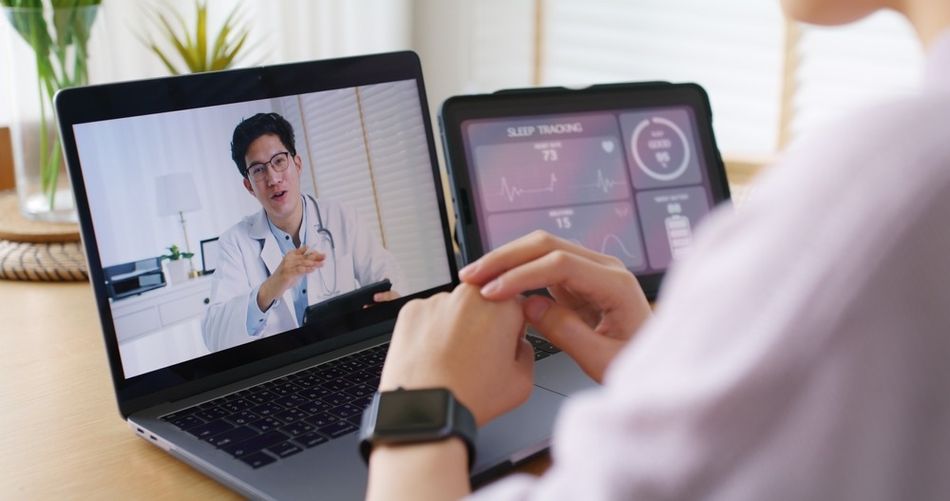
The availability of the networks varies in individual federal states. In Bavaria, for example, network availability is worse than average: the network of at most one mobile network operator is available in 15.5% of the entire area. This patchy coverage shows the relevance of using appropriate M2M SIM cards for IoT and M2M projects in the healthcare sector. This is because they can use the mobile networks of different network operators.
Their M2M SIM cards enable IoT devices to connect to the strongest network at a location. So it is not the network provider that counts, but only the network strength.
The Right M2M SIM for Telemetry and Telemedicine
Independence and flexibility are highly relevant in the medical field of M2M technology. Whether a patient is located in the countryside or lives in the middle of the city: in order to be able to react to changes in condition or emergencies in real time as far as possible, data must be reliably transmitted everywhere at all times. They offer the right IoT SIM cards for this, in combination with flexible M2M tariffs — always geared to the needs of your project.
Their M2M SIM cards are available in all common SIM formats as well as industrial M2M SIMs and fixed eSIMs.