Four Critical Interconnect Challenges in Modern Space Systems
Engineering and Sourcing Considerations for Reliable Aerospace Connectivity

29 Oct, 2026. 5 minutes read
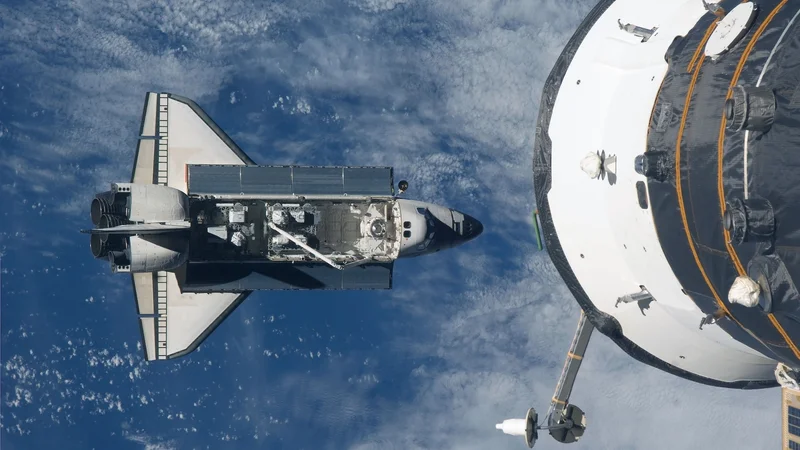
Electronic systems in satellites, launch vehicles, and payloads continue to grow in complexity. More power; data, control, sensing, and communication connections must fit within limited space. Each connection may also need to withstand launch loads, electrical noise, temperature changes, contamination, and long storage periods.
Connector selection, therefore, cannot be based on size or electrical rating alone. Engineers must evaluate the connector, cable, contacts, shell, backshell, shielding, strain relief, and mounting as one system. Four interconnected challenges are especially important: shock and vibration, EMI and signal integrity, environmental exposure, and size, weight, power, and cost (SWaP-C).
Cinch Dura-Con™ Micro-D and MIL circular connectors address different interface needs. Powell can help engineering and procurement teams identify Cinch options, documentation, and in-stock availability, while product approval and qualification remain the responsibility of the design team.
Challenge One: Shock and Vibration
Launch exposes flight hardware to sustained random vibration and short mechanical shocks. Separation, staging, and deployment can add sudden loads. NASA’s environmental verification guidance includes vibration and mechanical shock testing for flight hardware [1]. Similar concerns arise in munitions and naval equipment, where connectors may experience severe acceleration or shock.
These loads can cause contact movement, intermittent signals, loosened hardware, conductor fatigue, or cable damage. Contact geometry, retention features, shell construction, strain relief, and cable support must work together.
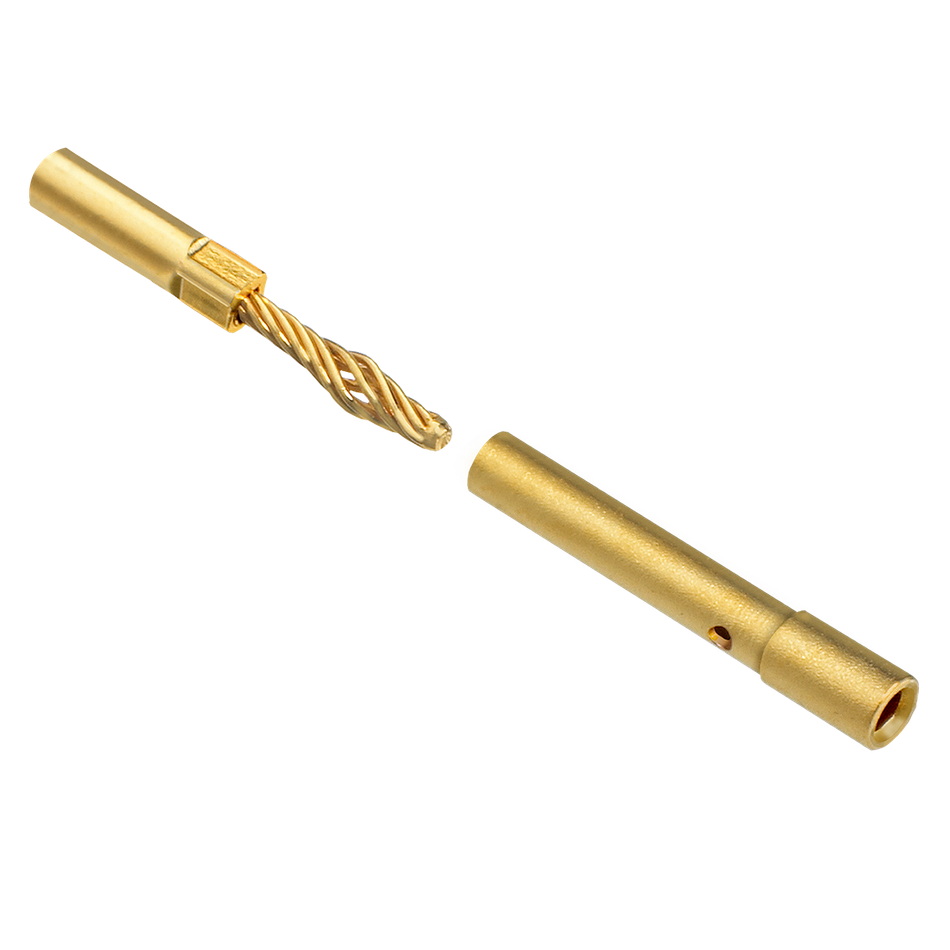
Cinch Dura-Con Micro-D connectors use a 0.050-inch contact pitch and a twist-pin contact with seven points of contact when mated, which is a design required in NASA's EEE-INST-002 [2]. This construction supports compact internal links where space and weight are restricted. A MIL circular connector may be more suitable where an interface requires a larger shell, stronger coupling, or greater protection against handling.
Testing should use representative connectors, cables, backshells, mounting hardware, and cable routing rather than evaluating an isolated connector.
Challenge Two: EMI Shielding and Signal Integrity
Dense satellite layouts often place power conductors, high-speed data links, low-level sensor lines, and control circuits close together. This raises the risk of interference, crosstalk, grounding problems, impedance discontinuities, and signal reflections. Electronic warfare or jamming may increase the external threat for some defense platforms, but onboard power switching and cable proximity can create problems without a hostile source.
Shielding and signal integrity should be reviewed together because both depend on the complete electrical path. A shielded connector cannot correct an unsuitable pin layout, excessive unshielded wire, poor termination, or an incomplete return path.
Practical measures include separating sensitive signals from power lines, placing ground contacts beside critical signals, controlling cable geometry, maintaining shield continuity, and managing connector transitions.
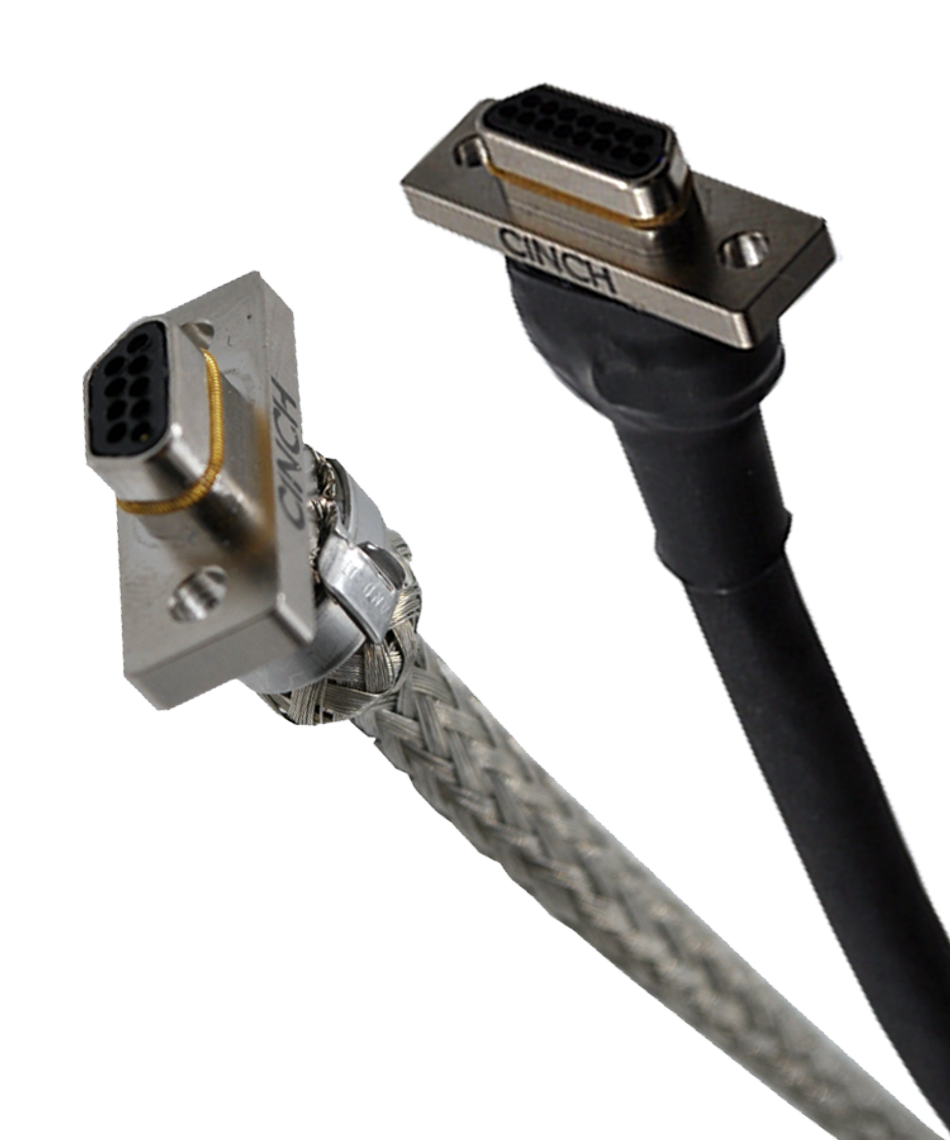
Cinch Micro-D EMI backshells connect cable shields to the connector and provide strain relief, as well as mechanical and electromagnetic protection. They include a crimp ferrule for bonding a braided shield at the cable entry [3]. Cinch shielded cable assemblies also use braided sleeves and grounding features where EMI control and signal integrity are design requirements [4].
NASA workmanship guidance covers shield termination, grounding conductors, connector assembly, and limits on unshielded wire exposure [5]. Tested pin arrangements, simulation, and early laboratory work can reveal crosstalk or reflection problems before integration. Validation should use representative cable lengths, terminations, data rates, loads, and nearby noise sources.
Challenge Three: Environmental Sealing and Corrosion Resistance
Space hardware may spend months in assembly, storage, transport, and launch-site preparation. Connectors can face humidity, contamination, cleaning processes, temperature cycling, and coastal salt exposure.
Corrosion can increase contact resistance and weaken shells, fasteners, or cable-entry parts. Material compatibility should be checked across contacts, shells, backshells, seals, and finishes.
Cinch’s space screened to NASA’s EEE-INST-002 Level 2 Micro-D range uses electroless nickel-plated shells and ETFE-insulated wire, with stated low-outgassing limits for selected low Earth orbit applications [6]. Relevant Cinch Micro-D and circular products also use gold-plated contacts.
Finish selection must also account for tin-whisker risk. NASA warns that pure tin finishes can grow conductive whiskers, including in vacuum, and may cause electrical faults [7]. Plating composition should therefore be verified against the project’s material and reliability requirements.
For exposed interfaces, protection may include grommets, O-rings, backshells, cable-entry seals, and suitable shell finishes. Cinch’s MIL/aero circular portfolio includes connector families with environmental sealing and defined performance in temperature, vibration, and salt exposure [8]. The exact protection level must be confirmed for the selected series and part number.
Challenge Four: SWaP-C Constraints
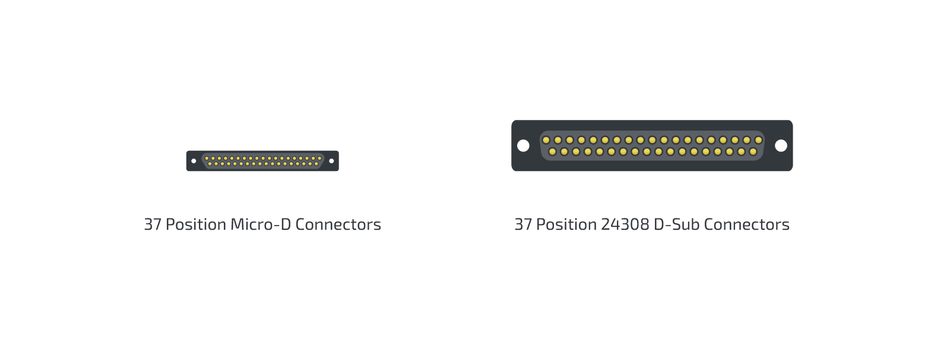
CubeSats and smaller satellites place strict limits on size, weight, power, and cost. Similar pressures apply to drones and munitions. Connector dimensions and installed mass affect enclosure size, cable routing, thermal planning, and total platform weight.
Compared with traditional D-sub formats, Micro-D connectors use a tighter contact pitch, reducing connector footprint and weight while providing higher contact density [2]. This makes them suitable for internal links among avionics modules, processors, sensors, and payload electronics.
Miniaturization still requires enough room for mating, fastener access, backshells, cable bends, inspection, and maintenance. A smaller connector offers little benefit if routing becomes too tight, shielding is difficult to terminate, or assembly damage becomes more likely.
Turning Technical Requirements into Connector and Sourcing Decisions
Micro-D connectors are generally a stronger fit for compact internal system-to-system links. MIL circular connectors are often better for external, exposed, or frequently handled interfaces.
Selection should consider shock, sealing, shielding, pin count, electrical limits, mating cycles, installation space, cable construction, and qualification needs. Engineering choices also depend on the availability of configurations, drawings, compliance records, lead times, and test schedules.
Powell lists Cinch Dura-Con and other MIL-DTL-83513 Micro-D options, but stock position and lead time vary by part [9]. DLA ASSIST should be checked for the current specification sheet and qualified-product information for the exact MIL-DTL-83513 configuration [10].
Early coordination between engineering and procurement can reduce late redesign, schedule pressure, and qualification delays. Product requirements should remain the focus, with sourcing support used to confirm what can be obtained and documented.
Conclusion
The four challenges are connected and should be addressed at the system level. A decision made to reduce size, or weight can affect shielding, cable support, sealing, assembly access, or qualification.
Micro-D connectors can support compact internal links, while MIL circular connectors may suit more exposed interfaces. Early selection, representative testing, and realistic sourcing plans can help prevent problems during qualification or integration.
For more information, reach out to a Powell representative at cinchinfo@powell.com or visit www.powell.com.
References
NASA Goddard Space Flight Center. (April 28, 2021). General Environmental Verification Standard for GSFC Flight Programs and Projects. Retrieved from: https://standards.nasa.gov/standard/gsfc/gsfc-std-7000
Cinch Connectivity Solutions. (April 2023). Dura-Con Product Overview: Microminiature D-Shaped Connectors. Retrieved from: https://www.cinch.com/media/product-information/products/rf-microwave/connectors/Snapshot-DuraCon.pdf
Cinch Connectivity Solutions. (2020). Dura-Con Micro-D Top Entry EMI Backshell. Retrieved from: https://www.cinch.com/media/datasheets/products/d-shape/accessories/backshell/ds-ccs-dura-micro-d-backshells.pdf
Cinch Connectivity Solutions. (2020). Dura-Con Micro-D Shielded Cable Assemblies: EMI Pigtails and Jumpers. Retrieved from: https://www.cinch.com/media/datasheets/products/d-shape/cable-assemblies/ds-ccs-dura-shielded-cable-assemblies.pdf
National Aeronautics and Space Administration. (June 30, 2016). Workmanship Standard for Crimping, Interconnecting Cables, Harnesses, and Wiring, NASA-STD-8739.4A with Change 4. Retrieved from: https://standards.nasa.gov/standard/nasa/nasa-std-87394
Cinch Connectivity Solutions. (2024). Dura-Con Space Screened Micro-D: Micro-D Plugs and Sockets for LEO Space Applications. Retrieved from: https://www.cinch.com/media/datasheets/products/d-shape/connectors/ds-CCS-DURA-space-screened-micro-d-connectors.pdf
NASA Electronic Parts and Packaging Program. (October 23, 1998). Tin Whiskers, NASA Parts Advisory NA-044. Retrieved from: https://nepp.nasa.gov/whisker/reference/tech_papers/na-044.pdf
Cinch Connectivity Solutions. (May 2025). Mil/Aero Circulars Product Snapshot. Retrieved from: https://www.cinch.com/media/product-information/products/circular/connectors/snapshot-cinch-mil-aero-circulars.pdf
Powell Electronics. Cinch Dura-Con MIL-DTL-83513 Metal Shell Connectors. Website: https://www.powell.com/powell/en/USD/manufacturer/Cinch_Connectivity/dura-con
Defense Logistics Agency. ASSIST Quick Search. Website: https://quicksearch.dla.mil/qsSearch.aspx