Envisioning an All-Electric Society: Perspectives from EBV Elektronik's Leaders
EBV Elektronik's leaders share how emerging technologies will shape the future All-Electric Society and outline the supply-chain strength and engineering support innovators will rely on to turn long-term electrification ambitions into scalable, production-ready solutions.

28 May, 2026. 10 minutes read

AI-generated image by Google Gemini 3 Pro
Electrification is becoming the foundation for how Europe powers mobility, industry, homes, and infrastructure. But scaling this transformation requires more than advanced semiconductors; it demands reliable access to technology, strong design support, and partners who understand how innovation moves from concept to production.
EBV Elektronik is a semiconductor distributor with decades of technical expertise and strong ties to Europe's engineering community. It has been a key player in supporting innovation across the region. With the All-Electric Society shaping its long-term direction, Wevolver interviewed two of EBV’s technical leaders, Sergio Timpretti and Uros Mali, to discuss how electrification is progressing and what developers require to move ideas into production-ready solutions. Their insights reveal what an electrified future could look like and what innovators need from their supply chain to deliver it.
The following Q&A presents their combined perspectives.
EBV’s Vision for an Electrified Future
The conversation opens by establishing the foundations of EBV Elektronik’s approach to electrification and the strategic role technology leadership plays in enabling the All-Electric Society.
Q: It’s a pleasure to have you both with us today, Sergio and Uros. Could you start by introducing yourself and your role at EBV Elektronik?
Sergio: Thanks for the opportunity to discuss electrification. I've been fortunate to spend nearly 30 years in the semiconductor industry, starting out as an electronic designer before moving into field applications, sales management, and eventually marketing.
These days, my role involves leading an organisation that includes technical marketing, supplier marketing, communication marketing and engineering solutions teams, while also maintaining close links with our regional demand creation teams. My focus is on driving technical strategy and innovation across Europe, with an emphasis on emerging technologies, supply chain optimisation, and customer-centric solutions.
Uros: Thanks for the chance to discuss the transformation in electrification and the technologies driving it. I've been working in engineering for more than 25 years and have seen the performance of critical semiconductor technologies like microcontrollers and microprocessors, including Edge AI, sensors, and connectivity solutions, evolve considerably over that time.
These days, I lead technical marketing within EBV Elektronik. Together with my team, we follow market developments and customer needs, connecting them with the latest innovations from our semiconductor partners. My focus is on bringing technologies and applications together, turning complex innovations into practical value for customers on the path to a more electrified future.
Q: Can you describe your vision for an electrified society?
Sergio: We stand at an incredibly important point in time, when the transition to an electrified society is seeing the convergence of energy efficiency, sustainability, and innovation to create a cleaner, smarter world. This shift from fossil fuels to electricity across transportation, industry, and infrastructure presents enormous challenges and opportunities. Our role is to support customers with the technologies, expertise, and ecosystem partnerships needed to accelerate this transformation. We want to help make electrification scalable and impactful.
Q: Why is electrified transport such an essential step toward achieving sustainability goals?
Uros: That’s a wonderful question. Without electrified transport, we won’t be able to achieve that leap to an all-electric society. Transport today remains one of the biggest sources of CO₂ emissions, so moving from combustion engines to electric drivetrains makes a huge difference; it eliminates local emissions. But it’s not only about being cleaner; it’s also about being smarter. Electric vehicles (EVs) are far more efficient, and they connect directly to renewable energy through smart charging and even vehicle-to-grid concepts. So, in the bigger picture, electrified transport is not just about the vehicles themselves; it’s about creating a more sustainable and intelligent energy ecosystem.
Core Technologies Driving Climate Neutrality Across Sectors
From wide-bandgap semiconductors to digital twins and energy-aware systems, electrification is being accelerated by a convergence of technologies.
Q: What technologies are facilitating the movement toward climate neutrality?
Sergio: This is where things get interesting, as we can clearly see several technologies coming together to drive climate neutrality. There have been tremendous advances in wide-bandgap semiconductors like Silicon Carbide (SiC) and Gallium Nitride (GaN), which enable more efficient power conversion. Then there’s Edge AI and IoT, which, by processing data locally, can significantly optimise energy usage in real time. Meanwhile, energy storage systems, digital twins, and smart grid technologies are making renewable energy more reliable and scalable. This is why engineering is such an exciting field to be involved in at the moment. We have the opportunity to deploy these innovations to reshape how we generate, distribute, and consume energy.
Q: Which technologies do you see as most impactful for decarbonising industrial processes, and how does your portfolio meet these needs?
Uros: Let’s be honest here, decarbonising the industry is an enormous challenge but also a big opportunity. A lot of progress comes from using energy more efficiently, and that’s where electrification really takes the lead. Technologies such as variable-speed motor drives, power conversion with SiC and GaN, and heat pumps that leverage electrical energy for heat generation can drastically reduce energy losses.
Then, when you combine that with smart sensing, control, and connectivity, you can start optimising processes in real time. This is where digital twins come into play. By creating a virtual representation of the system, you can monitor performance, predict maintenance needs, and continuously improve efficiency across the whole system.
We support all of this with a broad portfolio: from power semiconductors and isolated gate drivers to industrial sensors, embedded processing, and connectivity solutions. When customers combine these technologies, they can make their production not only cleaner but also smarter and more reliable.
Q: How do you see electrification evolving across road, maritime, and air transport, and what role can EBV Elektronik play in supporting customers?
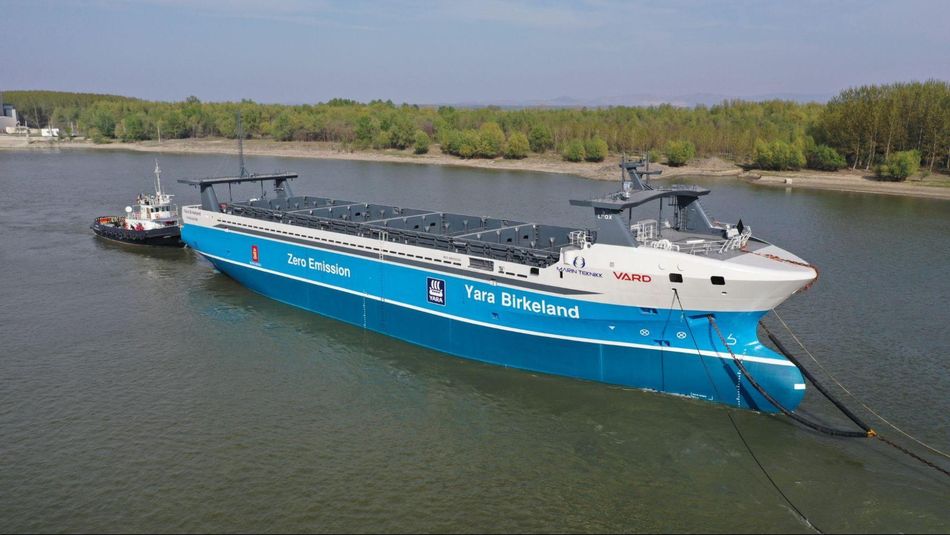
Uros: We’re seeing electrification accelerating across all areas of transport, just at different speeds. On the roadside, passenger cars are already well established, and now we’re seeing strong growth in commercial vehicles, buses, and trucks, where high-power charging and its enabling technologies are becoming key. In maritime, the focus is shifting toward hybrid and fully electric solutions for short-distance and port operations. And in aviation, it’s still early, but we already see exciting progress in urban air mobility and regional hybrid-electric concepts.
So, with these bursts of innovation taking place across multiple applications, our role is to position these technologies within our customer’s applications. We support customers leveraging semiconductor technologies, from efficient power conversion and battery management to safety-certified microcontrollers and communication systems. But just as important, we help them integrate these technologies into reliable, scalable solutions that can move from prototype to production while accelerating time-to-market.
Q: Looking across transportation, industry, and infrastructure, where do you see the greatest opportunity to accelerate the adoption of electric technologies in the next five years?
Sergio: Predicting the future at a time of rapid change is quite a challenge. But I really do think that incredible opportunity lies in electrifying transportation and industrial automation. In e-mobility, the shift to EVs is driving demand for high-efficiency power electronics, battery management, and charging infrastructure. In industry, electrification and digitalisation are converging in robotics, smart factories, and energy optimisation. Distributors like EBV can play a central role by bridging technology, expertise, and supply chains to accelerate this transition.
Q: Where do you see the biggest growth potential for your suppliers’ technologies in emerging energy infrastructure, including High Voltage Direct Current (HVDC), microgrids, and hydrogen electrolysis?
Uros: You’re right to focus on energy infrastructure, as we see so much going on there right now. We often think of HVDC in terms of long-distance transmission, but there’s also a strong trend toward short-distance or local DC distribution. This is becoming especially relevant for systems including local generation like PV and large electrical energy consumers like heat pumps, EV chargers, and data centres, basically wherever energy is generated, stored, and consumed locally.
By going DC, you can skip multiple conversion stages, which leads to higher efficiency and lower system cost. Smart solid-state switches and solid-state transformers are now opening new possibilities in this space, as they make local energy networks more compact, faster, and fully controllable in real time.
We also see strong growth in microgrids that combine photovoltaics (PV), storage, and EV charging, and in hydrogen electrolysis, where high-efficiency power conversion is key. We support all of these with our portfolio – from SiC and GaN power devices to sensors, controllers, and communication components, helping customers build the next generation of intelligent, DC-based energy infrastructure.
Q: In building automation and smart living, how does your offering in sensors, connectivity, and power management address customer needs?
Uros: In smart buildings everything is about balance, providing comfort and convenience while also ensuring efficiency, sustainability, and, increasingly, security. This includes a growing focus on Indoor Environmental Quality (IEQ) and Human-Centric Lighting (HCL), where environmental conditions and lighting are optimised to support health, wellbeing, and productivity.
Beyond comfort and efficiency, intelligent home technologies are also enabling Ambient Assisted Living (AAL). They are supporting seniors to live independently for longer and are becoming active partners in ageing-in-place strategies.
Sensors are the starting point, as they can be used to capture data on air quality, temperature, lighting, or occupancy. They can also enable health-monitoring functions such as activity tracking and fall detection for seniors in AAL environments. Connectivity then links everything together, from low-power wireless standards such as Matter, Thread, and Bluetooth Low Energy (BLE) to wired solutions such as Ethernet and KNX. And, of course, cloud connectivity enables remote monitoring, analysis, and optimisation of building performance.
But with this growing level of connectivity comes the need for cyber resilience. The upcoming Cyber Resilience Act[1] sets clear expectations for device security and lifecycle management, and we take this very seriously. Together with our semiconductor partners, we help customers design with security built in, from trusted hardware and secure elements to software support and certification guidance.
In the end, we’re helping to create buildings that are not just smart and efficient but also safe, secure, and future-proof.
Q: How do you view the adoption of smart agriculture technologies like drones and robotics, and what makes you a valuable partner in this space?
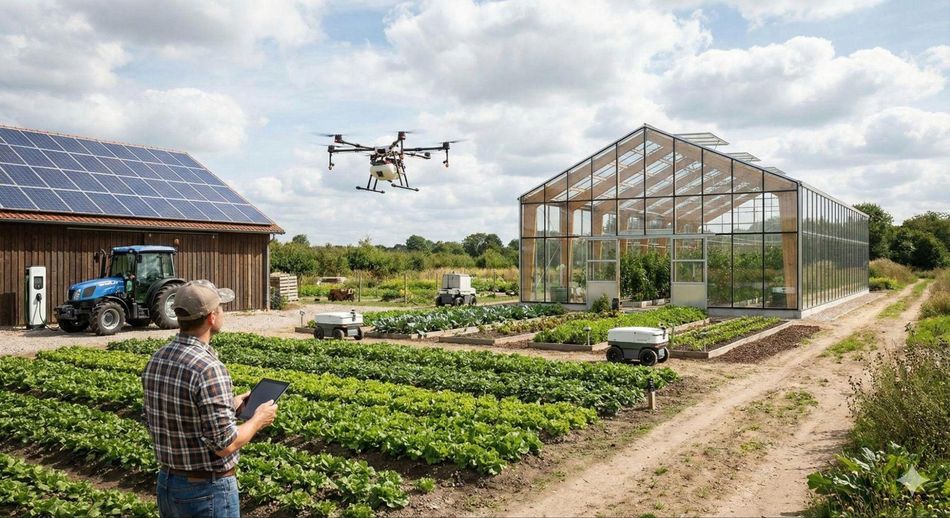
Uros: Smart agriculture is a perfect illustration of technology for good, helping farmers grow more crops while using fewer resources. We are already seeing this in many ways, with drones, autonomous tractors, and field robots helping monitor crops, optimise fertiliser use, and reduce manual labour.
These systems rely on a combination of precise sensing, efficient power management, and advanced edge computing, often supported by AI and reliable connectivity. We bring all those building blocks together, with a portfolio that covers everything from high-accuracy Global Navigation Satellite System (GNSS) and vision sensors supported by edge AI to motor control, battery management, and secure communication.
What I would say, though, is that it is crucial to understand the full system, not just the individual components. We help customers select the right technologies, ensure robustness for outdoor conditions, and address safety and lifecycle challenges. In the end, our goal is to help make agriculture more productive, more sustainable, and less dependent on manual work.
From Components to Scalable Systems: EBV’s Role in Enabling Innovation
Electrification requires more than access to hardware; it depends on integration expertise, ecosystem collaboration, and support that carries concepts through to production.
Q: How do you ensure engineers and manufacturers have reliable access to the latest components needed for electrification?
Sergio: Our ‘global but local’ strategy is critical here. We leverage Avnet’s global supply chain strength while maintaining EBV’s local, specialised support. This means we can offer both availability and agility. Our demand-creation model ensures early customer engagement, enabling us to forecast needs and secure allocations. We also invest in digital tools and logistics services to streamline procurement and reduce time-to-market.
Q: How do you ensure customers have both reliable access to key technologies (SiC, GaN, etc.) and the expertise to integrate them effectively?
Sergio: Meeting that need really goes to the heart of what we do. Our role is to combine deep supplier relationships with a strong technical backbone. This enables our dedicated teams of technical marketing engineers and field application experts, who work closely with customers, to ensure early access to critical technologies like SiC and GaN. But, actually, access alone isn’t enough. We also provide design support, reference platforms, and training to help customers integrate these technologies efficiently and confidently into their applications.
Q: Beyond logistics, how are you positioning yourself as a partner for innovation through design support, technical guidance, and ecosystem collaboration?
Sergio: We go beyond just delivering components. Our technical marketing teams help co-create solutions, working closely with customers to identify the right technologies, while our engineering solutions group supports design-in activities. We also encourage ecosystem collaboration through partnerships with startups, universities, and industry alliances to accelerate innovation across the board.
Q: How does EBV elektronik help customers integrate newer technologies like SiC and GaN in ways that are both relevant and scalable for real-world deployment?
Sergio: As our customers need tangible, practical support to bring these technologies to life, we focus on relevance and scalability by aligning technology with application-specific needs. Our engineering teams provide hands-on support, from simulation and prototyping to thermal management and Electromagnetic Compatibility (EMC) compliance. We also collaborate with suppliers to offer evaluation boards, design kits, and application notes tailored to real-world use cases in automotive, industrial, and energy sectors.
Europe’s Path Forward: Competitiveness in a Fully Electrified World
Electrification is not only an environmental transition; it is also a strategic and industrial one. Europe can only lead if it has skilled engineers, strong local capabilities, and strong partnerships.
Q: How does your role in enabling electrification strengthen Europe’s competitiveness in global technology markets?
Uros: That’s a very important aspect, because electrification isn’t just about sustainability; it’s also about industrial strength and technological leadership. By enabling European customers to design and build innovative, energy-efficient systems locally, we help keep high-value engineering and manufacturing expertise within the region.
So how do we bring value here? We connect Europe’s strong application know-how with the latest semiconductor technologies from our global partners. And we do this in close collaboration with many third parties; from design houses and research institutions to system integrators and solution providers. This ecosystem approach helps customers move faster, reduce complexity, and bring reliable products to market.
This combination: innovation, collaboration, and technical depth, directly strengthens Europe’s competitiveness. It ensures that European companies remain at the forefront of electrification and digitalisation, while building a more resilient and independent technology landscape.
Conclusion
The transition to an all-electric society is already underway. Still, its success will depend on access to advanced technologies, robust supply chains, and engineering support that helps innovators reduce complexity and accelerate time-to-market.
Through the combined perspectives of Sergio and Uros, it’s clear that EBV Elektronik positions itself not just as a semiconductor distributor but as a technical partner empowering customers to design, scale, and deliver the systems that will define Europe’s electrified future.
References
- Regulation (EU) 2024/2847 of the European Parliament and of the Council of 23 October 2024 on horizontal cybersecurity requirements for products with digital elements and amending Regulations (EU) No 168/2013 and (EU) 2019/1020 and Directive (EU) 2020/1828 (Cyber Resilience Act) (Text with EEA relevance). Source: https://eur-lex.europa.eu/legal-content/EN/TXT/?uri=CELEX:32024R2847