Engineering Fans and Airflow Solutions for Medical Devices with ebm-papst
Engineered airflow solutions play a vital role in keeping medical devices precise, quiet, and reliable. ebm-papst and Sager Electronics partner to support engineers with a broad portfolio of fans and custom airflow solutions for building high-quality medical devices.

02 Sep, 2026. 8 minutes read
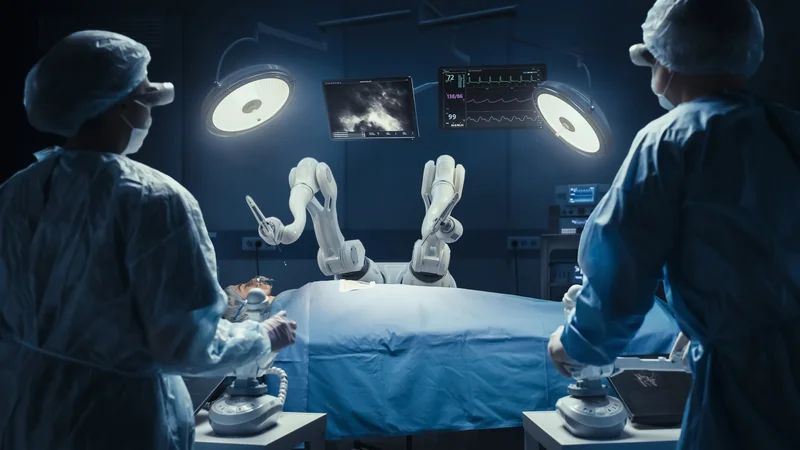
Introduction: The Role of Airflow in Medical Devices
Global healthcare systems are undergoing a major shift. Advances in technology are enabling more sophisticated healthcare facilities, and increasing life expectancies are driving greater demand.
Alongside this growth, medical devices are becoming smaller and more patient-friendly. Their use is extending beyond large hospitals to smaller clinics, local laboratories, ambulatory surgical centers, and even people’s homes. This evolution introduces new considerations for space, noise, and reliability.
Ensuring smooth and reliable operation of medical devices depends on a number of different underlying systems that often go unnoticed but are still essential. Among them, fans and airflow solutions play a key role. Thermal management is no longer a secondary consideration; airflow solutions need to be designed in and integrated closely with the healthcare systems.
Key Performance Factors in Medical Airflow System Design
Engineering fans and airflow solutions for medical technology requires balancing several different variables. Some of the key factors that affect design decisions include:
Thermal Stability and Precision
Many medical devices require operation within strict temperature limits. They lose accuracy with even the smallest thermal fluctuations. Airflow solutions must deliver consistent and precise cooling to ensure stable operating conditions for the equipment.
Low Noise Operation
Noise is a significant consideration due to its negative impact on patient comfort, interference with clinical environments, and ability to compromise device utility. As a result, medical devices, especially those that come into direct contact with patients, are engineered to operate with minimal acoustic emissions.
While mitigating noise from other components can pose difficulties, fans and airflow systems can be optimized through advanced aerodynamics and the adoption of effective motor designs, thus minimizing acoustic output without compromising performance.
Compact and Space-Constrained Integration
As devices become more portable, the available space for thermal management components becomes increasingly limited. Airflow solutions must achieve optimal performance and be suitable for integration into compact and dense system architectures. Compact designs also support more minimally invasive procedures, shorter recovery times, and lower production costs.
Continuous and Fail-Safe Operation
Healthcare devices are among some of the most critical systems on the planet. As a result, they are often expected to work continuously. Fans and blowers must offer long-term reliability and require minimal maintenance, even under the most demanding and extended operating conditions.
Vibration Control and Mechanical Stability
Vibrations affect both the performance and longevity of any system and are critical to minimize in medical equipment. Uncontrolled vibrations in imaging systems, for example, can create artifacts, or distortions, leading to misdiagnosis. In other systems, they can contribute to mechanical wear, damage, malfunctions, or even complete failure. Effective airflow solutions must operate with minimal vibrations through balanced design and optimized mounting.
Energy Efficiency and Intelligent Control
Energy efficiency is important for reducing operational costs and creating a sustainable system design. While efficient operation is beneficial for large systems, it becomes even more critical for smaller, portable devices operating on battery power. Modern fans and airflow solutions are required to offer precise airflow control, allowing systems to dynamically adjust performance based on real-time requirements to maximize efficiency.
ebm-papst Fans and Engineered Airflow Solutions for Medical Devices
ebm-papst is one of the world’s leading experts in air movement technology. Their extensive range of fans, blowers, motors, and engineered airflow solutions is optimized for the medical field. This is backed by years of experience in motor technology, aerodynamics, and system integration.
ebm-papst RV45/RVE45 DC Centrifugal Fans
ebm-papst’s RV45 and RVE45 DC centrifugal fans are designed for precise control of rapidly changing airflow and pressure in applications such as ventilators, sleep apnea devices, respiration/breathing equipment, and emergency ventilation systems. These fans support high-speed operation of up to 50,000 RPM and can deliver pressure up to 5,000 Pa.
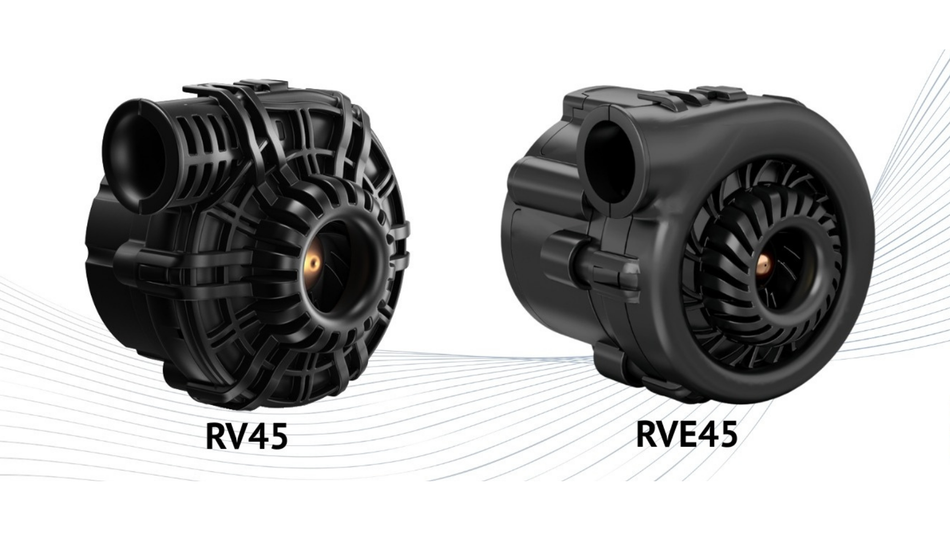
The key strength of these product series lies in their dynamic response. Both feature a lightweight, high-speed, internal rotor motor to enable quick and reliable adjustments to airflow and pressure. They are also aerodynamically optimized for minimal noise and vibration, ensuring patient comfort. Control electronics allow both series to be customized to the exact specifications needed. The RV45 uses external control electronics, while they are built into the RVE45 for plug-and-play operation. With a service life of ~50,000+ hours, they also operate reliably and consistently over many years.
Parameter | RV45 / RVE45 Series |
Fan Type | DC centrifugal blower |
Max Speed | Up to ~50,000 rpm |
Max Pressure | Up to ~5,000 Pa |
Noise Level | As low as ~49 dB(A) (application dependent, inside a CPAP less than 25 dB(A) |
Operating Life | ~50,000+ hours (at 25°C) |
Control | RVE45 includes integrated control electronics, PWM control, tacho output |
Design Features | Compact, lightweight, low-inertia rotor |
Key Benefits | Fast response, precise airflow control, low vibration, quiet operation |
Typical Use Case | Respiratory devices like ventilators, CPAP (Continuous Positive Airway Pressure) and BiPAP (Bilevel Positive Airway Pressure) |
ebm-papst AxiForce Series Fans
ebm-papst AxiForce is a series of aerodynamically optimized fans, delivering strong performance with high efficiency and low noise. Models range from 40 mm to 172 mm to suit a wide range of applications and airflows.
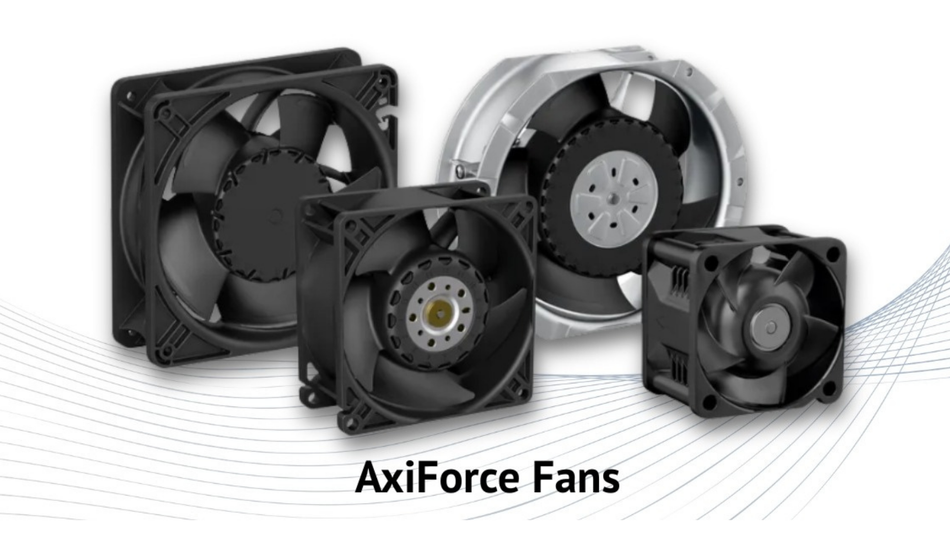
Some variants of AxiForce fans come with a built-in temperature sensor and a tachometer for monitoring speed. The fan speed can be electronically controlled by PWM, with an optional support for analog control. AxiForce fans are also available in special environmental-resistant variants with an IP68 rating for protection against severe dust and powerful water jets.
Parameter | AxiForce Series |
Fan Type | Tubeaxial fan |
Size Range | 40 mm to 172 mm |
Control | PWM control, analog control (optional), tacho output |
Airflow Performance | Up to ~650 m³/h (size dependent) |
Efficiency Gain | Up to ~18% improvement vs previous designs |
Noise Reduction | Up to ~6-7 dB(A) lower noise compared to comparable fans |
Design Features | Advanced aerodynamics, robust construction |
Key Benefits | High efficiency, low noise, flexible integration |
Broad Portfolio and Proven Performance
Beyond these product families, ebm-papst offers a comprehensive range of axial, centrifugal, and diagonal fans built for medical and laboratory use. All products are developed and tested to meet strict quality and safety standards. This ensures reliable performance even in the most demanding and safety-critical environments.
Case Study: Eliminating Contamination Risks in Inhaler Disinfection
Cystic fibrosis is a serious lung disease that requires inhalation therapy as a part of daily treatment. Ironically, the devices used for that therapy, like nebulizers and inhalers, can themselves become a source of infection if not cleaned and dried properly.
There are several disinfection devices on the market that use steam for sanitation, but that process leaves moisture behind. Air drying, and even manually drying the equipment and parts with a cloth, can create a favorable environment for bacteria and other pathogens to thrive, posing a direct and severe risk to the patient's already vulnerable lungs.
Disinfection with Complete Drying
The German brand Detherma GmbH solved this problem with an innovative approach. They wanted to build a cleaning device that would eliminate germs, in part by ensuring no moisture was left behind after the disinfection process was completed. The device would use a controlled flow of heated air to ensure all residual moisture was completely removed before delivering inhalers ready for immediate use.
Achieving this goal required precise optimization of the airflow. The fan needed to generate enough pressure to draw hot air through a HEPA filter and circulate it effectively within the disinfection chamber while remaining quiet enough for household environments.
Optimized Fan Integration and System Tuning
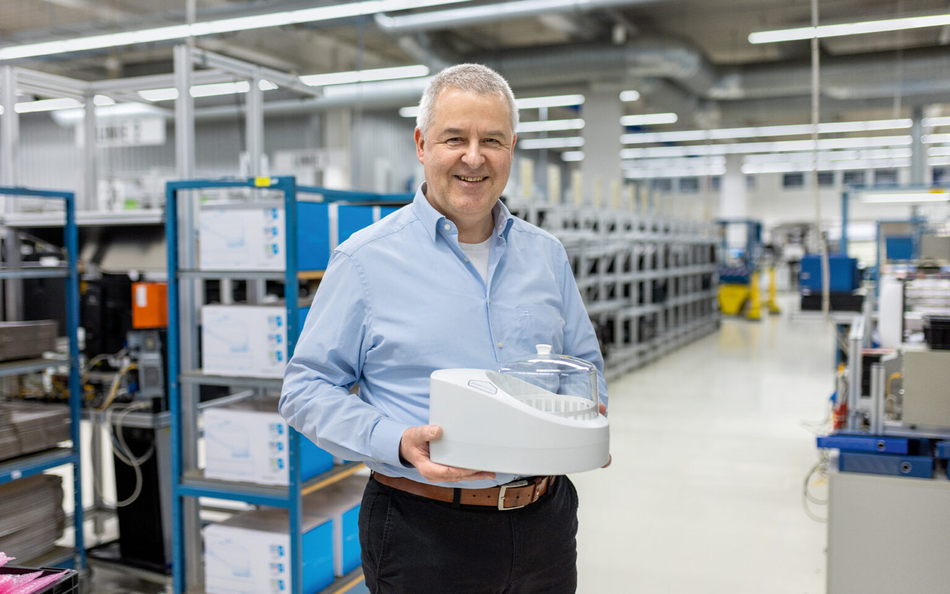
Detherma reached out to ebm-papst for a solution that would meet their unique needs. They ultimately designed in one of ebm-papst’s compact, high-performance fans, which delivered strong airflow at a low speed, thus minimizing noise and maximizing efficiency.
It seemed like the perfect solution, but some of the disinfection devices were louder than others, and Detherma couldn’t figure out why. Since they didn’t have the capabilities to investigate further, ebm-papst brought some of the devices into their extensive testing laboratory. They determined that the noise was caused by the housing, so Detherma installed a silicone damping element to resolve the issue.
Improved Safety and Usability
The collaboration between Detherma and ebm-papst is what really brought this project to fruition. The final device delivers inhalers that are clean, dry, and ready for immediate use. This demonstrates how engineered airflow solutions can fix even the most complex challenges.
Read the complete story here: Germs? Blown away: Disinfection device for inhaler | mag

Critical Medical Applications Enabled by Airflow
Engineered airflow solutions are needed for a wide range of critical healthcare functions, such as:
Respiratory Systems
Assistive breathing machines like ventilators, CPAPs, and BiPAPs require highly reliable, precisely controlled airflow and pressure to support consistent respiration. These devices have to react quickly to changes in breathing patterns while also operating as quietly as possible since they are often used throughout the night.
Imaging Systems
The sensitive electronics in imaging equipment like CT scanners and MRI machines generate significant heat, which makes fans and cooling a critical part of their infrastructure. Along with maintaining consistent airflow, solutions must operate with minimal vibration to ensure the integrity of the imaging and avoid artifacts.
Laboratory and Diagnostic Equipment
In laboratories and diagnostic settings, maintaining controlled conditions is essential. Blood gas analyzers, safety cabinets, and other medical equipment require stable temperatures and precisely managed airflow for optimal performance, safety, and to prevent contamination risks. Complex devices like centrifuges introduce more challenges, bringing high mechanical stress to thermal management.
Disinfection and Air Treatment Systems
Controlled air movement is required in disinfection and air treatment systems, as shown in the case study above. Fans built for these applications must operate reliably in harsh environments, including exposure to elements like steam, heat, and UV light. Plastic parts, wiring, and filters used in these systems could easily break down if they're not specifically designed for this use case.
Patient Care Systems
Beds, warming systems, and therapeutic devices also rely on consistent airflow for overall patient comfort and well-being.
These varied applications clearly highlight the breadth of requirements engineered airflow solutions must cover. Reliability, precision, minimal noise, compliance with stringent regulatory standards, and robustness are some of the key differentiators for this industry.
Sager Electronics and ebm-papst Partnership
Beyond performance, developing a successful medical device depends on availability, integration, and strong engineering support. Sager Electronics has been ebm-papst’s authorized partner since 1994 and is currently their largest distributor in North America.
Sager combines broad product availability with robust inventory and supply chain capabilities. The partnership between Sager and ebm-papst goes beyond distribution, as Sager facilitates faster sampling, prototyping, testing, and regulatory validation. In the medical industry, such collaborations make iterations quicker and speed up design cycles.
Sager’s Custom Solutions Center in Texas, U.S., provides custom thermal solutions and value-added services, including fan tray assemblies, fan modifications, heat exchanger modifications, fan-sink assemblies, thermoelectric assembly modifications, heat pipe bending, heat sink integration with thermal interface materials, and integration support. The solutions center gives customers access to Sager’s expertise from the early stages of the design process through to full-scale production.
As an ebm-papst-certified value-add reseller (VAR), Sager is trained and qualified to meet ebm-papst’s standards for workmanship, testing, quality, and packaging. All customized products are also backed by a factory warranty.
Together, ebm-papst’s engineered airflow solutions and Sager’s strong distribution and engineering support carve a pathway for medical device designers and manufacturers to address the diverse requirements of the industry while accelerating time-to-market.
Conclusion: From Performance to Patient Safety
Airflow management in healthcare affects something far more important than just system performance and efficiency; it directly impacts patient safety and comfort. As devices become more technically complex, compact, and widely deployed, the demands on airflow systems continue to rise.
Modern medical devices rely on advanced airflow solutions that balance thermal performance, acoustics, reliability, and regulatory requirements. By combining ebm-papst's industry-leading airflow technologies with Sager Electronics' technical expertise and design support, medical device manufacturers gain a collaborative resource to help optimize thermal management throughout the product development process.
To learn how ebm-papst and Sager Electronics can support your next medical device design, connect with our engineering team.