Consumer SIMs in the IoT: Why They Become a Risk and How To Do It Better?
Learn why M2M SIMs (also known as IoT SIMs) are the better choice for IoT projects, compared with consumer SIMs.

12 Jan, 2026. 4 minutes read
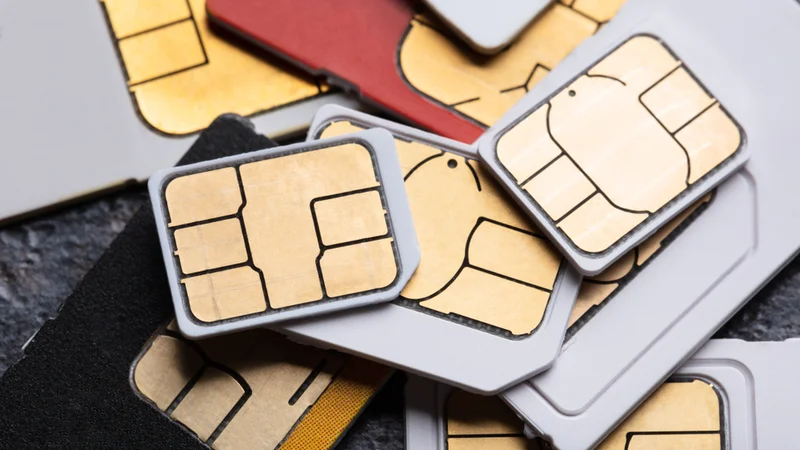
"A SIM card is a SIM card." We come across this assumption in many IoT projects. However, those who rely on classic consumer SIMs in the IoT context often realize too late that network coverage, management, and contract structure are not designed for M2M applications. In this article, we explain why M2M SIMs (also known as IoT SIMs) are the much better choice for IoT projects, the risks associated with consumer SIMs, and what should be considered when making a decision.
What is the Difference Between Consumer and M2M SIMs?
Consumer SIM cards are designed for end devices for private use, such as smartphones, tablet,s or mobile routers. Accordingly, they are designed for typical user habits such as telephony, text messaging, and surfing the mobile Internet. The management and tariff structure are primarily aimed at individuals or households.
M2M SIM (machine-to-machine) SIM cards, on the other hand, have been specially developed for use in machines, sensors and IoT devices. They enable the automated transmission of data, include flexible tariff models, central management, and access to multiple mobile networks or special technologies such as NB-IoT or LTE-M.
Criterion | Consumer SIM | M2M SIM Card |
Use Case | Smartphone, Tablet, Mobile Router | IoT Devices, Sensors, Machines |
National Roaming | No | Yes |
Management Platform / Online Portal for SIM Management | No | Yes |
Prepaid Tariffs | Yes | Yes |
Monthly Tariffs | Yes | Yes |
Flexible Tariff Models | No | Yes |
Data Pooling across Multiple Cards | No | Yes |
NB-IoT / LTE-M Support | No | Yes |
Robustness (e.g. Temperature Range) | No | Yes |
Contract Structure | Standardized End Customer Tariffs | Individual, Project-Related |
Support & Service | Consumer Support, Limited | Technical Support, Specialized in IoT, Focus on Business Customers |
Device Management & APIs | Not Planned | Partially Included |
Consumer SIM and M2M Tariff Models in Comparison
Although consumer and M2M SIMs may seem similar in price at first glance, their tariff models vary significantly. Consumer SIMs primarily use monthly flat rates or prepaid models, while IoT SIM cards provide a broader range of tariff options specifically designed for the needs of the IoT environment. These options include pooling, temporary pausing, and pay-per-use billing models.
Typical Mistakes When Using Consumer SIMs in IoT Projects
Most IoT projects start small - a few test devices, initial sensors and the desire to be up and running quickly. Project managers, therefore, often resort to the next best solution: a consumer SIM. But what appears to work in the pilot phase often turns out to be a stumbling block in practice. The most common problems:
Insufficient Network Coverage
Consumer SIMs are tied to a fixed mobile network provider. If the mobile network is weak at the place of use, the device will remain offline in the worst-case scenario. Especially with stationary installations in basements, industrial halls or rural regions, the restriction to one network provider becomes a real challenge. M2M SIMs circumvent this problem with national roaming, in the best case, without control (non-steered roaming), so that they automatically dial into the strongest available mobile network at the location.
No Central SIM Management
You can still keep track of a few devices manually. But what if there are hundreds or thousands of SIM cards? IoT SIMs can be controlled via central management platforms: activate, pause, monitor data consumption - all in one portal. This saves time, costs and minimizes errors.
Unsuitable and Rigid Data Tariffs
Standard flat rates are not optimized for IoT use. Some devices only send small data packets sporadically, while others need flexible data volumes depending on use. Without suitable tariff models, there is a risk of either unnecessary costs or restrictions in functionality.
Poor Data Protection and Lack of Security
In contrast to consumer SIMs, many M2M SIM providers offer additional functions such as private APNs or secure VPN connections. These security mechanisms are indispensable, especially for sensitive data, for example, from the healthcare or energy sector.
Unqualified Support for IoT Projects
If devices suddenly go offline, you need fast technical support, not a hotline with long waiting times or standard answers. Good M2M providers usually offer dedicated support with IoT expertise. In addition to their own SIMs, they are also familiar with different IoT hardware.
Excursus: Why Smart Meters Fail With Consumer SIMs?
Digital electricity meters - known as smart meters - are considered a key technology in the energy transition. They record electricity consumption in real time and automatically transmit the data to metering point operators or energy suppliers. However, this function is only reliable if the connection is stable. Smart meters face particular challenges here: They are often located in basements, must transmit energy efficiently for years and also function in remote regions with fluctuating grid availability. This is exactly what IoT SIM cards are designed for, unlike consumer SIMs.
Conclusion: The Right SIM Determines Success or Standstill
Whether an electricity meter, sensor or networked device: no IoT project can work without a stable and secure connection. If you choose the wrong SIM card, you risk not only poor network coverage but also a lack of control, unsuitable tariffs, or security gaps that slow down projects or cause them to fail. M2M SIM cards are specially made for such requirements. If you want reliable IoT connectivity in the long term, you should therefore go straight for the right solution - and leave consumer SIMs where they belong: in your smartphone.