Click, Press, Confirm: The Enduring Relevance of Electromechanical Switches
Discover why electromechanical switches remain essential in modern automotive, medical, industrial, and consumer systems, delivering unmatched tactile feedback, reliability, and engineered precision.

28 Jan, 2026. 4 minutes read
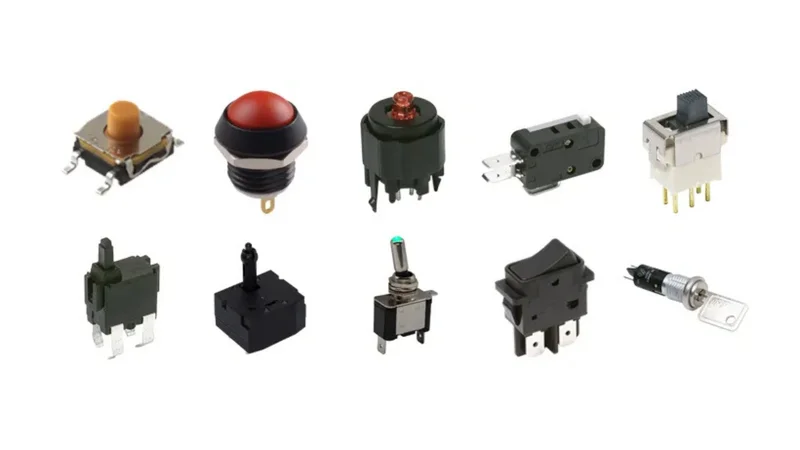
C&K Electromechanical Switch Family
Human-machine interaction has changed significantly, moving from mechanical buttons and switches to digital touchscreens and voice interfaces, enabling sleeker designs and streamlined user interfaces. However, despite these changes, electromechanical switches are still essential and demanded in engineered systems. This article explores why these switches still play a vital role across industries, the different types and their applications, and how Littelfuse C&K supports engineers with reliable, precisely engineered switch solutions for modern designs.
The Tactile Advantage: Why Physical Feedback Still Matters
Touch interfaces, whether capacitive touchpads or flat-panel displays, enable multifunctional, reconfigurable designs. However, they also introduce a degree of uncertainty, as without physical displacement or tactile feedback, operators need to rely entirely on visual or auditory cues to confirm input, which can slow reactions or cause input errors in high-demand environments.
What distinguishes a switch from its digital counterpart is its ability to provide immediate, physical confirmation of an action. The defined travel, audible click, or mechanical resistance of an electromechanical switch tells the user that the circuit has closed and the command is registered. This deterministic feedback loop of press, actuate, and confirm is something no touchscreen or voice interface can fully emulate. This is vital in safety, timing, and precision-centered applications such as medical instrumentation.
Well-designed switches contribute to user confidence and ergonomic consistency as well. The tactile resistance and actuation feel can be tuned to specific force thresholds, ensuring repeatable operation under vibration, stress, or gloved conditions. This mechanical assurance helps maintain precision and reduces the cognitive load on the operator in psychologically stressful environments, such as operating rooms or industrial plants.
Tactile Control in Real-World Applications
Switches enhance accessibility in ways digital interfaces are unable to. For example, users with limited vision, or in low-light or high-vibration environments, tactile feedback enables confident operation without visual confirmation. The mechanical travel and distinct actuation feel provide both orientation and certainty. Electromechanical switches play a vital role in several real-world applications.
Switches in Automotive Systems
For years, touchscreen-based dashboards were promoted as a symbol of innovation, but in practice, they can compromise driver safety and ergonomics. For instance, adjusting HVAC controls or changing infotainment settings through layered digital menus forces drivers to divert their eyes from the road. Recognizing this, many OEMs are reintroducing tactile interfaces for critical functions.
For example, C&K, a world leader in high-quality electromechanical switch manufacturing, have a long portfolio of such tactile interfaces. Their KSC XA, for instance, with its soft-sound actuation and long operational life, provides precise tactile feedback while maintaining quiet operation, which is an important factor in premium interiors. Its compact form factor integrates smoothly into dashboards, steering wheels, and center consoles, allowing drivers to locate and operate key controls by touch alone. Moreover, its IP67 rating provides necessary protection against moisture and dust. For engineers, this combination of mechanical reliability and compact integration simplifies system design and enhances safety performance.
Medical Equipment
In medical environments, the importance of tactile feedback becomes even more important. Devices are used repeatedly, sterilized frequently, and trusted in high-stakes situations. A surgeon operating a handheld instrument, often with surgical gloves on, must receive immediate, unambiguous confirmation of input. This can only be ensured by a physical switch. C&K’s KSC2 series addresses these demands with compact packaging, long lifecycle ratings, and consistent tactile response. For medical device engineers, this combination ensures reliable performance through thousands of actuations, maintaining both precision and user confidence.
Industrial, IoT, and Consumer Systems
Electromechanical switches are not just limited to automotive and healthcare, they are critical across a wide range of applications. For instance, in consumer electronics, they define the tactile character of gaming controllers, headphones, and home automation devices, where feel directly shapes user perception of quality. In industrial controls and IoT systems, sealed designs with IP-rated protection ensure consistent operation despite dust, moisture, vibration, and temperature extremes. Unlike touchscreens, which depend on software interpretation and are susceptible to latency or misreads, switches deliver direct electrical engagement. This immediate responsiveness is vital in safety-critical systems where milliseconds can determine the outcome.
Engineering the Right Switch for Each Application
Electromechanical switches are engineered for endurance, precision, and environmental resilience. Modern designs feature IP-rated sealing against dust and moisture, with lifecycles rated in the millions of actuations.
Mechanical parameters, including actuation force, travel distance, and sound profile, can be fine-tuned to meet specific performance targets. This allows engineers to tailor the tactile experience to both functional and brand requirements. Switch design can be precisely tuned for the environment in which it operates, whether the goal is a soft, silent press for a vehicle interior or a firm, audible click for an industrial panel.
Tactile switches represent only one subset of a broader electromechanical switch portfolio. Push buttons play a vital role in industrial controls, elevators, and consumer products where a clear, decisive action is required. Slide switches provide simple and reliable on/off or mode selection in portable electronics, instrumentation, and power tools. Toggle and rotary switches are important for aerospace, automotive, and test equipment, where mechanical robustness and exact positioning are essential. Each of these switch architectures is optimized for a specific control scenario, providing users with physical, reliable, and intuitive control in environments where digital alternatives alone cannot fully meet the demands.
Switches are evolving in step with digital interfaces. Hybrid control schemes that combine touchscreens for flexibility with tactile switches for primary functions are becoming common in vehicles, aircraft, and industrial control systems.
Role of Switches in Next-Generation Systems
Advances in IoT, wearables, and robotics are reshaping expectations for size, performance, and integration of switches. Electromechanical switches are adapting to meet these expectations through innovations in miniaturization and customizable tactile profiles.
Advanced switch designs utilize advanced materials and precision manufacturing to deliver consistent actuation performance within small footprints. Engineers can now specify exact parameters like actuation force, travel distance, contact resistance, and environmental sealing to align with both functional and aesthetic requirements.
Digitalization may have transformed how we build and operate machines, but it has not diminished the switch’s role. Whether in vehicles, medical devices, or industrial systems, electromechanical switches deliver a direct, unambiguous connection between human intent and machine response.
Engineers looking to explore C&K’s extensive portfolio of electromechanical switches can visit their website and discover how their solutions can enhance your next design.

References
Manufacturing High Performance Switch Solutions for OEMs Worldwide. [Online] Little Fuse. C&K Switches. Available at: https://www.ckswitches.com/ (Accessed on November 8, 2025)
KSC XA Series. Raised cage, Soft Sound Tactile Switch [Online] Little Fuse. C&K Switches. https://www.ckswitches.com/products/switches/product-details/Tactile/KSC%20XA/ (Accessed on November 8, 2025)
KSC2 Series. Sealed Tact Switch for SMT [Online] Little Fuse. C&K Switches. https://www.ckswitches.com/products/switches/product-details/Tactile/KSC2/ (Accessed on November 8, 2025)