Bidirectional Energy Recovery with the MEAN WELL BIC-5K
A sophisticated and practical path to implement high-efficiency, bidirectional power systems.

27 Jul, 2026. 8 minutes read
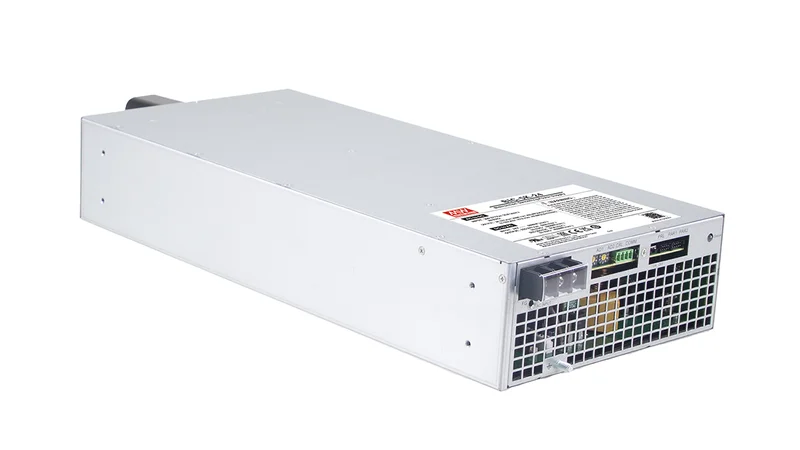
Power, and how to use it efficiently, is top of mind for designers in all industries. Between soaring energy prices and tightening sustainability regulations, engineers bear the burden of finding innovative ways to design products that use less electricity. Whereas previously they may have used unidirectional power supplies, which only allow energy to flow from the grid to the load, now they can turn to bidirectional power supplies like the MEAN WELL BIC-5K, which can simultaneously take in and give back energy to the grid. With both AC-toDC and DC-to-AC capabilities in a single device, the MEAN WELL BIC-5K is a versatile and compact solution to many engineers’ power needs.
Eliminating Energy Waste using Bidirectional Grid Recovery
Inefficiency of Passive Heat Dissipation
Ordinary battery test and storage systems lose significant energy during battery discharging. Typically, these systems dissipate excess energy passively as heat, requiring companies to invest in expensive cooling infrastructure to keep everything running smoothly. The confluence of both of these factors incurs unnecessary, high costs for companies and forces them to waste enormous amounts of electricity.
When faced with these problems, engineers often implement energy recovery systems. However, they quickly face space constraints because they need to use separate rectifiers to convert AC to DC and inverters to convert DC back to AC. Using two separate devices not only increases system complexity but also introduces more points of failure within the power system.
Overall, companies that use battery test systems incur additional expenses and require additional physical space to recover energy that may otherwise be lost during discharge. This compounds over time with facilities continuously buying electricity they never recover. These linear, unidirectional power architectures, in which energy flows in only one direction, put companies at a competitive disadvantage, whether or not they attempt to recover wasted energy. The best solution to all these physical and economic limitations is integrated bidirectional systems.
The Bidirectional Solution Space
Bidirectional power systems enable engineers to treat the AC grid as a virtual battery for storing excess energy. Specifically, these systems manage electricity flowing in opposite directions within a single unit so that engineers can capture energy that would otherwise be lost to heat and return it to the grid. The result is that companies with these systems have a much smaller carbon footprint and a lower cost of ownership for high-power installations.
Bidirectional systems also simplify thermal management for companies by allowing them to eliminate large resistive load banks. Ordinary unidirectional power systems require load banks to dissipate excess energy as heat. In contrast, bidirectional systems don’t need them, as they can redirect excess energy back to the grid.
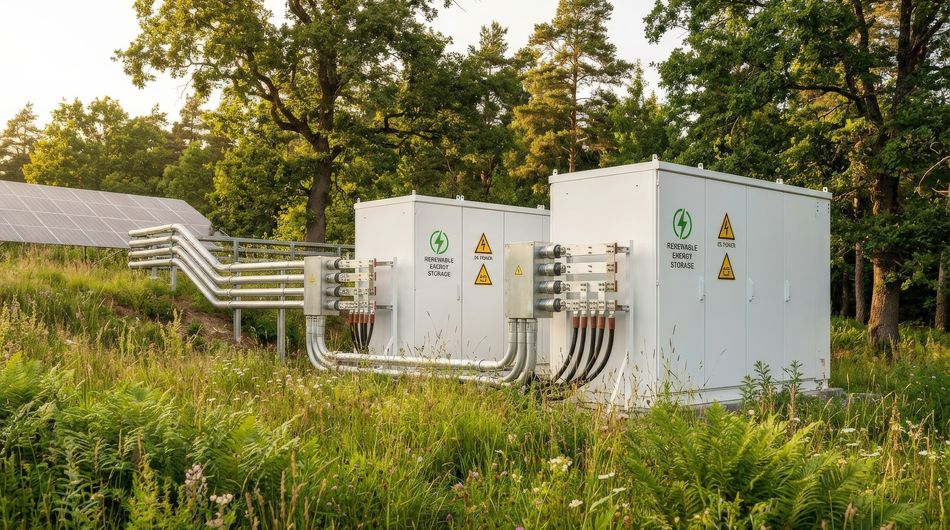
Bidirectional architectures allow the power supply to function as both a source, providing power to a device, and a sink, absorbing power from a device, and adjust dynamically depending on the immediate needs of the application. By feeding captured power back into the local grid, companies can also offset the consumption of other equipment within the same building. All of this enables companies to optimize their resources in ways they would not be able to with ordinary unidirectional systems. Ultimately, bidirectional power architectures empower engineers to design smaller, more efficient installations that are both more cost-effective and sustainable.
Industry Use Cases for the BIC-5K
Battery Formation and Grading Systems
When manufacturing batteries, engineers need to perform thousands of charge-discharge cycles to verify the stability of each battery’s cell chemistry and its grade capacity. With bidirectional power systems like MEAN WELL BIC-5K, engineers can feed the energy discharged from one battery bank back into the facility grid to power other active charging stations. This capability helps reduce the facility’s total energy usage and keeps it cooler by avoiding the heat-generating resistive load banks required by unidirectional power systems.
In addition to improving the facility’s energy efficiency, the BIC-5K enables engineers to precisely control batteries' charging and discharging curves so that each cell meets strict current- and voltage-regulation standards. MEAN WELL also designed the BIC-5K for industrial-grade reliability, so engineers can confidently implement demanding applications, such as continuous duty cycling, on their equipment.
All of these features allow companies to scale their production lines in denser formations without a proportional increase in cooling infrastructure. The result is that the BIC-5K helps companies achieve higher efficiency, higher throughput, lower energy consumption, and lower environmental impact in their battery production processes.
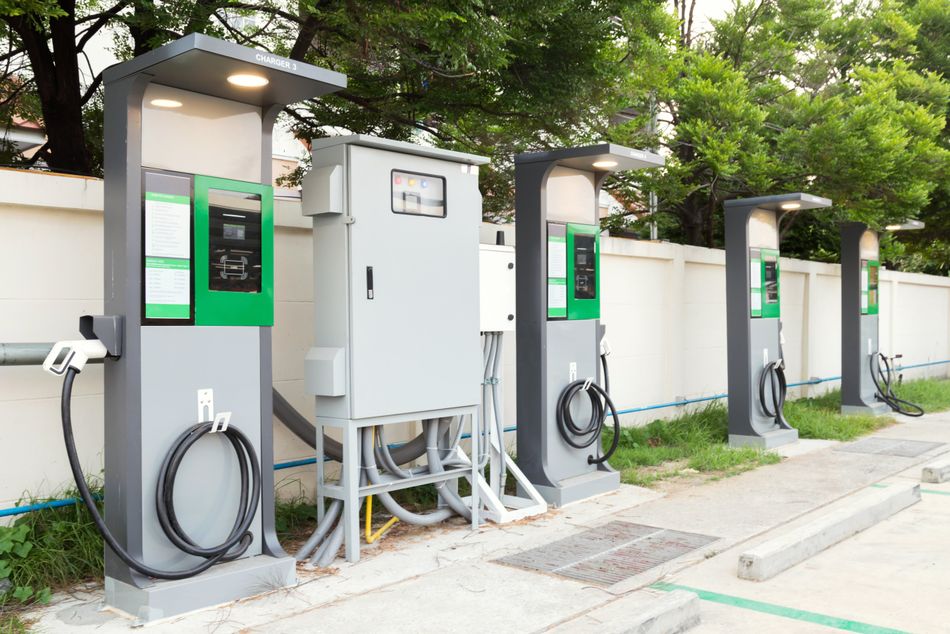
Bidirectional architectures allow the power supply to function as both a source, providing power to a device, and a sink, absorbing power from a device, and adjust dynamically depending on the immediate needs of the application. By feeding captured power back into the local grid, companies can also offset the consumption of other equipment within the same building. All of this enables companies to optimize their resources in ways they would not be able to with ordinary unidirectional systems. Ultimately, bidirectional power architectures empower engineers to design smaller, more efficient installations that are both more cost-effective and sustainable.
Electric Vehicle Infrastructure and V2G
Designers of Vehicle-to-Grid (V2G) systems, which enable electric vehicle (EV) batteries to draw and return power to the grid, need specialized hardware capable of managing bidirectional power flow. With the BIC-5K, engineers can deliver V2G systems with a single unit that also meets utility companies’ safety and synchronization standards. With this feature, designers can form localized microgrids, where each parked EV is an independent energy storage node.
With microgrids, the broader electrical grid can better handle peak demand by drawing on the collective energy stored in connected EV fleets. The BIC-5K ensures that this power transfer stays clean and perfectly synchronized with the utility frequency by preventing electrical noise or timing mismatches that could otherwise destabilize local power.
Kinetic Energy Recovery and Regenerative Loads
Industrial automation teams frequently work with high-inertia equipment, such as large motors or elevators, which generate significant back-EMF during braking. Back-EMF is a voltage that occurs when a motor’s internal magnetic fields interact during deceleration, effectively turning the motor into a generator. To prevent damage to drive electronics, historical power systems would force this energy through braking resistors that dissipate excess energy as heat.
With the BIC-5K, engineers can capture this back-EMF energy and return it to the facility grid rather than dissipate it as heat. As a result, they can reduce their heavy machinery’s net electrical demand, as the recycled energy can later power other machines.

Beyond energy savings, this regenerative approach reduces physical wear from mechanical braking. With the recovery unit offering electrical braking to handle much of the deceleration load, the BIC-5K transforms what was once a problematic source of heat waste into a reliable supplemental power source that maximizes energy efficiency for every part of a moving industrial automation system.
Technical Capabilities: Fast Switching, Efficiency, and Scalability
Ultra-Fast 1ms Bidirectional Switching
One of the most important performance metrics for a bidirectional power system is the speed at which it can switch between AC-to-DC (rectification) and DC-to-AC (inversion)modes. The BIC-5K switches in under 1 ms, which keeps the system's DC bus stable during instant shifts between charging and discharging phases. In this way, the BIC-5K protects the entire system from transient voltage spikes that could damage sensitive downstream electronics.
The BIC-5K’s high-speed switching capability also enables engineers to implement highly responsive battery grading profiles, especially those that use immediate current reversal to represent real-world usage. With faster switching that reduces lag and gaps, operators can collect more precise data during battery testing.
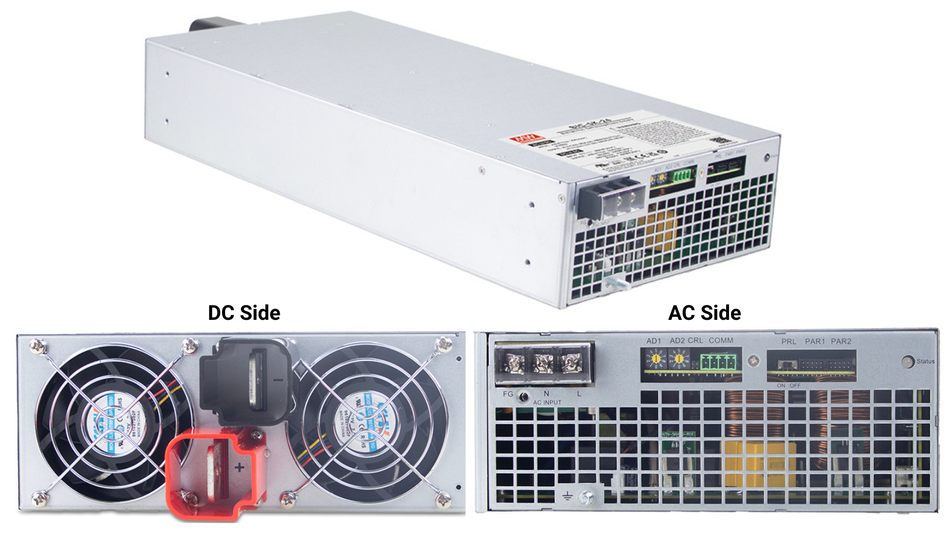
To simplify the switching process, the BIC-5K uses a fully digitalized control loop that automatically transitions between inversion and rectification modes. In addition, the internal firmware automatically detects the direction of energy flow, a feature that reduces the external control logic required and simplifies the overall system architecture. Ultimately, with the BIC-5K, teams can create testing environments that are both more reliable and significantly faster than alternatives.
Peak Efficiency and Power Quality
At the highest level, with a peak efficiency of 93.5%, the BIC-5K helps teams maximize the amount of energy they can recover and return to the facility grid. But, equally as important, greater efficiency – and, therefore, lower internal heat – means the BIC-5K can sustain full power operation in both directions without heat-related performance degradation.
Beyond raw efficiency, the BIC-5K maintains a Total Harmonic Distortion (THD) of less than3% in both conversion directions. The system’s low THD ensures that the power returned to the grid is clean and synchronized, thereby assuring compliance with strict utility power quality standards. This is non-negotiable for preventing electromagnetic interference with other sensitive electronic devices connected to the same local grid.
The hardware's versatility is further enhanced by a wide AC input range of 180-305 Vac, which lets engineers deploy the system in a variety of 230 or 277 Vac industrial environments. All of these features let the BIC-5K support large-scale energy recovery efforts without compromising the long-term stability or safety of local electrical components.
Voltage Range and 3-Phase Scaling
To guarantee compatibility with many industrial platforms, the BIC-5K offers four distinct models customized for specific DC bus requirements, ranging from low-voltage 24/48V options to high-voltage 96/380V units. These options give companies the breadth of tools needed to work with a wide array of DC battery chemistries and industrial motor voltages, all from a single product line.
And, if designers need power beyond a single unit's capacity, they can parallel up to 6 units. MEAN WELL enables this through a built-in active current-sharing function that automatically balances the electrical load across multiple devices. This configuration can achieve a total system capacity of 30kW in a 5+1 setup, where the sixth unit provides redundancy to ensure continuous operation if one module fails.
With a modular approach, teams can scale their power infrastructure linearly and increase capacity as an application grows without redesigning the power system. Teams can also integrate the BIC-5K into 3-phase 4-wire systems and standard industrial power setups consisting of three hot wires and one neutral by distributing single-phase units across the grid phases.
Streamlined Digital Control and Safety
With the BIC-5K, engineers can perform live monitoring and granular parameter adjustment via standard digital interfaces such as CAN bus or Modbus-RTU. They can use these protocols to precisely set both active power, which performs the actual work in a circuit, and reactive power, which maintains steady voltage levels in magnetic fields of motors and transformers. This type of control helps engineers make informed, analytics-driven decisions when managing distributed energy resources, such as localized solar arrays or battery storage units. They can also use the digital control interface to log performance data and diagnostic information, which is key to optimizing long-term system health and predictive equipment maintenance.
Beyond software control, MEAN WELL designed the BIC-5K to withstand harsh industrial environments while meeting the highest safety standards. It features an Over Voltage Category III (OVC III) rating, meaning it can withstand significant voltage transients common in fixed-plant installations, and a conformal coating that shields the internal circuitry from moisture and contaminants. It also includes internal protections such as AC fail detection and anti-islanding, which prevent the unit from feeding power back into a dead grid during an outage, thereby protecting utility workers performing repairs. The BIC-5K also meetsEN50549-1 grid connection standards.
Competitive Advantages of Off-the-Shelf Integration
A final benefit of the BIC-5K is that it’s a ready-to-use system. Rather than designing a custom solution from scratch, teams can simply pick the BIC-5K off-the-shelf and integrate it directly into their existing systems. They immediately avoid the exhaustive design and certification cycles typically required to build custom bidirectional power electronics from scratch. They can also trust that the unit is safe, as MEAN WELL has already pre-validated it against global safety standards, including IEC62368-1 for high-tech equipment.

Beyond simplifying the initial engineering phase, the BIC-5K can also decrease a system's total cost of ownership. As a standardized unit backed by a five-year warranty, companies can rest assured that their systems will work for a long time, and even avoid the considerable costs and technical risks associated with independent grid-connection testing. Because the BIC-5K includes an extensive global support network and a comprehensive set of safety certifications, engineers can use it to implement a uniform solution that meets worldwide market requirements without ever changing their design to comply with specific regional requirements.

Leading the Eco-Friendly Transition
The MEAN WELL BIC-5K gives companies a sophisticated and practical path to implement high-efficiency, bidirectional power systems within their infrastructure. As bidirectional power, thermal management, and environmentally-conscious designs become more pressing, a solution like the BIC-5K gives engineers the infrastructure they need to build for a more efficient, resilient, and eco-friendly future.
To learn more about the BIC-5K or to explore the MEAN WELL product portfolio, visit https://www.sager.com/manufacturers/mean-well.