Automating the Entire Product Lifecycle
Why Connected AI Is Becoming a Competitive Advantage

22 Oct, 2026. 7 minutes read
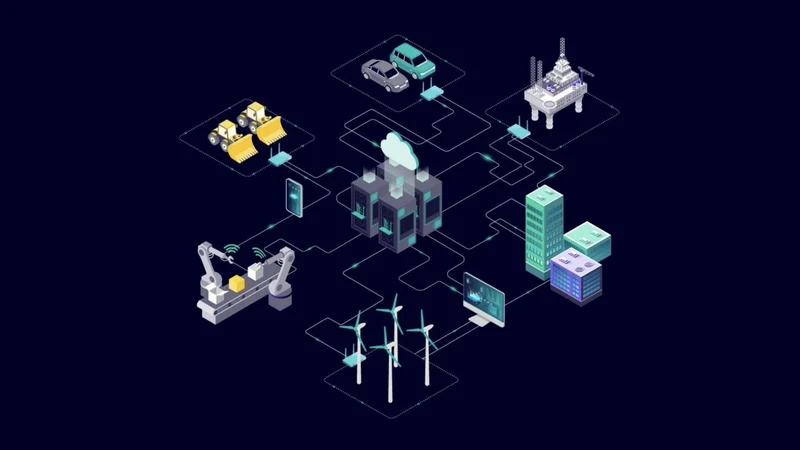
Introduction
The Cost of Moving Too Slowly
Industrial product development is becoming more complex while competitive pressure continues to shorten expected development timelines. Modern products often combine mechanical systems, electronics, software, controls, thermal behavior, and other engineering disciplines. Siemens describes AI-powered engineering as increasingly relevant across these different stages and disciplines of product development. [1]
Many traditional original equipment manufacturers, or OEMs, may still work through development cycles that span several years, particularly for complex industrial products. The sources used here do not provide a universal numerical comparison between established OEMs and faster competitors, so a specific time difference cannot be stated reliably. However, the underlying competitive issue remains important. Companies that can evaluate engineering changes and move through development iterations more efficiently may be able to respond more quickly to changing requirements and market conditions.
The challenge is not simply making individual engineering tasks faster. Product development is interconnected. A change in requirements, design, materials, or components can affect bills of materials (BOMs), validation plans, sourcing decisions, manufacturing processes, and downstream activities.
This means that automating a single engineering task can only address part of the problem. A broader competitive advantage can come from automating the connections among lifecycle activities, enabling the organization to respond to engineering changes with greater speed and consistency.

Why Engineering Cannot Be Automated One Task at a Time
An Interconnected Product Lifecycle
Engineering work spans requirements, design, simulation, validation, manufacturing, production, deployment, and operation. These activities are related rather than independent.
Requirements influence design. Design decisions affect simulation and validation. Component selections affect the BOM, sourcing, and manufacturing. Production and operational information may later influence future engineering decisions.
ISO/IEC/IEEE 15288:2023 reflects this interconnected view by defining processes across the system lifecycle rather than treating engineering activities as separate tasks. [2] The standard provides a lifecycle framework that can be applied across different types of systems and development approaches.
ISO/IEC/IEEE 29148:2018 similarly places requirements engineering within broader system and software lifecycle processes. [3] Requirements are therefore not simply documents created at the beginning of development. They remain connected to decisions made across other parts of the lifecycle.
Manual handoffs between teams and software systems can make those relationships difficult to manage. When information is stored in separate systems, teams may need to manually identify changes, determine which records are affected, and communicate the consequences before downstream work can continue.
NIST research on digital-thread architectures identifies a similar problem. It describes the need to integrate heterogeneous manufacturing and product-lifecycle systems so that information can move more effectively across them. [4]
Lifecycle-wide automation therefore requires more than tools that complete individual tasks. AI must also operate with information about the relationships between engineering objects, processes, and systems.
Where Isolated AI Falls Short
General-purpose AI can assist with individual activities. It can summarize technical documents, generate content, extract information, organize data, and support specific engineering tasks.
However, these abilities do not automatically give an AI system an understanding of engineering dependencies.
For example, a large language model may accurately interpret a written requirement. That does not mean it inherently knows which component implements the requirement, where that component appears in the BOM, which validation activity tests it, or which manufacturing process depends on it.
This illustrates an important distinction. Large language models can process natural language, but engineering automation requires context.
The AI must understand how requirements, components, assemblies, BOM entries, manufacturing processes, validation activities, and other engineering information relate to each other. Without those relationships, AI may improve isolated activities while leaving the larger coordination problem unchanged.
Follow One Engineering Change Through the Lifecycle
A Small Change with Large Consequences
Consider a simple example. An engineer changes a product requirement or replaces a component during development. The immediate modification may appear limited, but its effects can extend across several lifecycle activities.
The design may require revision. The BOM may need to reflect a new component or material. Technical requirements and simulation assumptions may have to be reviewed. Validation plans may need to change if the modification affects expected performance or test conditions.
Procurement may also need to respond if the change affects supplier availability, cost, sourcing, or specifications. Production teams may need to review assembly instructions, manufacturing processes, tooling, or other related information.
When lifecycle information is fragmented, each team may have to discover these consequences on its own.
This means the delay does not come only from performing the engineering work itself. Time is also spent discovering what needs to change, finding relevant information, interpreting the consequences, and coordinating the response.
NIST's work on digital twins supported by digital threads emphasizes the importance of connecting information across lifecycle stages rather than keeping product information in separate implementations or silos. [5]
From Manual Handoffs to Connected Automation
Connected lifecycle automation can change how an organization responds to such engineering changes.
If AI operates with engineering context, it can help identify dependencies and determine which downstream information may be affected. A workflow could identify related requirements, BOM elements, validation records, manufacturing information, or other lifecycle objects that require attention.
Agentic workflows can extend this process by supporting the propagation of engineering changes across connected systems. For example, a change could trigger checks against related requirements, BOM entries, and manufacturing processes before proposed actions are routed to the appropriate engineers.
This does not mean that AI should make consequential engineering decisions without oversight.
Human engineers remain responsible for reviewing, validating, and approving critical decisions. The purpose of connected automation is to improve coordination and reduce unnecessary manual handoffs, not to remove engineering judgment.
Siemens Intelligence Center X reflects this broader approach by connecting enterprise data, lifecycle context, workflows, people, and AI agents within a governed environment. [6]
Context Is the Missing Layer
Giving AI an Understanding of Engineering Relationships
Effective lifecycle automation requires more than giving an AI system additional documents. The AI needs information that explains relationships.
A requirement may connect to a particular function. That function may be implemented by a component or assembly. The component may appear in a BOM, depend on a manufacturing process, require validation activities, and generate operational data later in the lifecycle.
This is why engineering context is different from simply having more data.
Digital-thread research focuses on maintaining information connections across lifecycle stages so that product information can be accessed and reused. NIST notes that integrating lifecycle information can be difficult because systems, standards, and technologies are often heterogeneous. [5]
Knowledge graphs and ontology-based methods can help represent these relationships in a structured way. NIST research on graph-based digital threads demonstrates how information can be linked and traced across design, manufacturing, and quality domains. [7]
The important distinction is therefore not simply data volume. It is whether the data carries enough context to show how engineering information is connected.
This principle also aligns with Siemens Intelligence Center X, which combines enterprise information with industrial ontologies and knowledge-graph capabilities to provide context for AI-supported workflows. [6]
From AI Assistance to Agentic Workflows
AI That Can Help Move Work Forward
Traditional AI assistance usually provides information, recommendations, generated content, or analysis. Agentic workflows extend this capability by helping coordinate multi-step work across connected systems.
An engineering change could, for example, trigger the identification of affected requirements, BOM elements, manufacturing information, and validation records. The system could then prepare proposed actions and route them to the appropriate engineers or teams for review.
The difference is that AI is no longer limited to providing an isolated insight. It can participate in a governed workflow that helps move work forward.
Governance and traceability become important because engineering actions can have consequences across the product lifecycle. Organizations need visibility into what information was used, which actions were proposed, what records were affected, and who approved important decisions.
Siemens positions Intelligence Center X around this shift from AI-generated insights to govern enterprise action, while maintaining human participation and control within the workflow. [6]
 Product lifecycle icons. Source: AdobeStock.
Why Lifecycle Automation Becomes a Competitive Advantage
Speed, Quality and Consistency Move Together
Faster product development is valuable only when greater speed does not create additional errors, conflicting information, or rework.
Connected automation can help teams evaluate engineering changes earlier. When requirements, design information, BOMs, validation data, and manufacturing records are connected, teams can identify potential downstream consequences before those issues reach later development stages.
Greater lifecycle consistency can also reduce the risk of different teams working from conflicting engineering information.
NIST's digital-thread research supports the importance of interoperability, information reuse, and connections between lifecycle systems. [4, 5] Siemens similarly describes AI-powered engineering as extending across requirements, design, simulation, verification, manufacturing, and in-service operations.[1]
The potential business outcomes can be summarized in five areas:
Faster time to market through quicker coordination and iteration;
Stronger cost competitiveness through reduced unnecessary manual work and rework;
Better quality through earlier evaluation of engineering changes;
Greater consistency across lifecycle information;
Faster iteration as teams understand downstream consequences earlier.
These outcomes should be viewed as potential benefits rather than guaranteed results for every organization.
The Shift from Faster Tasks to a Faster Organization
Automating one engineering task can create a local productivity improvement.
Automating connected lifecycle processes can affect how quickly an entire organization responds to engineering changes.
If connected engineering information allows teams to understand downstream consequences earlier, problems may be identified before changes reach manufacturing or production. Procurement, validation, manufacturing, and other groups can respond while the change is still being evaluated.
Digital-thread approaches are intended to maintain information connections across lifecycle systems and improve the reuse and interoperability of product information.[4, 5] Graph-based approaches can also help link and trace information across multiple engineering domains.[7]
Over repeated development cycles, faster coordination and more consistent execution can become a durable organizational capability.
The advantage is therefore not simply that one engineer completes a task faster. It is that the organization can understand a change, identify its consequences, coordinate a response, and move to the next engineering iteration with less friction.
Automate the Lifecycle, Not Just the Task
Industrial companies may gain limited value from AI if it remains confined to isolated engineering activities.
Product development depends on interconnected decisions spanning requirements, design, simulation, validation, manufacturing, production, deployment, and operation. A decision made in one area can affect several others.
AI becomes more useful when it operates with context that shows how those engineering relationships connect. Digital threads can help maintain information continuity across lifecycle systems, while knowledge graphs and related methods can support the linking and tracing of engineering information.[4, 5, 7]
Siemens provides one example of this direction through AI-powered engineering across product-development stages and through Intelligence Center X, which connects enterprise information, workflows, lifecycle context, people, and AI agents within a governed environment.[1, 6]
The broader competitive argument is not about making one isolated task faster. It is about helping the entire engineering lifecycle respond faster and more consistently.
Companies that can connect engineering information, identify dependencies earlier, coordinate changes more effectively, and maintain human oversight may be better positioned to improve time-to-market, quality, cost competitiveness, consistency, and iteration speed.
The competitive advantage therefore comes from automating the lifecycle, not merely the task.
References
Siemens AI-Powered Engineering
https://www.siemens.com/en-us/digital-thread/product-development/ai-powered-engineering/ISO/IEC/IEEE 15288:2023 — Systems and Software Engineering: System Life Cycle Processes
https://www.iso.org/standard/81702.htmlISO/IEC/IEEE 29148:2018 — Life Cycle Processes: Requirements Engineering
https://www.iso.org/standard/72089.htmlNIST Reference Architecture to Integrate Heterogeneous Manufacturing Systems for the Digital Thread
https://www.nist.gov/publications/reference-architecture-integrate-heterogeneous-manufacturing-systems-digital-threadNIST A Methodology for Digital Twins of Product Lifecycle Supported by Digital Thread
https://www.nist.gov/publications/methodology-digital-twins-product-lifecycle-supported-digital-threadSiemens Intelligence Center X
https://news.siemens.com/en-us/siemens-intelligence-center-x/NIST Using Graphs to Link Data Across the Product Lifecycle for Enabling Smart Manufacturing Digital Threads
https://www.nist.gov/publications/using-graphs-link-data-across-product-lifecycle-enabling-smart-manufacturing-digital