The Circle Scales Commercial Aquaponics with Custom Industrial Control Architecture
How the largest aquaponic facility in Europe built a flexible, real-time monitoring system, achieving 70% cost savings while maintaining precision control over thousands of interconnected variables – with Arduino.

10 Apr, 2026. 4 minutes read
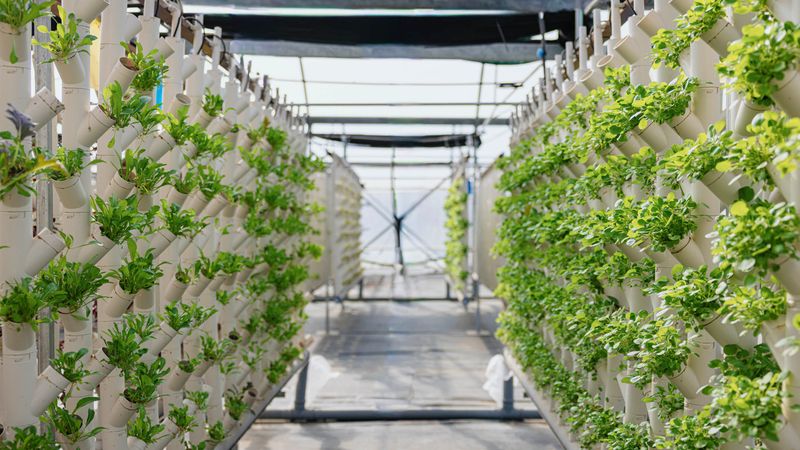
The Arduino Opta microPLC was at the core of a custom industrial solution that balanced full control with cost-effectiveness.
Managing Delicate Ecosystems at Commercial Scale
Aquaponics – the integrated cultivation of fish and plants in recirculating systems – demands extreme precision. Water quality, temperature, humidity, and flow rates must remain within tight tolerances for fish, biofilters, and plants to coexist successfully. When scaling from experimental setups to commercial operations, these requirements become exponentially more complex.
The Circle operates one of Europe’s most advanced commercial aquaponic facilities: a 12,500-sqm greenhouse near Rome with over 150,000 plants grown in vertical NFT (nutrient film technique) systems. The company supplies more than 200 restaurants and hotels, making consistency and reliability non-negotiable. Even minor deviations in environmental parameters can quickly cascade into yield losses, quality issues, and supply disruptions.
The company faced a critical decision: rely on manual monitoring (labor-intensive and prone to human error), adopt traditional industrial control systems (expensive, rigid, and difficult to customize), or build something purpose-fit for their unique requirements.
Manual monitoring wasn’t viable at commercial scale. Traditional PLCs and SCADA systems offered industrial reliability but came with significant drawbacks: high upfront costs, vendor lock-in, inflexibility when processes needed adjustment, and dependence on external integrators for any modifications.
The Circle needed a control architecture that could manage thousands of interconnected variables in real time, adapt quickly as processes evolved, and scale economically as the business grew – all while maintaining zero chemical inputs and minimal water use.
Building a Custom Solution with Open Industrial Hardware
The Circle’s technical team decided to design their own monitoring and actuation system using open-source industrial hardware. This approach gave them complete control over the architecture, eliminated dependency on proprietary systems, and allowed rapid iteration from prototyping to field deployment.
At the core of their system is the Arduino Opta microPLC – an industrial control platform that combines the reliability of traditional PLCs with the flexibility of open development tools. The team selected Opta for several key reasons: it provided industrial-grade I/O and connectivity while remaining fully programmable and customizable; it supported modular deployment across their distributed systems; and it enabled them to build devices tailored specifically to aquaponic processes rather than forcing their operations to conform to generic controllers.
Opta now handles real-time monitoring and control across The Circle’s facility: water quality sensors (pH, dissolved oxygen, electrical conductivity), climate parameters (temperature, humidity, CO₂), pump and valve actuation for recirculation and distribution, lighting schedules optimized for plant growth, and flow rate management to maintain nutrient delivery.
The modular architecture allows The Circle to deploy control nodes where needed throughout the facility, with each unit managing specific zones or processes while communicating with the central monitoring system. This distributed approach provides both resilience – localized failures don’t cascade – and scalability, as new sections can be added without redesigning the entire control infrastructure.
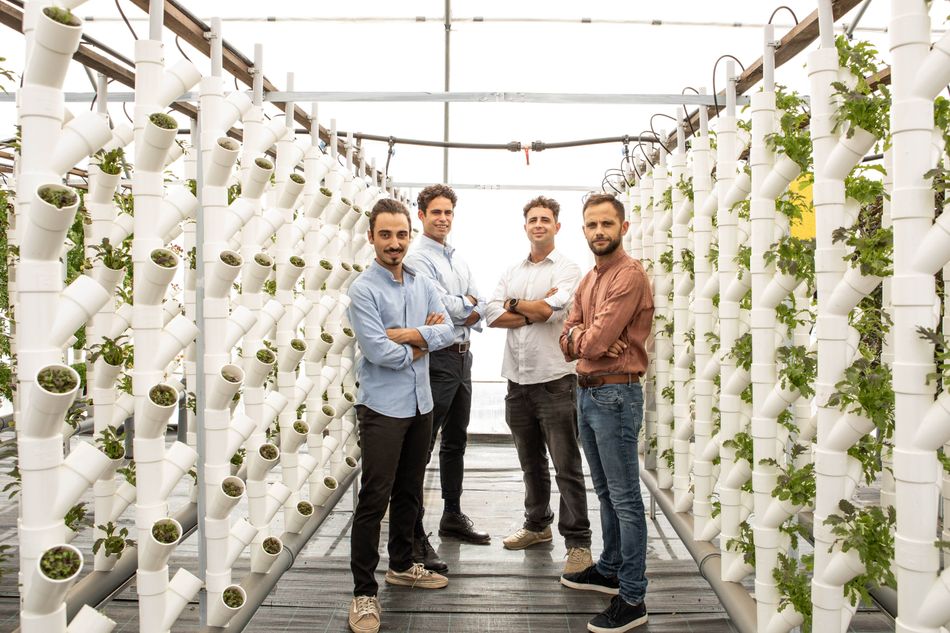
According to Simone Cofini, CTO & Co-Founder of The Circle: “Without the flexibility and openness that Arduino offers, we simply would not have been able to create a control architecture so closely tailored to our processes. From a cost perspective, moving from proprietary, ready‑made controllers to our own Arduino based devices has led to an estimated cost reduction of more than 70%, while at the same time giving us much finer control over how the system behaves.”
Real-Time Control Meets Economic Viability
The technical and economic benefits of this approach are substantial. The Circle achieved industrial reliability without industrial prices – a 70% cost reduction compared to traditional control solutions. The open architecture eliminated vendor lock-in, giving the team freedom to modify, extend, and maintain the system internally without relying on external integrators.
Perhaps most importantly, the system provided the precision control necessary for commercial aquaponics. The ability to monitor parameters in real time and respond instantly to deviations means The Circle can maintain the delicate balance required for fish health, biofilter efficiency, and optimal plant growth – all while operating at a scale that would be impossible with manual oversight.
The flexibility to iterate quickly during development was equally valuable. As The Circle refined their processes and learned from operational data, they could adjust control logic, add new sensors, or reconfigure monitoring priorities without waiting for vendor approval or paying for custom programming.
Scaling with Confidence
With a proven control architecture in place, The Circle is now positioned to scale both domestically and internationally. The company plans to maintain this technology stack as a core component of all future expansions, confident that the system can grow alongside new production lines and business opportunities.
The solution demonstrates that industrial automation doesn’t require choosing between control and cost, or between flexibility and reliability. By building on open industrial platforms, companies can achieve all three – creating systems that are robust enough for commercial deployment, adaptable enough to evolve with changing processes, and economical enough to support sustainable business growth.
For The Circle, this approach has enabled their “from zero impact to positive impact” agricultural model to scale sustainably, with technology that supports rather than constrains their vision for the future of food production.
Curious to find out more? Read the full case study on the Arduino website.
Arduino and Opta are trademarks or registered trademarks of Arduino S.r.l.