Transforming Sensing with Photonic Integrated Circuits
How can photonic integrated circuits push the limits of sensing systems? Join PhotonDelta's Global Photonics Engineering Contest and develop sensing technologies of the future.

30 Apr, 2026. 6 minutes read
Sensing technologies have made their way to every household and industry today. As consumer and industrial technologies evolve, they put forward new requirements that may not always be met by existing sensors available in the market.
In many such cases, photonic integrated circuits (PICs) offer unique capabilities, such as small size, fast response, better sensitivity, and low power consumption that can be used to convert environmental signals into the optical domain more efficiently, making them the key to enabling the next generation of sensing technologies.
As silicon-based photonic platforms are adopted by large players such as TSMC (Compact Universal Photonic Engine, COUPE), PIC-based sensing technologies can align with emerging standards and become both technologically and economically viable for large-scale deployment.
PhotonDelta is inviting engineers to join their Global Photonics Engineering Contest to create PIC-based solutions that can contribute to reshaping the sensing sector and beyond. To this end, we examine the technological modalities enabled by PICs and how these can help grow different sectors in which sensing plays an essential role.
PIC-Enabled Sensing Technologies
One of the emerging applications of PICs is the readout of Fiber Bragg Gratings (FBGs) and distributed acoustic sensing (DAS), providing fiber-optic sensing systems for human-centric monitoring.
FBGs allow a variation in the normal refractive index of a fiber core over a particular length of the fiber. Specific wavelengths of light propagating in the fiber and interacting with the FBG can be reflected back towards the source or be transmitted, with the FBGs acting as a spectral filter. Because of FBGs’ high temperature sensitivity, the transmitted light will depend on the environment’s temperature, making fiber optic sensors ideal for temperature monitoring. This can happen in one or across several locations, as FBG devices can be interconnected to each other with hundreds of accurate measurements being performed and multiplexed on one single line.
Similar to FBGs, DAS relies on microscopic variations in the fiber’s material to detect any abnormalities along the fiber’s length. Any strain on the fiber will cause propagated light to reflect back, reaching the original sensor, where it can be collected and analyzed. This system is sensitive enough to detect even the smallest of vibrations, which can cause backscattering inside the fiber. This makes DAS suitable for real-time monitoring tasks like pipeline leaks, railway safety, seismic activity, and more.
Applications in Healthcare
One of the healthcare applications is endoscopy. With fiber-based systems, the tiniest of endoscopes can be developed to reach parts of the body that are otherwise impractical. This can help assess situations during surgeries, providing immediate feedback to the surgeons. Robotic surgery can prosper with the implementation of PIC technology, as active loops are used to provide haptic feedback to devices.
With PIC systems, the necessary sensitivity levels are achieved, and the detection of optical signatures can be analyzed with the help of machine learning (ML) models to construct exoskeletons. They can greatly improve the quality of life for people living with chronic diseases. Apart from robotic arms, exoskeletons and fully humanoid robots can be built since these sensors can detect positions and strains and also mimic skin-like properties such as temperature and pressure.
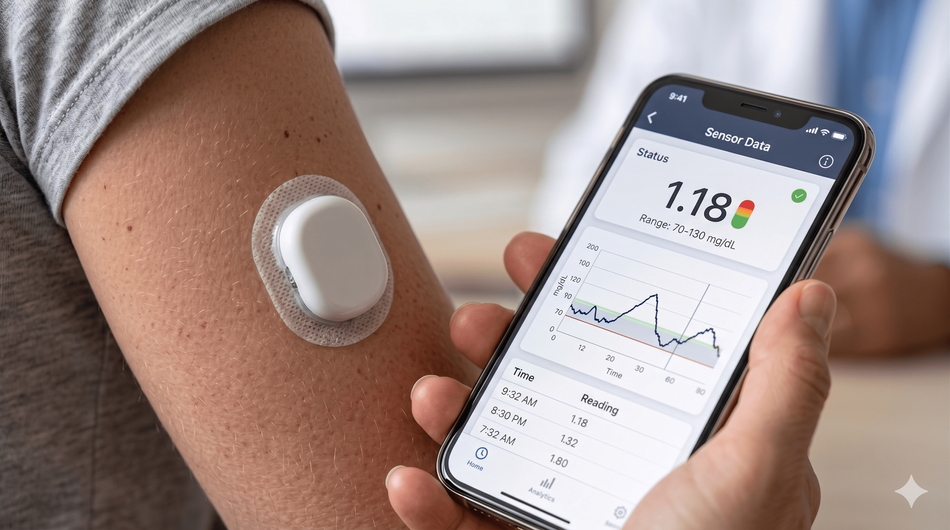
Another healthcare application where PICs can be beneficial is non-invasive health monitoring with spectroscopy. Spectroscopy measurements can be performed under the skin with the help of PIC sensors to monitor glucose levels for people living with diabetes.
Apart from spectrometers, PICs with micro ring resonators can be implemented to perform label-free immunoassays for glucose or other molecules. Optical ring resonators have the ability, depending on their physical parameters, to allow the transmission of specific frequencies of input light. These frequencies are used at the output of the sensor where analysis is performed. Any interaction with external matter will cause a change in the refractive index of the ring resonator and will result in the change of allowed frequencies, changing the detected signal at the output of the sensor.
This helps in identifying the structural components of the interacting matter by determining which molecules are present. These sensors are exceptionally diverse, and with the addition of a specific bioreceptive layer, they can be adjusted to have different selectivity rules, giving us the ability to perform different tests. It is a technique that can enable the identification of different conditions and can directly alert the user of the device.
PIC technology can be used to produce sensors small enough to be implemented in wearable devices. They could be used to monitor respiration rate, heart sound, and joint movement. All of this becomes possible by analyzing the pulse wavefront that the photonic systems send to interact with the wearer before it is retrieved. These technologies are ideal for home implementation, as monitoring can happen across dozens of sensing points while still preserving the patient’s privacy, as detection doesn’t need any cameras. These devices can offer proactive care instead of reactive, as heart failure can be treated before it happens.
Applications in Agrifood and Environmental Monitoring
Just like the medical sector, the AgriFood sector could also greatly benefit from the implementation of fiber-optic PIC technologies, bringing in a new era of sustainability and precision.
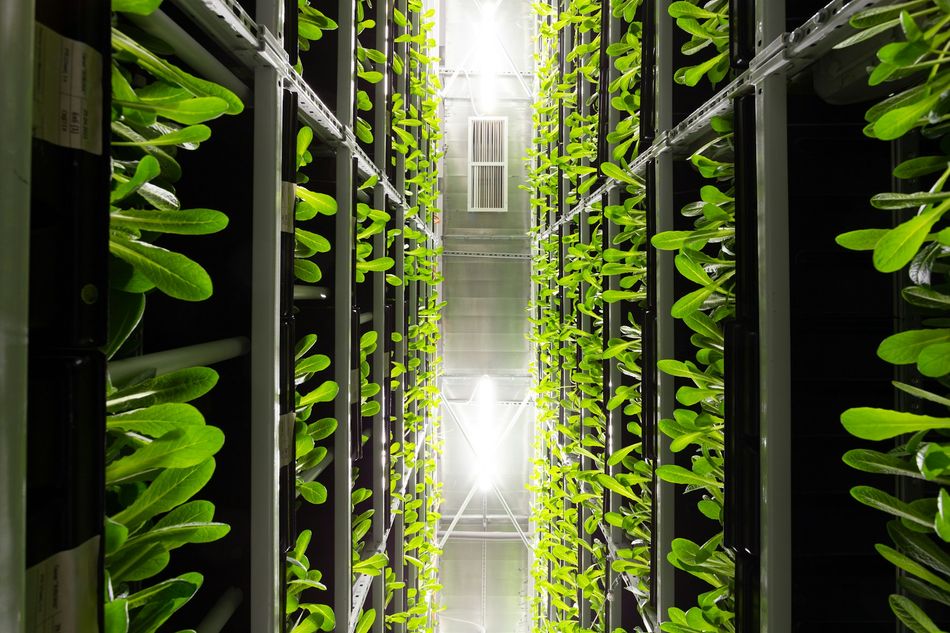
PICs make the construction of large sensory networks possible that can be used to monitor soil moisture, water leaks, and temperature fluctuations. This setup can be implemented to ensure the health of whole biotopes and even monitor wildlife from remote locations.
Suggested reading: Integrated Photonics for AgriFood: A Roadmap for Sustainable Transformation
The agriculture sector will significantly benefit in the future with the integration of PIC sensors in farms to monitor the growth and quality of produced food. Streams of data can reach the farmers, and real-time decisions can be made, with irrigation and soil nutrient levels being adjusted as needed. This creates sustainable farming solutions, owing to the sensors’ high sensitivity and fast response, that allow for prevention of wasted resources.
Fibers, with their ability to expand to hundreds of kilometers, are used to study large expansions of land in a single platform. In contrast to other agricultural farming practices, PICs reduce cost and power consumption, further encouraging sustainability.
Engineering Challenges Yet to Be Solved
While PIC-based systems have been integrated within a number of sectors, there are still challenges that need to be addressed to ensure wider adoption. Looking to address those challenges, PhotonDelta has launched the Global Photonics Engineering Contest. Some of the most prominent challenges include:
Yield and manufacturability
For single-time-use sensors, the yield is critical because sensor should be cheap and close to 100% accurate, and these two are correlated to yield. A single-use PIC cartridge should be attached to the readout system with extreme accuracy to maintain the signal integrity. Accurate yield prediction and demonstration are some of the key challenges when designing a PIC with many components.
Bioreceptor at volumes
Functionalization of the surface needs to be highly sensitive and selective to a particular component, which is a chemical challenge itself. Another challenge is how to make the top sensor layer be extremely sensitive to many components at the same time.
Standard interfaces
Not an engineering challenge, however, adhering to existing high-volume manufacturing standards, such as packaging and automated testing interfaces, is extremely important in order to put the PIC in the package and drive it.
Sensitivity and SNR
Another key challenge is the sensitivity and resolution of PIC-based sensors, which need to increase to fulfill industry standards. By exploring the advances in material science, novel architectures can be developed with enhanced performance.
Similarly, DAS can suffer from the signal-to-noise ratio, hindering our ability to interpret data. To account for this, denoising techniques like deconvolution or filtering need to be developed. These techniques should be adaptable, since different sources of noise will require different methods to be effectively eliminated.
Packaging and system-level engineering
Another prominent bottleneck is packaging. The packaging of these sensors should be carefully considered and designed to complement the sensors without limiting their uses. For example, for FBGs used in farmland monitoring, the packaging should be suitable to protect the fiber and sensor from erosion and ground settlement. Packaging shouldn’t be overdesigned either, as overprotection can reduce the sensor’s performance.
Application manufacturers today need to ensure that their devices are stable and environmental effects do not hinder their performance. System-level engineering needs to address noise and the mechanical shock that could affect the performance of the system. For example, in FBGs, we need to be able to distinguish if any observed wavelength is purely due to temperature variations or caused by force vibrations.
Why this Matters for the PIC Industry
When building PIC sensing technologies for the industrial, medical, and AgriFood sectors, the PIC industry will be faced with immediate and tangible impact. Patient outcomes and new agricultural practices will be able to provide instant feedback to the engineers and a clear direction from the needs of these markets.
For these sectors, integration is the key, and portable technologies that are manufactured at scale are essential. They should be able to access industrial sites, homes, fields, and hospitals, giving PIC engineers the opportunity to design systems that are diverse and could be implemented in different settings. This provides an opportunity for PIC systems to grow from niche designs into diverse applications that play a massive role in people's lives.
Is your company or team working on the next innovation in sensing technologies enabled by photonics? Submit your application for the Global Photonics Engineering Contest today.