The Future of Surgery Is Robotic, Compact, and Precise
The future of modern healthcare utilizes surgical robots to provide precision beyond human capability. These motion systems demand accuracy, control, and minimal tissue disruption.

04 Aug, 2026. 8 minutes read
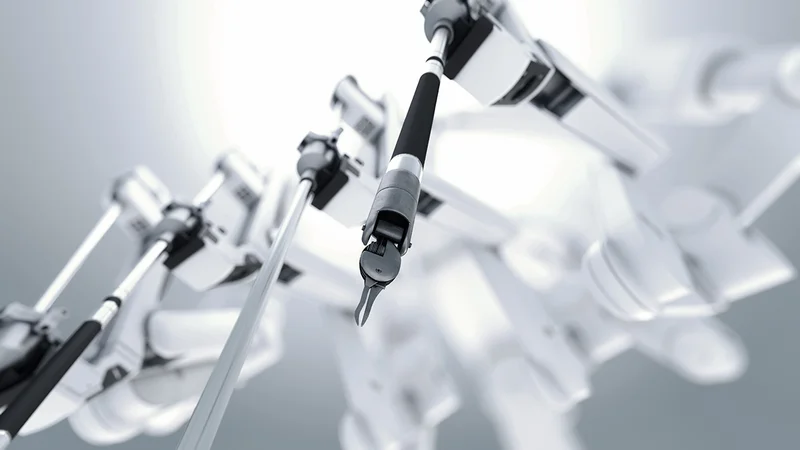
Robotic-assisted surgery is becoming an important part of modern healthcare because it supports procedures that demand accuracy, control, and minimal tissue disruption. In many cases, the value of a surgical robot lies not only in what the surgeon sees on a screen but also in how precisely the system translates human input into physical movement.
This is why motion systems matter. Motors, gearheads, encoders, controllers, and software determine how a robotic instrument moves, how smoothly it responds, how much space it needs, how much heat it produces, and how reliably it performs during a procedure.
The engineering challenge is difficult. Surgical systems must deliver precise, repeatable motion inside compact, safety-critical environments. They must also meet medical requirements for sterilization, reliability, low vibration and heat, and long-term performance.
The future of surgery is therefore not just robotic. It is robotic, compact, precise, and dependable.
Why Surgical Robotics Places Unique Demands on Motion Systems
Precision Beyond Human Capability
Surgical robotics depends on the ability to translate a surgeon’s input into controlled movement at the instrument tip. In laparoscopic robotic procedures, instruments may be inserted through small openings and moved inside the body with greater flexibility than would be possible by hand. [1]
This level of motion control is especially important near nerves, blood vessels, and sensitive tissue. The system must reduce unintended motion, limit tremor, and support fine movement in confined anatomical spaces.
Smooth movement is central to this performance. The medical reference notes that surgical robotic systems may use several dozen DC motors to transmit and execute surgeon movements, and that motors without cogging torque are well-suited because they support smoother motion. [1]
Working Within Extremely Limited Space
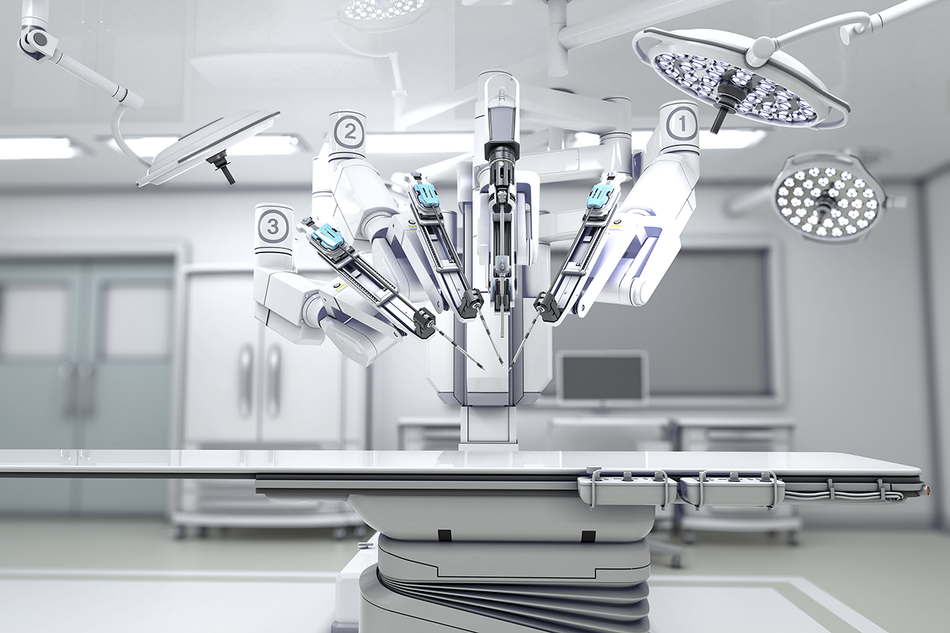
Surgical robots cannot gain performance simply by becoming larger. Robotic arms, joints, instruments, and end effectors must fit within tight mechanical limits while still delivering torque, accuracy, feedback, and safe control.
This creates a constant trade-off between size and performance. A compact actuator must still provide the motion quality needed for delicate procedures. The robotics reference also notes that robotic drives require high precision, safe motion sequences, high speed, high power density, and OEM-ready integration.[2]
In surgical systems, those needs are intensified by the clinical setting. Compactness is valuable only when it does not weaken reliability, control, or safety.
Reliability When Failure Is Not an Option
Reliability is not a performance bonus in surgery. It is a basic design requirement.
A surgical system must perform consistently throughout a procedure. Unexpected motion, actuator failure, excessive heat, or loss of control can affect the entire robotic platform. In robotics more broadly, actuator robustness is a central issue because a single failed actuator can stop the entire robot. [3]
This is especially important in surgical robotics. The system must be designed for predictable performance, not just successful demonstration. The standard is not whether the robot can move once. The standard is whether it can move safely, accurately, and repeatedly under real operating conditions.
The Engineering Challenges Behind Robotic Surgery
Balancing Precision, Torque, and Responsiveness
A surgical motion system must balance several needs simultaneously. It needs positioning accuracy, enough torque to move or hold instruments, and a fast response to the surgeon's input. It also needs smooth behaviour, so speed does not come at the cost of control.
These requirements are connected. More torque can increase size, weight, heat, and power demand. A faster response can affect controllability. Higher precision may require better feedback, tighter mechanical design, and more careful integration.
This is why actuator decisions should not be made late in development. Motion-system choices influence packaging, thermal management, structural dynamics, power distribution, and control behaviour. [3] When those choices are delayed, redesign becomes harder because the rest of the system may already be fixed.
For surgical robotics, motion-system planning should begin at the architecture stage. Engineers need to define gearing, communication, power supply, thermal management, peak performance, and continuous performance before selecting individual components. [3]
Managing Heat, Noise, and Vibration
Heat, noise, and vibration are not minor issues in surgical systems. They affect usability, control, comfort, and long-term performance.
Surgical shavers used in minimally invasive knee and shoulder procedures offer a useful example. These tools may encounter saline solution, so their drives need corrosion resistance and sealing. Warmth and vibration also need to be minimized to keep the tool comfortable for the surgeon to hold. [1]
Dental implant devices show similar design pressure. They need to be light and quiet while delivering high torque at low speed. Low noise, low vibration, and minimal heat build-up are important because the device is used close to the patient and directly handled by the clinician. [1]
In robotic surgery, these same issues affect instrument steadiness and overall system behaviour. Vibration can reduce procedural accuracy. Heat can limit compact packaging. Noise can affect the operating-room environment. These problems are difficult to fix late in the design process, so they need to be addressed early.
Sterilizability and Medical Compliance Requirements
Surgical robotics must meet requirements that many other robotic systems do not face. Depending on the application, medical drives may need high speed, high dynamics, torque, sterilizability, or even implantability. [1]
Sterilization is one of the clearest examples. Some medical drives are tested in autoclaves as part of product qualification, with testing including 2,000 sterilization cycles. Steam sterilization conditions can involve high temperature, pressure resistance, and 100 percent relative humidity. [1]
These requirements affect materials, sealing, corrosion resistance, electronics protection, lubrication, and long-term reliability. A compact motor or actuator cannot be considered suitable for surgery just because it is small and powerful. It has to survive the clinical environment.
This is why medical motion-system design is more than component selection. It is a full system problem involving mechanics, electronics, software, safety, and compliance.
Compact Motion Systems as a Surgical Enabler
The Shift Toward Smaller Robotic Platforms
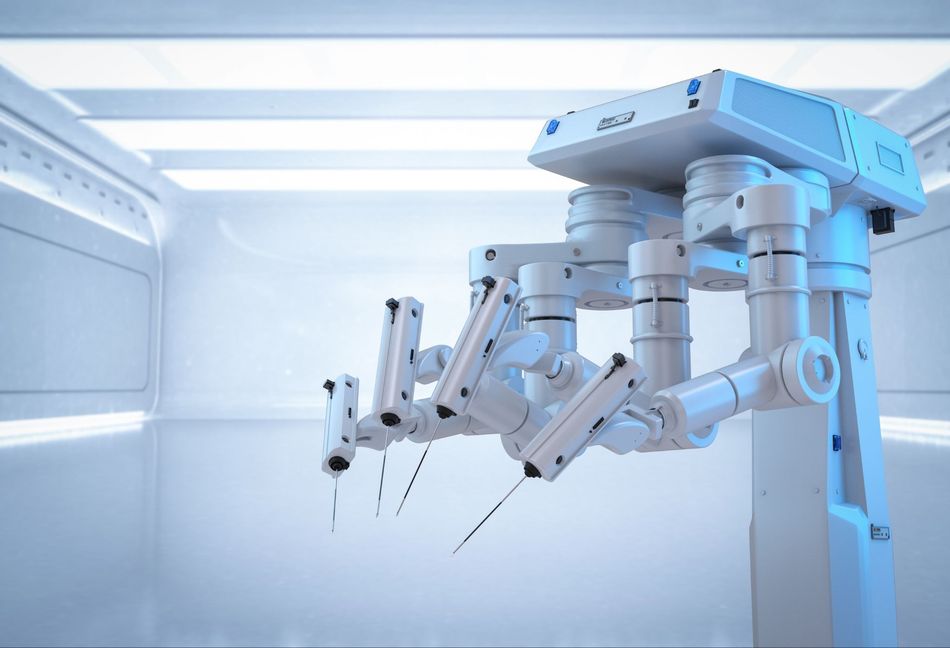
Surgical robotics is moving toward smaller and more flexible platforms. Smaller robotic instruments and actuation systems can improve access during minimally invasive procedures and help robotic systems fit more naturally into operating rooms.
This shift increases pressure on the motion system. A smaller robotic joint still needs precise positioning, smooth response, reliable feedback, and safe motion behavior. Compactness cannot come at the cost of stability.
Robotics applications, more broadly, require drives with strong control characteristics, high efficiency, high torque density, dynamic response, and low system losses. [2] In surgery, those needs must be combined with medical requirements such as sterilization resistance, low vibration, quiet operation, and predictable performance.
High Performance in Small Packages
High power density is essential in compact surgical systems. Medical drives may need to deliver high torque, high speed, smooth running, and long service life within a small footprint. [1]
This is important because surgical devices often operate in tight spaces. A compact actuator must do more than fit mechanically. It must also support precise control, manage heat, and provide sufficient feedback to the wider robotic system.
The complete actuator package matters more than the motor alone. A usable motion system may include the motor, gearhead, encoder, controller, firmware, cabling, and communication interface. If these elements are not designed to work together, a compact motor can still lead to a bulky or difficult-to-integrate system.
System-Level Integration
System-level integration becomes more important as surgical robots become more complex. A robotic platform may contain many axes of motion, each requiring feedback, control, thermal management, and safe operation.
Medical drive systems may combine motors, gearheads, encoders, brakes, and controllers to meet specific requirements. [1] Broader robotic drive systems also comprise numerous interconnected subsystems, including electronics, motors, gears, encoders, seals, and lubrication. [2]
This means integration affects more than development speed. It affects reliability, packaging, motion quality, safety validation, and long-term serviceability.
When motion systems are treated as isolated components, complexity increases. When they are designed as part of the full robotic architecture, the system is more likely to perform predictably in real use.
Designing Surgical Robots for Real-World Performance
Motion-System Design Starts Early
A successful prototype is not the same as a clinical-ready surgical robot. A prototype may show that an instrument can move. A real surgical platform must show that it can move accurately, safely, repeatedly, and reliably during actual use.
This is why motion-system design should start early. Actuator choices affect packaging, thermal layout, power distribution, mechanical structure, communication, and control behavior. [3] If these decisions are postponed, the final design may require costly changes.
Early design work should answer practical questions before parts are selected. What torque and speed are required? What are the thermal limits? How much space is available? What communication structure will be used? How will the system behave if something goes wrong?
These questions are not separate from surgical performance. They shape it.
Simulation and Early Validation
Simulation can help reduce integration risk before hardware is finalized. It allows teams to test assumptions about torque, speed, heat, packaging, energy use, and control behaviour before physical design changes become expensive.
Accurate actuator models can also reduce the gap between simulated behaviour and real-world robotic performance. [3] This is valuable because the final performance of a surgical robot depends on how the full system behaves, not just whether each component meets its own specification.
Simulation does not replace physical testing, sterilization validation, or safety review. It does, however, help teams find design problems earlier and reduce unnecessary hardware iterations.
Moving Beyond the Prototype
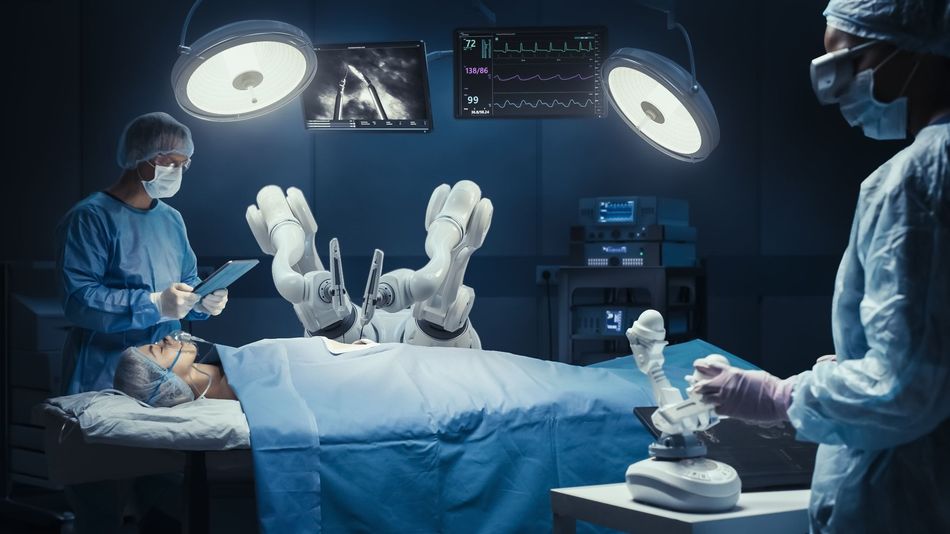
Surgical robotics must move beyond proof-of-concept performance. A real system needs repeatability, reliability, thermal resilience, controlled motion, and safe response behaviour.
Robots operating for long periods in tight spaces and under demanding duty cycles need actuator robustness, overload tolerance, thermal resilience, and protection against environmental stress. [3] These are core design requirements, not late-stage refinements.
Lessons from logistics robotics support the same broader point. Autonomous transport systems need compact, efficient, reliable drive systems that can perform positioning tasks in narrow spaces and support continuous operation to reduce downtime. [4] Surgical robotics has stricter medical and safety requirements, but the shared engineering lesson is clear: real-world robots succeed through dependable motion, not demonstration value alone.
What the Future Holds for Surgical Robotics
Increasing Miniaturization
Surgical robots are likely to continue becoming smaller and more specialized. Compact actuation systems can support smaller instruments, more flexible robotic joints, and better access within confined anatomical spaces.
This trend will increase demand for high-power-density, efficient thermal design, compact feedback systems, and precise control. Miniaturization will only be useful if reliability and safety are preserved.
The next generation of surgical robots will need motion systems that can deliver more capability in less space without increasing heat, vibration, or integration risk.
Greater Precision and Automation
Future surgical systems may provide more assistance to surgeons, but greater automation will not reduce the need for dependable motion. It will increase it.
As robotic workflows become more advanced, motion must remain predictable, measurable, and safe. Robotic drives need high precision, safe motion sequences, high dynamic response, and low system losses. [2]
In surgery, these qualities must support clinical judgment and surgeon control. The robot must move in a way that feels predictable, stable, and trustworthy.
Robotics Becoming Standard Clinical Infrastructure
Robotic surgery is moving from novelty toward regular clinical use. As adoption grows, hospitals and device manufacturers will expect platforms that are reliable, serviceable, scalable, and safe.
The wider robotics industry is also shifting from impressive demonstrations toward dependable real-world systems. [3] For surgical robotics, this means the hidden engineering layer will matter more: motors, gearheads, encoders, controllers, thermal design, sealing, firmware, communication, and safety architecture.
The most successful surgical platforms will not be judged only by software intelligence or visual sophistication. They will be judged by how safely and consistently they move in real clinical settings.
Conclusion
Surgical robotics is one of the most demanding applications for motion-system design. It requires precision, compactness, reliability, safety, sterilizability, low heat, low vibration, quiet operation, and long-term performance to work together.
The future of robotic-assisted surgery will not be shaped by software alone. It will depend on physical motion systems that can translate the surgeon's intent into controlled movement inside small, safety-critical spaces.
As surgical platforms become more compact and capable, the standard for motion-system design will continue to rise. The strongest systems will combine intelligence with dependable real-world motion.
References:
- Maxon, Precision Drive Systems: Drive Systems for Medical Technology, Reliability When It Matters Most. Sachseln, Switzerland: Maxon, 2019.
- Maxon, “Powerful robot drives: Perfect solutions for modern robotics,” maxon group. [Online]. Available: https://www.maxongroup.com/en-us/market-solutions/mobility-solutions/robotics.
- M. Maurer, Robots in the Real World: What It Takes to Build Motion Systems That Deliver.
- Maxon, “Drive systems for logistics,” maxon group. [Online]. Available: https://www.maxongroup.com/en-us/market-solutions/mobility-solutions/logistics-automation.