Powering the EV Revolution
How Connectors Shape Charging and Battery Innovation

27 Jul, 2026. 6 minutes read
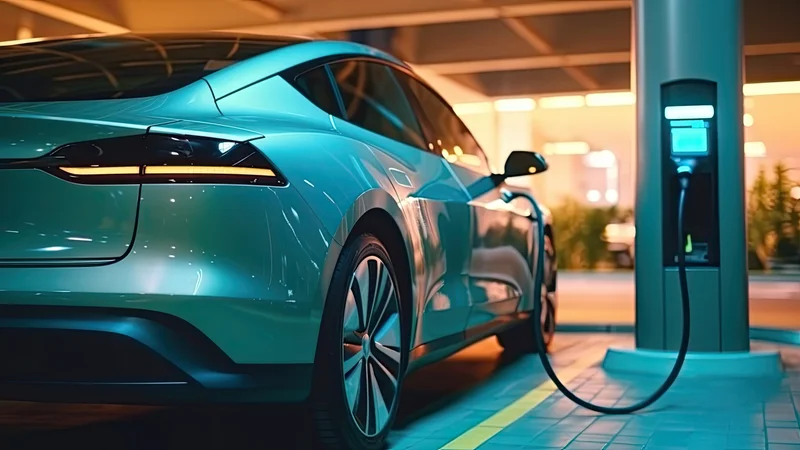
Electrification Raises New Demands on Interconnects
Electric vehicles (EVs), high-power charging infrastructure, and stationary energy storage systems are expanding in scale and complexity at an unprecedented pace. As battery capacities increase, charging speeds rise and power electronics become more sophisticated. Holding it all together, often invisibly, are the connectors.
Connector electrical resistance directly affects heat generation and efficiency in EV and charging systems. Their mechanical stability influences reliability under vibration and thermal cycling, while their insulation and creepage characteristics help determine how safely high voltages can be managed. In this way, connectors help define the operational boundaries of the overall system.
This article discusses how connector design influences EV charging and battery-system performance by exploring the electrical, mechanical, and environmental challenges involved. It also explores how Harwin approaches these challenges, drawing on experience in high-reliability sectors to support electrification efforts.
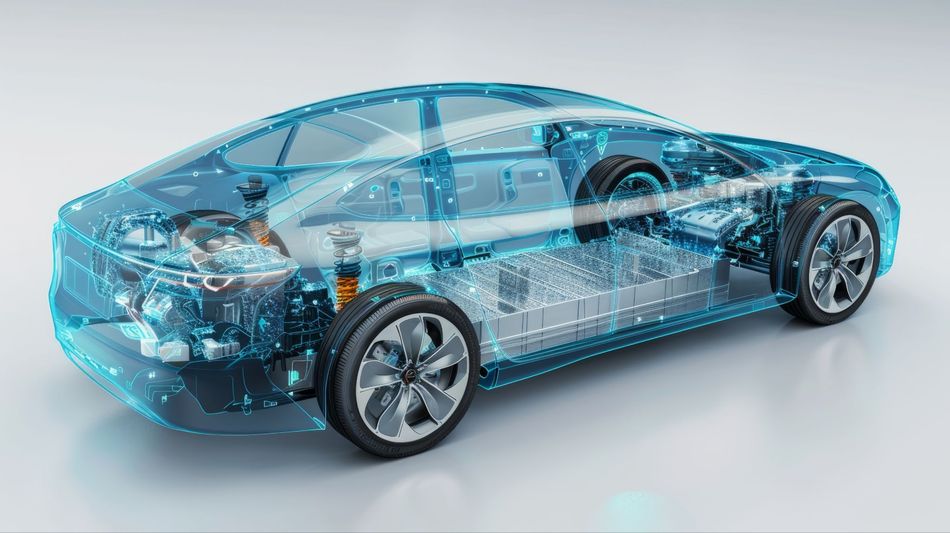 Internal system view of EV. Source: AdobeStock
Power Flow in EV Systems: Where Connectors Come into Play
An EV’s power architecture is built around multiple subsystems, each linked by dedicated interconnects. Connectors join cells into modules and modules into higher-voltage assemblies within the battery pack, where they must support high current while maintaining low resistance and consistent performance across the pack.
In the battery management system (BMS), signal connectors carry voltage, temperature, and current-sensing data from individual cells or modules to the BMS controller. The quality of these connections affects the accuracy of state-of-charge calculations and thermal management strategies, while inconsistencies in signal quality can also influence balancing algorithms and fault detection.
Power electronics add another layer of connection complexity. Inverters convert DC battery power into AC for traction motors, DC-DC converters regulate voltage for auxiliary systems, and onboard chargers manage energy intake from external sources. Each of these devices depends on high-current connectors for power delivery, along with separate signal connectors for control and feedback.
The connection between the vehicle and charging infrastructure introduces additional demands. External charging connectors must withstand repeated mating cycles under high current and voltage, while internal interconnects inside charging stations link rectifiers, filters, and control electronics.
Any failure or inefficiency at these connection points can constrain overall performance. Elevated contact resistance increases losses and heat generation, intermittent signal connections can trigger diagnostic errors, and insufficient insulation can compromise safety margins. Taken together, connectors have a substantial cumulative influence on the performance of complex EV architectures.
High-Current and High-Voltage Challenges
Fast-charging systems operate at high current levels to reduce charging time, and many platforms are also transitioning from 400 V to 800 V architectures to improve efficiency and reduce conductor size for equivalent power transfer. Together, these shifts impose new constraints on connector design.
Higher current levels increase thermal stress at contact interfaces, where even small increases in contact resistance can produce measurable temperature rise under sustained load. To keep resistance low over time, connector designers optimize contact geometry, plating materials, and normal force.
At 800 V, insulation design becomes equally critical. Adequate creepage and clearance distances must be maintained to prevent dielectric breakdown, particularly in contaminated or damp environments.
Arcing during mating and unmating is another concern in charging applications. To ensure safe operation, connectors may need design features that support controlled engagement sequences or integrate with system-level interlocks.
Finally, repeated thermal cycling during charging and discharging can alter contact pressure or plating conditions, while sustained high loads may accelerate wear or material fatigue. Connector reliability should therefore be assessed across the full service life of the vehicle or charging installation.
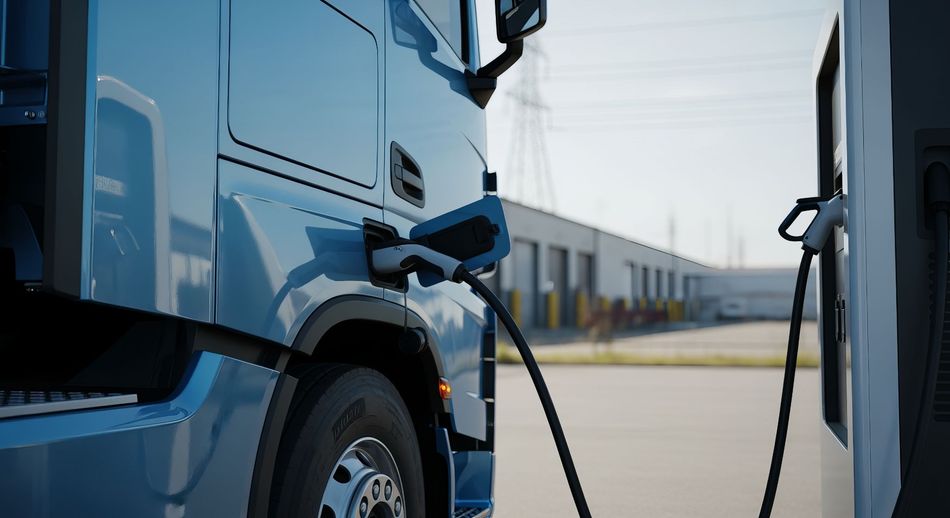 EV transport truck recharging. Source: AdobeStock.
Thermal, Mechanical, and Environmental Constraints
EV connectors face a demanding combination of electrical, mechanical, and environmental stresses throughout their operating life. Temperature fluctuations arise both from ambient conditions and from internal heating during high-current operation, while rapid charging events can elevate connector temperatures further, followed by cooling cycles when the vehicle is idle. These repeated cycles of expansion and contraction place ongoing strain on contacts and housings.
Mechanical stress adds another layer of demand. Connectors located near the traction motor, suspension components, or chassis structures experience sustained vibration and occasional shock. Secure locking mechanisms and stable mating interfaces help prevent the micro-movements that can accelerate wear.
Environmental exposure presents a third challenge. Connectors in underbody or external charging locations may encounter moisture, dust, and automotive fluids, making sealing strategies and corrosion-resistant materials essential to preserving performance. The choice of plating and housing materials further determines how well a connector resists long-term degradation of its electrical properties.
Connector Design Trade-offs in EV and Charging Applications
Connector design in EV systems involves balancing multiple engineering priorities, often against one another. Compactness, for instance, is highly desirable in densely packaged battery modules, since smaller connectors reduce space consumption and support higher power density. But shrinking dimensions comes with limits: smaller connectors may sacrifice current-carrying capacity or reduce creepage distances.
Weight reduction presents a similar tension. Lower mass improves vehicle range and efficiency, but lighter materials or thinner housings may not deliver the mechanical strength a connection needs. When selecting connectors, engineers must weigh whether reductions in mass compromise vibration resistance or durability.
Beyond these trade-offs, automotive manufacturing environments favor connectors that support quick, reliable mating with minimal risk of misalignment. Long-term serviceability matters too, since battery modules and power electronics assemblies may need replacement or maintenance over the vehicle's lifetime. Connectors that allow controlled disconnection without damage fit naturally into modular system architectures.
These priorities also shift depending on where a connector sits in the system. Vehicle-side internal connectors prioritize compactness and integration within tight packaging constraints. Charging infrastructure connectors call for repeated mating durability and environmental sealing. Battery module interconnects, meanwhile, must balance uniform electrical performance across many parallel paths.
Taken together, these trade-offs show why connector design can't be standardized across all EV applications. Each interface has to be evaluated on its own terms, against its specific electrical load, mechanical environment, and lifecycle expectations.
Sustainability and Lifecycle Considerations
Connectors contribute to sustainability goals primarily through durability and extended service life. A connector that maintains stable performance across thousands of cycles reduces the likelihood of premature component replacement.
Reliable mating interfaces also reduce material waste in two ways. During manufacturing, connectors that resist damage during assembly help minimize scrap rates. In the field, robust connectors lower the probability of failures that require complete subsystem replacement rather than a simple repair.
Design for maintenance and modular replacement extends this benefit further. Battery systems are typically structured in modules specifically to allow partial replacement instead of full pack disposal; this is a strategy that depends on connectors being capable of safe disconnection and reconnection without degrading performance. Alongside this, engineers weigh recyclability, reduction of hazardous substances, and long-term corrosion resistance as part of the same sustainability calculus.
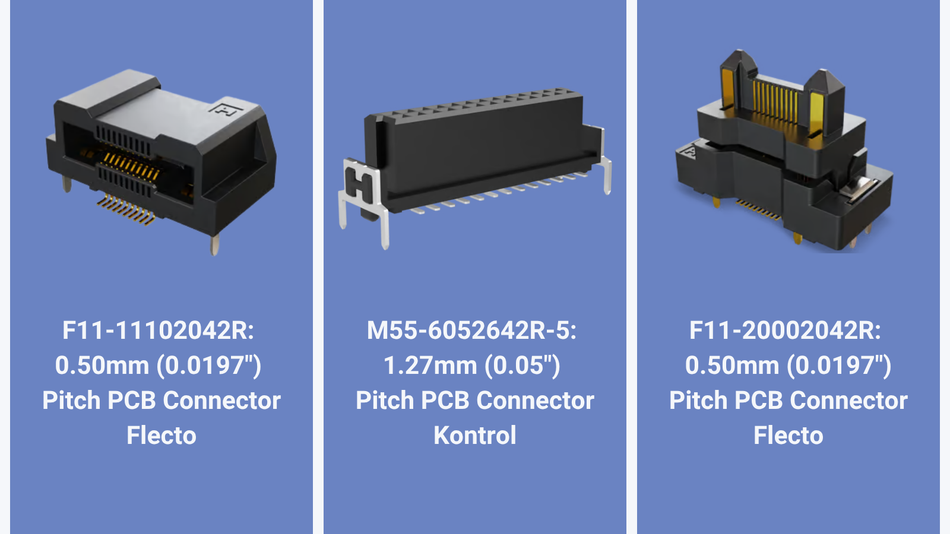
Harwin’s Role in High-Current and EV-Ready Interconnects
Harwin addresses these challenges through a set of high-reliability product families and defined engineering practices, most notably its Board-to-Board (BBi) range.
The BBi portfolio includes the Archer, Flecto, Indess, and Kontrol product families, each suited to different aspects of electrification. Flecto connectors, for instance, are designed for board-to-board battery module connections where tolerance compensation and assembly flexibility matter. Their floating contact design accommodates positional variation between mating components, reducing mechanical stress during assembly and operation.
Kontrol connectors, at 1.27mm pitch, offer a more rugged option for battery monitoring and control applications, with durability that exceeds many other industrial connectors. They support the transmission of critical sensing and communication signals used by battery management systems (BMS), including voltage and temperature monitoring — data that underpins cell balancing, thermal management, diagnostics, and safety functions. Reliable signal integrity is therefore essential to how well a modern battery pack performs.
Across the BBi range, Harwin focuses on features suited to electrification applications: secure mating interfaces, resistance to vibration and mechanical stress, and designs that support efficient manufacturing and servicing. Several design principles carry through the full product family. Contact materials and plating thicknesses are specified to manage wear over repeated mating cycles, particularly in serviceable modules. Creepage and clearance distances follow high-voltage design practices for integration into 400 V and 800 V platforms, where specified at the system level. Mechanical retention features are tested against vibration and shock profiles derived from demanding industrial and transport environments.
This approach draws directly on Harwin's experience in aerospace, industrial automation, and other high-reliability sectors, where connectors are routinely exposed to temperature cycling, mechanical stress, and strict performance requirements. Applying similar validation methods, such as vibration testing, current derating analysis, and contact resistance monitoring, gives engineers the data they need to assess a connector's suitability for EV subsystems.
Supporting the Next Phase of EV Electrification
Connectors define how efficiently power moves between subsystems, how safely high voltages are managed, and how reliably vehicles operate over time. They contribute to long-term system reliability by resisting vibration, environmental exposure, and mechanical wear.
In this regard, connectors influence how effectively EV power systems scale. Engineers developing EV platforms and charging infrastructure can benefit from evaluating connector design choices early in the development process. Exploring how interconnect parameters affect electrical, mechanical, and lifecycle performance can clarify trade-offs and reduce integration risks.
For those seeking to understand how high-current, electrification-ready interconnects are engineered, further information about Harwin and its approach to robust connector design is available on Harwin’s website.
References
Harwin. [Online] Available at: https://www.harwin.com/ (Accessed on February 13, 2026)
Harwin. [Online] Wevolver. Available at: https://www.wevolver.com/profile/harwin (Accessed on February 13, 2026)
Flecto. Fine Pitch Board-To-Board Connectors with High Pin Count [Online] Harwin. Available at: https://www.harwin.com/bbi-range/flecto (Accessed on June 09, 2026)
Kontrol. Durability and High Performance on 1.27mm (.05”) Pitch. Available at: https://www.harwin.com/bbi-range/kontrol (Accessed on June 09, 2026)