Leveraging LDOs for Low-Noise Power in IoT Devices
This article explores how low-dropout regulators (LDOs) enable low-noise, high-stability power in IoT devices, balancing quiescent current, efficiency, and power-supply rejection to preserve signal integrity across sensitive analog and RF domains.

04 May, 2026. 4 minutes read
Efficiency often dominates conversations about power design in portable and IoT systems. Engineers evaluate converter efficiency curves, switching frequencies, and battery runtime projections. Yet in many real-world deployments, the defining factor in system performance is not efficiency alone, but power quality.
Noise on a supply rail can shift a sensor reading, ripple can degrade RF phase noise, and microvolt-level fluctuations can propagate into analog front ends and compromise measurement accuracy. In compact devices that combine digital processing, wireless communication, and precision sensing, supply integrity becomes a foundational requirement. Low-dropout regulators (LDOs) continue to play a critical role in achieving that integrity.
The Role of the LDO in Modern Portable Systems
Switching converters are the backbone of efficient voltage translation. They provide the high efficiency required to move energy from a battery to usable system rails. However, their switching action introduces ripple and electromagnetic noise that must be managed carefully.
LDOs provide the final stage of conditioning. Positioned downstream of DC-DC converters, they supply clean, tightly regulated voltage to circuits that demand low noise and high stability.
This is particularly important in:
RF phase-locked loops and transceiver bias networks
Precision sensor interfaces
High-resolution analog-to-digital converters
Reference voltage domains
In these subsystems, power quality directly influences system accuracy and communication performance.
The Hidden Cost of Quiescent Current
In battery-powered IoT systems, the design of an LDO cannot focus solely on noise performance. Quiescent current (Iq) plays an equally important role.
Traditional LDOs were often designed for higher-current applications and may draw significant internal current even when the load is minimal. In devices that spend 90% or more of their lifetime in standby, this internal current can quietly erode battery life. The result is a paradox: a regulator chosen to improve signal integrity ends up shortening system lifetime.
Ultra-low-Iq LDOs address this challenge by minimizing internal consumption while maintaining strong regulation and power-supply rejection ratio (PSRR). This balance is essential in IoT deployments where standby duration defines total runtime.
Semtech’s nanoSmart® LDO family is engineered with this use case in mind. These devices combine extremely low quiescent current with strong noise rejection, enabling designers to power sensitive domains without sacrificing battery longevity.
Where and When to Use an LDO
Selecting an LDO is a strategic decision. LDOs are most effective when:
The load current is relatively low
The input-to-output voltage difference is modest
The domain requires high PSRR and low output noise
The rail must remain stable during transient digital activity nearby
In portable systems, a common architectural approach is to use a high-efficiency DC-DC converter to reduce battery voltage close to the target rail, followed by an LDO that performs the final regulation step. This minimizes power dissipation across the LDO while maximizing noise suppression.
For example, a buck converter may reduce a 3.7 V Li-ion cell to approximately 1.3 V. An LDO can then regulate that rail precisely to 1.2 V for a sensitive analog block. Because the voltage drop across the LDO is small, thermal dissipation remains controlled while PSRR performance remains high. This layered strategy reflects a system-level view of power design.
Maintaining Analog Integrity
In wireless IoT systems, the relationship between supply noise and signal integrity is direct. Phase-locked loops rely on stable bias conditions. Any ripple or noise coupling into these domains can manifest as phase noise or reduced link margin. In communication systems, even small degradations in signal stability can influence data integrity and overall system reliability.
By placing an ultra-low-Iq LDO close to the analog domain, designers create a localized clean supply. Short routing and solid grounding further strengthen isolation.
The same principle applies to precision sensing. Environmental monitors, medical devices, and industrial measurement platforms rely on stable analog references. Fluctuations on supply rails can translate into apparent sensor drift or measurement error. A properly selected and positioned LDO isolates these domains from switching noise and digital activity elsewhere on the board.
Integration and Layout Discipline
As with converters, layout plays a defining role in LDO performance. LDOs should be placed close to the circuits they serve. Output traces should be short and routed over solid ground references to minimize impedance. Input decoupling should be positioned tightly to prevent upstream noise from coupling into the device.
Thermal considerations also remain relevant. Although LDOs are typically used at lower currents, voltage drop across the regulator generates heat. Designers must account for worst-case load and ambient conditions to ensure safe operation. In compact enclosures, even small thermal gradients can influence performance.
Validating LDO Performance in Real Conditions
Bench validation is essential to confirm that an LDO performs as intended within the complete system. Key evaluation metrics include:
PSRR across the frequency bands relevant to system operation
Output noise under both typical and peak load conditions
Load-step response when voltage headroom is minimal
Contribution of LDO quiescent current to total standby consumption
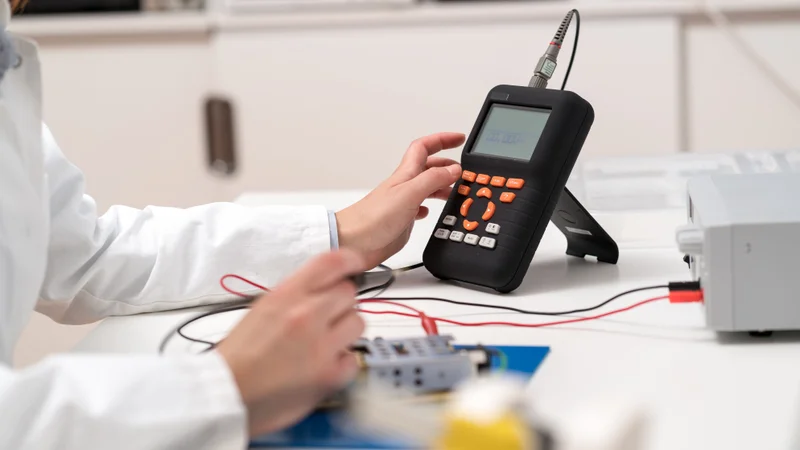
Testing under realistic duty cycles ensures that laboratory measurements align with field behavior. In many cases, designers discover that noise interactions occur not at nominal load but during transitions. Observing wake-up sequences, radio activation events, and processor bursts provides insight into how effectively the LDO isolates sensitive rails.
Power Quality as a System Enabler
In portable and IoT systems, LDOs are often perceived as supporting components. In practice, they define how cleanly and reliably critical subsystems operate. Semtech’s nanoSmart® LDO portfolio reflects this reality. By combining ultra-low quiescent current with strong PSRR and stable regulation, these devices support precision domains without undermining overall battery performance.
When integrated into a well-planned power architecture, LDOs help maintain signal integrity, reduce measurement drift, preserve RF link quality, and extend operational lifetime. Efficiency determines how long a device runs, while power quality determines how well it performs during that time. In compact IoT designs where sensing, processing, and communication converge, both dimensions are essential.
To explore the complete power strategy, including high-efficiency portable converters and system-level power architecture alongside ultra-low-Iq regulation, download the full Semtech whitepaper, Efficient Power Management for Portable and IoT Devices. It provides deeper technical guidance across all three pillars of portable power design.