Key Takeaways from HIMSS 2026
Healthcare systems are actively implementing technologies that enable smarter care delivery, lower operational costs and better patient outcomes.

19 Mar, 2026. 2 minutes read
This article was first published on
monogoto.ioHealthcare is entering a new era.
One where care doesn’t stop at discharge, and automation is quietly reshaping how healthcare organizations operate, all while keeping patient-centered decisions at the core. At this year’s HIMSS Global Health Conference & Exhibition 2026 in Las Vegas, this shift was hard to ignore. Conversations across the show floor made one thing clear: the healthcare industry is becoming more connected. Healthcare systems are actively implementing technologies that enable smarter care delivery, lower operational costs and better patient outcomes.
After a jam-packed week of conversations, here are the themes that stood out:
Healthcare is Entering the Age of Autonomous Intelligence
Artificial Intelligence (AI) has been a major talking point across healthcare for years. What’s changed is how it’s being used. At HIMSS 2026, the shift was clear: AI is moving from a supporting tool to an operational layer within healthcare systems.
Across hospitals and healthcare systems, AI is being used for:
administrative workflow automation
diagnosis and clinical decision-making
insurance processing and approvals
personalized treatment plans
predictive analytics for patient outcomes
This isn’t about isolated use cases anymore. Healthcare is transitioning toward a future where intelligence is continuously applied, from patient diagnosis through treatment, reporting, and reimbursement.
The Hospital is No Longer the Center of Care
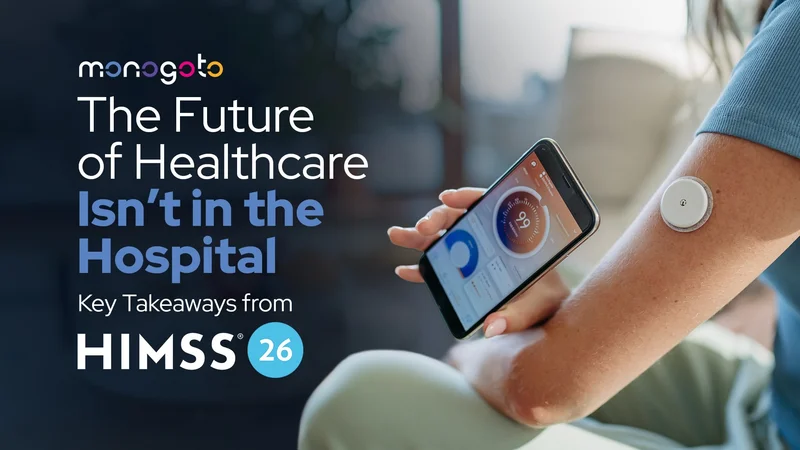
What started as a pandemic-driven shift has evolved into a long-term solution; care is no longer limited to traditional clinical settings but rather wherever the patient is. Now more than ever, we are seeing healthcare systems increasingly rely on connected devices to monitor patients in real time, fundamentally changing how patients are treated. We’re seeing this through:
in-home doctor and even dentist visits
mobile health clinics bringing care directly to underserved areas
remote patient monitoring (RPM) for chronic conditions and post-discharge recovery
By treating patients outside the hospital and monitoring them in real-time, healthcare providers can reduce hospital readmissions, lower costs, and improve long-term outcomes.
Robotics Are Quietly Transforming Hospital Operations
While robotics in surgery has been around for years, what stood out at HIMSS was how far robotics has come across many areas of care. These innovations are enabling healthcare providers to automate routine tasks and free up staff for improved patient care. Hospitals are deploying robotics systems across day-to-day operations, including:
assisting with diagnostics and lab processes
delivering medications and automating pharmacy workflows
security and facility monitoring
disinfecting patient rooms and operating areas
transporting food and equipment across facilities
These automations are helping healthcare systems operate more efficiently, without compromising the quality of care.
The Bigger Picture: A More Intelligent Healthcare System
Throughout all the sessions and conversations at HIMSS 2026, one theme was made clear: healthcare is becoming more intelligent, more distributed, and more connected.
We’re moving away from hospital-centered care and toward continuous, data-driven care networks. This new era of healthcare will not be defined by any single technology. It will be defined by how seamlessly these systems work together to support continuous, connected care.
That shift introduces a new reality for healthcare organizations: intelligence depends on connectivity. AI relies on continuous streams of patient data. Remote monitoring depends on secure, always-on connectivity. And autonomous systems require resilient networks to operate reliably at scale.
At Monogoto, we believe the future of healthcare depends on software-defined connectivity. Infrastructure that is programmable, secure and built to support distributed care at scale.
Because the future of healthcare isn’t just digital. It’s connected.