Injection Molding for Medical Devices: How to Reduce Risk Before Production
A medical plastic part can look simple on a drawing. But before it reaches validation or production, small details can change the result: material behavior, shrinkage, wall thickness, assembly fit, surface finish, inspection requirements, and production volume.

29 Sep, 2026. 2 minutes read
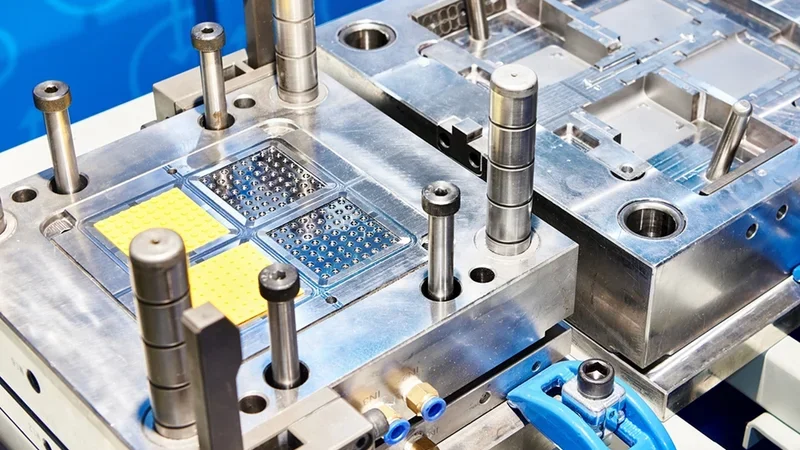
For engineering teams, injection molding is not only a way to produce plastic parts. It is a decision point that affects validation readiness, tooling cost, part consistency, and the path toward low-volume or mass production.
That is why medical device teams need to plan molding strategy before tooling begins.
Start with the Part Requirements
Before choosing a molding route, the team needs to understand what the part must prove.
Will it be used for verification and validation builds?
Does it need bridge tooling before production tooling?
Is the expected volume closer to 50 parts, 5,000 parts, or 100,000+ parts?
Are there critical dimensions, assembly interfaces, visible surfaces, or functional features that must be tightly controlled?
These questions affect material selection, mold design, tolerance planning, inspection methods, and production strategy.
Material Choice Affects More Than Strength
For medical device components, material selection is not only about mechanical strength. A plastic material may also need to support chemical resistance, dimensional stability, surface finish requirements, sterilization-related conditions, or application-specific performance.
Some projects may also require medical-grade or biocompatible material options, as well as RoHS, REACH, or other compliance considerations.
Choosing the wrong material too early can lead to late design changes, surface issues, assembly problems, or unstable performance across builds.
Consistency Matters Across Every Build
One good molded part is not enough.
Parts used for testing, validation, pilot runs, or production must remain consistent across batches. That means dimensions, surface quality, material performance, and assembly-related features need to be controlled throughout the molding process, not only checked at the end.
For medical device teams, inspection planning should be part of the molding strategy. FAI, IPQC, OQC, CMM measurement, and 3D scanning can help confirm whether critical features meet design intent and remain stable across builds.
Match the Molding Route to the Project Stage
Not every medical plastic part needs the same molding setup.
Some teams need molded parts quickly before validation. Others need bridge tooling before final production tooling. Some projects require a scalable route that can support low-volume production first and higher-volume manufacturing later.
Common options include:
• injection molding
• overmolding
• insert molding
• multi-cavity molding
• bridge tooling
• low-volume production
• mass production
The right choice depends on the part geometry, material, expected quantity, validation stage, and long-term production plan.
How RPWORLD Supports Medical Device Injection Molding
RPWORLD, owned by Innorapid, supports medical device teams with injection molding solutions from 50 to 100,000+ parts, helping projects move from verification and validation builds to bridge tooling, low-volume production, and mass production.
For projects where speed and control both matter, RPWORLD provides molded parts in as fast as 7 days, more than 100 material options, including biocompatible material options, and ISO 13485 certified manufacturing support.
RPWORLD also combines injection molding with material support, surface finishing, inspection, and assembly, helping reduce supplier handoffs and keep key manufacturing steps connected under one partner.
From Molded Parts to Production Readiness
Injection molding for medical devices is not just about making plastic parts. It is about making sure the selected material, tooling strategy, inspection plan, and production volume match the current project stage.
When these decisions are made early, teams can reduce rework, avoid late-stage changes, improve validation readiness, and move toward production with greater confidence.