Improving Life Science Instrumentation with Advanced Energy Medical Power Supplies
Explore power supply solutions for life science applications such as mass spectrometry, cellular analysis, and automated diagnostics.

19 Oct, 2026. 9 minutes read

Life science instruments are expected to deliver higher analytical resolution, process samples more quickly, and fit within increasingly compact footprints. Meeting these demands creates complex power requirements, as the same instrument could have very different power requirements across subsystems. For example, high-power motors may operate alongside low-voltage, sensitive analog sensors within the same device.
The power supply is one of the most challenging subsystems to get right. Its critical role in system performance and regulatory compliance, including safety and EMI, makes selecting the appropriate power supply an important part of the design process.
To address these challenges, Advanced Energy (AE) offers a comprehensive portfolio spanning the full power conversion chain, from AC-DC front ends to DC-DC modules, all designed specifically for life science applications. This white paper explores how AE’s power supply solutions help address challenges in life science applications such as mass spectrometry, cellular analysis, and automated diagnostics.
Precision High-Voltage Architectures in Analytical Instrumentation
Optimizing Ion Optics and Beam Stability
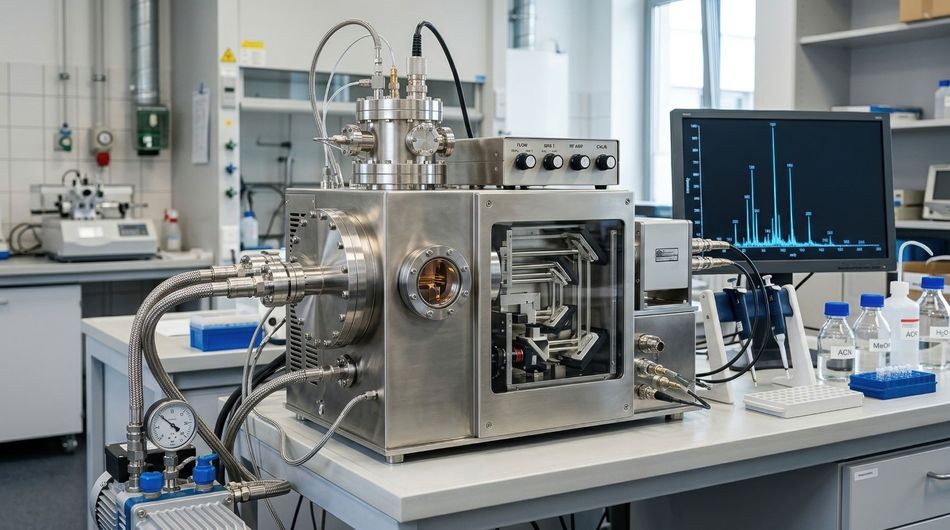
Analytical instruments such as mass spectrometers work by using steady electric fields to manipulate and detect ions. Given that they typically operate at extremely low power levels, these instruments need stable, low-noise power rails, as small fluctuations in the output can distort the electric fields, degrade mass resolution, and ruin measurement accuracy.
In a Time-of-Flight (TOF) mass spectrometer, a flight tube accelerates ions and separates them by the time they take to reach a detector, with lighter ions arriving sooner than heavier ones. As part of this, an einzel lens, which is a series of cylindrical electrodes placed along the ion beam path, improves separation accuracy by focusing the beam before it enters the TOF tube, thereby tightening the arrival time distribution of ions of the same mass at the detector.
To reduce spatial uncertainty, einzel lenses require high-voltage DC-DC power supplies with low output ripple and high DC stability. Advanced Energy designed the UltraVolt LE Series of DC-DC power supplies to meet these requirements directly, delivering output voltages up to 25kV with an output ripple of just 0.002% of the maximum output voltage. The LE Series also features a temperature coefficient of just 25ppm/°C, so ambient temperature changes during an instrument run do not shift the DC bias level and alter ion flight times. With AE’s power supplies, designers can achieve power stability below 10ppm.
In addition to providing power stability, the UltraVolt LE Series also reduces noise for spectrometers. One problem these instruments face is micro-discharge, or brief ionization events in the air surrounding exposed high-voltage cabling that introduce noise into the system. AE addresses this discharge risk with custom coaxial high-voltage output connectors that mate directly with shielded cabling. With tighter connections to the instrument, these cables eliminate exposed conductors in the high-field region around the lens assembly.
Managing Multi-Rail Complexity in Mass Spectrometry
A complete mass spectrometry system requires more than a single high-voltage rail for the TOF tube. For example, the ion optics stage – which moves, directs, and focuses ions through the instrument before they reach the analyzer – requires multiple independently controlled voltages. For compact systems, designers commonly struggle to accommodate multiple discrete high-voltage modules while maintaining independent control of each rail.
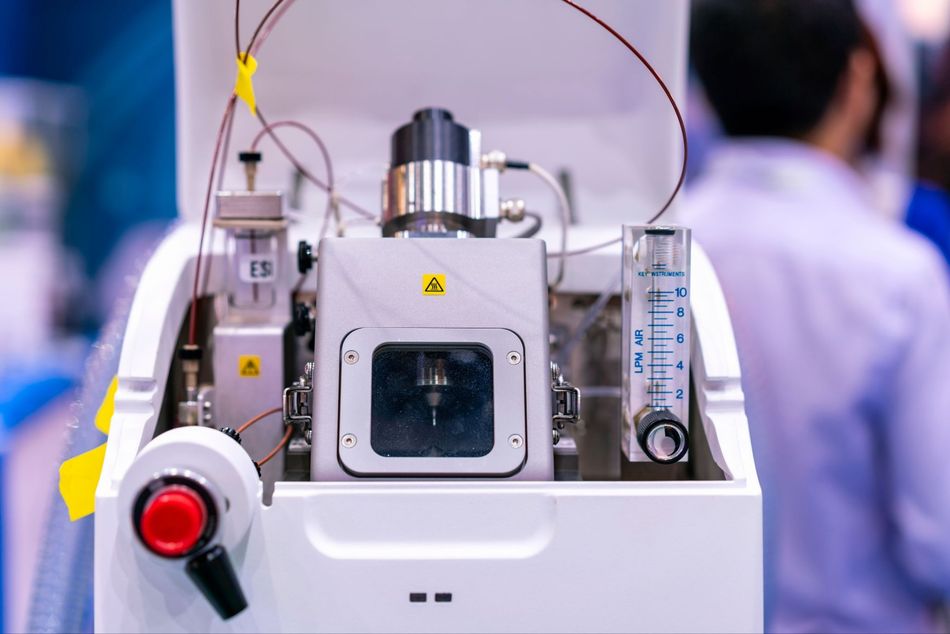 Advanced technology mass spectrometer device. Source: AdobeStock
Advanced Energy developed the miniature AEQ and US series of DC-DC converters to directly address this challenge. The AEQ is a high-voltage DC-DC converter available in unipolar and bipolar configurations, providing up to 1.25W in a compact form factor that lets engineers place power conversion close to the ion optics load. Engineers can then use shorter high-voltage traces, reducing the risk of parasitic discharge and simplifying PCB layout.
Whereas the AEQ converters can be bipolar, the US are 0.1W, single-output, micro-sized modules available in positive and negative variants. The 0.2US5-P0.1 and 0.2US5-N0.1 models give designers the flexibility to assign a dedicated supply to each electrode based on where it fits best within the system architecture.
Since AEQ and US series work from a common 5 or 12V input bus, designers can exercise independent control over the full range of ion optics bias voltages, spanning bipolar rails from ±10V up to ±200V. By consolidating their power system to a single input bus, engineers can greatly simplify the control architecture and reduce total component count.
Modular Power Integration for Automated Analysis
Multi-Load Power Architecture in Automated Diagnostics
Manufacturers of automated diagnostic systems have a different type of power challenge. They need their systems to manage dozens of loads with widely different voltage, current, and transient profiles from a single certified architecture. For example, a hematology analyzer may need to power systems with different requirements, such as a centrifuge motor, robotic dispensers, heating elements, and an industrial PC.

For these systems, Advanced Energy offers the CoolX1800 AC-DC power supplies, a high-density modular platform that can house up to six independently specified output modules within a single 1U chassis. Engineers can use this architecture to consolidate what would otherwise require many separate power supplies, each carrying its own certification burden and integration overhead.
For example, in a hematology analyzer, the CoolX1800 can supply 48V output to drive motors and 24V for conveyor and pump systems. It can also supply separate rails at 12 and 5V to power system electronics and microcontrollers, with an always-on 5V standby rail dedicated to control logic.
Manufacturers of these diagnostics systems also need power supplies that handle motor start-up sequences that draw more current during start-up than during steady-state operation. To help them, AE equipped the CoolX1800 with PMBus digital communication to enable the host system to monitor all output parameters in real time. Engineers working for these manufacturers can use PMBus to capture start-up power behavior under real-world operating conditions, identify reliability risks early, and qualify motors with appropriate current profiles before mass production.
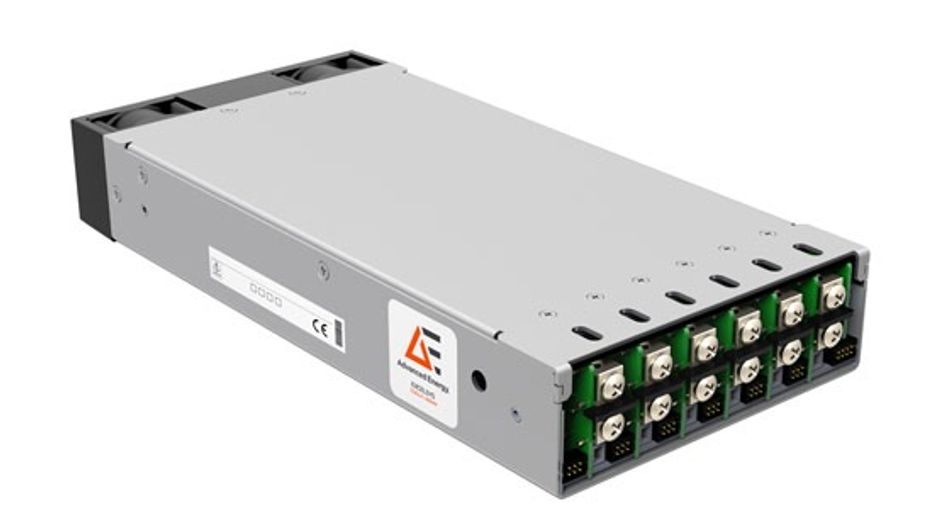
For instrument manufacturers that need to minimize mechanical vibration, AE developed the fanless CoolX1000 power supply. By using convection cooling rather than conventional airflow-based solutions, the supply eliminates turbulence and mechanical vibration. In addition, AE’s CoolX1000 offers a modular output architecture to support multiple voltage rails, making it useful for manufacturers of high-precision instruments like nanoscopes, which measure surface features at nanometer resolution.
Speeding Medical Safety Certification
To sell life science equipment internationally, OEMs need to pass rigorous electrical safety certification under IEC 60601-1. A key test in this process is the Hi-Pot (high-potential) isolation test, which verifies that sufficient electrical isolation exists between the AC input and the DC outputs. For medical and life science applications, the Hi-Pot test requires 4kVAC and 5.6kVDC isolation between input and output circuits.
During the verification process, manufacturers frequently need to remove the power supply from its production chassis and reconfigure it specifically for agency review. As part of this test, one common modification manufacturers might make is disconnecting the Y-capacitors, which puts the power supply in a state different from the finished product.
The result is that when safety agencies review and approve the power supply, they are certifying a unit physically different from what ships to the customer. For manufacturers, restoring the power supply to production configuration afterward consumes time and engineering resources, in addition to creating a risk for product documentation discrepancies.
AE designed the -G option of its CoolX power supplies to eliminate this problem. The -G power supplies allow the CoolX to withstand the full 4kVAC and 5.6kVDC Hi-Pot test, exactly as it will be installed in production. The unit requires no modifications for testing, which means the power supply reviewed by the safety agency is identical to the unit that ships to the customer, simplifying certification in all international markets simultaneously.
Advanced Capabilities in Electroporation and Transfection
Controlling Pulsed Power for High-Volume Cell Processing
Researchers conducting cell-based therapies and genetic research use electroporation to temporarily increase cell membrane permeability by applying controlled electrical pulses. Electroporation enables researchers to introduce foreign genetic material, such as DNA, into the cells. In this process, pulse precision directly determines quality: too little voltage (and energy) and the membrane does not open sufficiently, and too much destroys the cell.
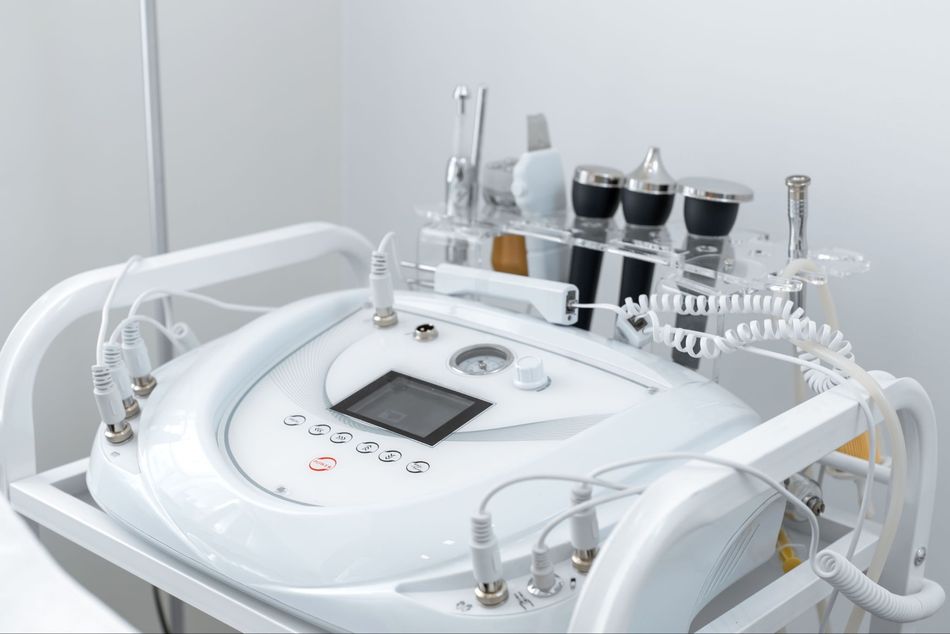
To this end, electroporation instruments typically use either static or flow methods. Static electroporation machines can only process one vial or cuvette at a time, whereas flow electroporation instruments move a continuous stream of cells through an electroporation zone. Flow electroporation instruments can therefore transfect a much larger volume of cells than static instruments can.
To support flow electroporation’s high-volume processing, manufacturers need more capable power supplies to deliver precise high-voltage pulses repeatedly and consistently to large numbers of cells without drift in pulse characteristics. AE developed the UltraVolt High Power C Series of DC-DC power supplies to meet these instrument manufacturers’ needs.
With the C Series, AE offers a set of powerful features, including:
Single output or Dual-polarity outputs within a single package
Dual-tracking capability to keep both output polarities synchronized
Fast ramp-up time constant
Flashover and short-circuit protection from capacitive discharge
Fanless Power Design for Laboratory Environments
Because benchtop life science instruments operate in close proximity to people and sensitive samples, cooling fan noise and airflow turbulence can interfere with researchers’ delicate measurements. AE solved this problem in the CPS255-M and NGB250S48K AC-DC power supplies by eliminating system fans entirely and opting for convection-cooled designs.
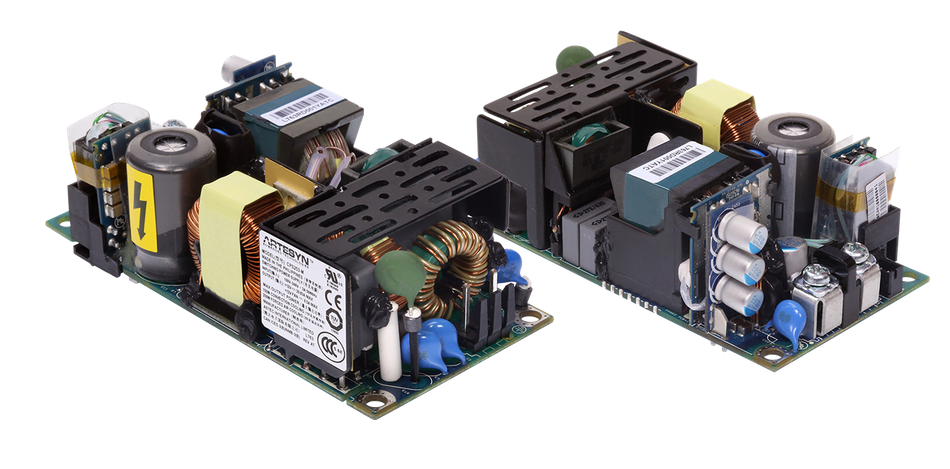
By eliminating system fans, AE also improved thermoelectric cooling performance. Many electroporation and flow cytometry instruments incorporate thermoelectric cooling modules to maintain fluid samples at a precisely controlled temperature. A thermoelectric module moves heat from one face to the other when current flows through it, and the accuracy of that temperature regulation is sensitive to the surrounding thermal environment. Airflow from a system fan can disrupt the thermal environment by creating localized temperature gradients and undermine a thermoelectric module’s ability to accurately regulate fluid temperature.
Manufacturers can pair AE’s AC-DC power supplies with thermoelectric cooling modules in their instruments to provide the temperature control system with clean, consistent power without thermal interference from forced-air cooling.
Improving Lifecycle Management and System Extensions
Maintaining Backward Compatibility in Long-Lifecycle Instruments
Life science instruments have unusually long lifespans. For example, a diagnostic platform that reaches the market today might stay in production for more than a decade, and field-deployed units can remain in clinical service considerably longer. This longevity means OEM-designed components eventually reach end of life, forcing manufacturers to either qualify a replacement or discontinue the product.
To qualify a replacement part, instrument manufacturers need to match the original’s mechanical specifications and connector interfaces while precisely replicating its control-signal behavior, so that their field service teams can swap a failed component without modifying the entire system.
AE recently supported a chromatography system manufacturer in qualifying replacement parts when one of their AC-DC power supplies was approaching end-of-life. To deliver a qualifying power supply, AE engineered a modified NGB425 derivative that matched every physical and electrical aspect of the original part. AE extended the U-channel chassis to the 9-inch form factor required and added a front panel with a filtered AC inlet and a cooling fan to match the original power supply’s mechanical specifications. For electrical compatibility, AE added an interface PCB to replicate the original power supply inhibit logic, DC-OK signal behavior, and an output cable with identical length and terminations.
The result was a drop-in replacement requiring no system-level modifications, extending the instrument's serviceable life by eight years at a 25-30% lower unit cost than the legacy system, with no near-term discontinuation risk. AE's local field application engineers supported the qualification process to expedite the manufacturer’s part replacement without disrupting their pre-production schedule.
Value-Add Customization and Modular Flexibility
AE's value-add solution model serves manufacturers whose requirements are too specific for off-the-shelf products but whose budget and schedule can’t support a full custom design. The company’s engineering team uses standard configurable platforms, such as the Artesyn iVS3 modular power supply and iMP4 multi-output converter, to assemble semi-custom platforms within a customer-defined chassis.
For example, AE recently delivered a single qualified power subsystem for a manufacturer designing a clinical immunoassay diagnostic system that required 4,200 W across six DC output voltages from 5 to 48 V. AE’s power solution included mains outlets and front-panel breakers, along with EMI filtering and surge protection. In addition, AE added programmable voltage and current limit control via I2C, with intelligent output monitoring and protection against all standard fault conditions.
This modular flexibility is further enhanced by Sager’s Value-Add Reseller (VAR) program with AE, which provides specialized engineering support for complex configurations. Through Sager’s 3x5 modular quick-turn program with AE, design engineers can access rapid prototyping and delivery of customized power solutions tailored to their specific instrumentation needs - up to three configured power supplies in five days or less. And to ensure the highest levels of reliability and compliance, Sager Electronics operates under an ISO 9001:2015 Certified Quality Management System for modular power assembly and maintains safety certification by UL.
Powering the Next Generation of Life Science Discovery
The life science industry pushes manufacturers to deliver higher resolution, faster throughput, and broader diagnostic capability within shrinking form factors. The challenges of achieving all of these features simultaneously are immense, and manufacturers that source from multiple vendors face a maze of certification processes and supply chain risk for every power rail in the system.
With AE's comprehensive portfolio, engineers have access to solutions for every part of the power chain. Sager Electronics helps teams quickly and reliably source AE’s full lineup of power conversion and control products. By working with AE and Sager, instrument manufacturers can spend less time resolving incompatibilities between power subsystems and more time designing the next generation of life-saving products.
Explore Advanced Energy's solution set, or contact the technical team at Sager via this short-form for application-specific support.