How Battery-Powered Soldering Systems Are Changing Precision Electronics Manufacturing
What are the advantages of battery-powered tools, and do they offer the same precision and temperature stability as their corded counterparts?

18 Sep, 2026. 5 minutes read
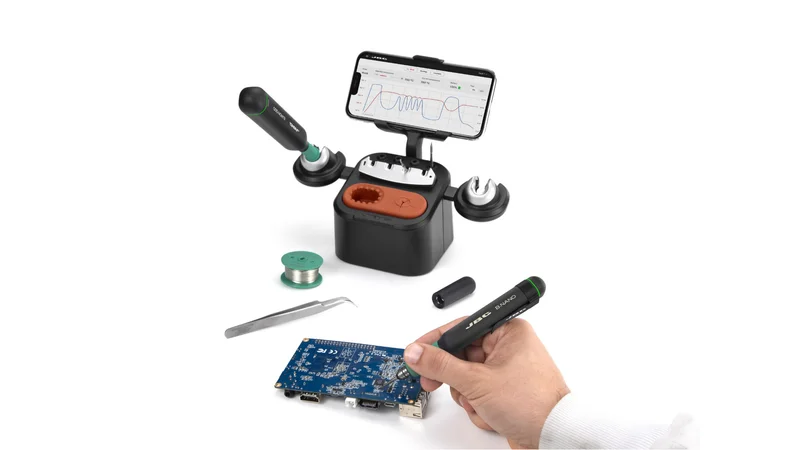
Soldering is one of the most important processes in electronics manufacturing. Even as automated assembly takes over much of production, many steps still require manual soldering for component replacement, rework, prototyping, inspection, repairs, and assembly. But as electronic boards become smaller and more densely populated, engineers require tools that offer greater precision, mobility, and temperature stability without compromising performance. Separating the hand tool from a fixed power station brings greater freedom of movement to these tasks. This article explores the advantages of this approach and how B.IRON, JBC's Battery-Powered System for soldering and rework, combines cordless operation with precise thermal control for high-reliability electronics applications.
Where Cordless Soldering Adds Flexibility
Traditional soldering stations are effective for many applications, and removing the cable that connects the iron to the station can offer additional flexibility when working on complex assemblies.
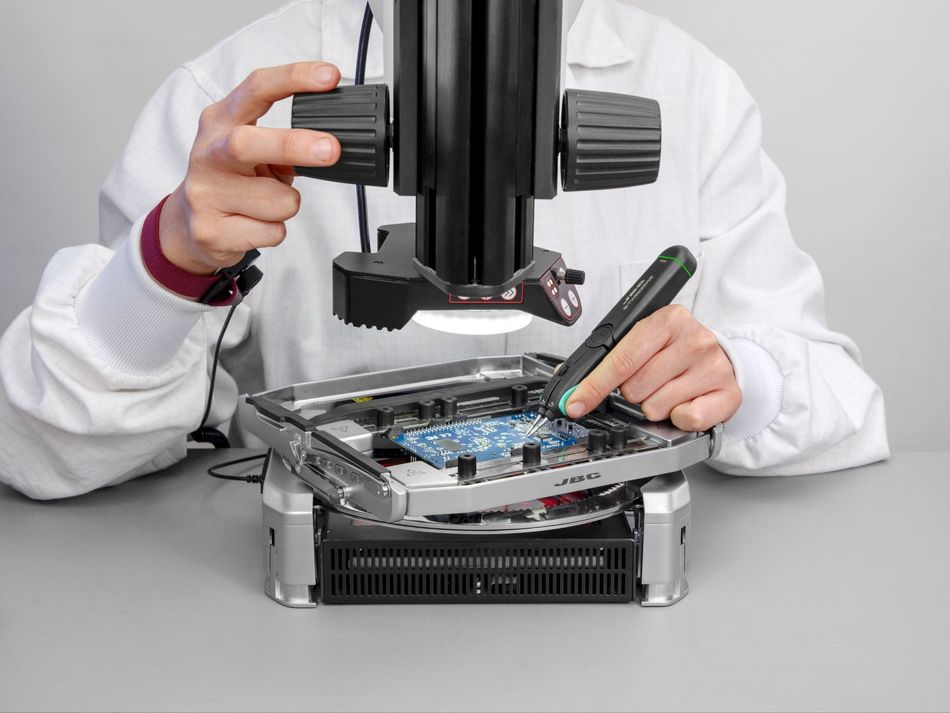
For instance, during microscope work, fine-pitch components and densely populated boards often call for small, controlled movements when positioning the soldering tip. A cable trailing from the tool can influence how the handpiece is held at precisely the point where mobility is useful. Similar considerations apply when a PCB is installed inside a larger assembly, where access may involve working around housings, fixtures, cables, or other components. In these situations, a cordless handpiece gives technicians more flexibility in how they approach and position the tool.
However, removing the cable alone does not make a soldering system suitable for precision work. The tool still needs to reach its operating temperature quickly and recover heat after contact with a joint. Therefore, for professional applications, mobility needs to be combined with controlled and repeatable heating.
What Makes a Professional Battery-Powered Soldering System Different?
A clear distinction exists between entry-level cordless irons designed for basic wiring repairs and professional battery-powered precision stations engineered for electronics manufacturing. Consumer-grade cordless tools usually rely on basic resistive heating elements and unmonitored battery outputs, resulting in slow heat-up times, significant thermal drop during contact, and inconsistent tip temperatures as the battery drains. In contrast, professional platforms are designed to deliver thermal performance that matches top-tier corded benchtop stations.
The most notable characteristics of professional battery-powered systems include exceptionally fast heating, rapid thermal recovery, dynamic temperature regulation under load, and comprehensive battery management algorithms. Integrated microcontrollers regulate current delivery as energy is consumed, helping maintain stable thermal output from the first solder joint to the last.
Moreover, ergonomics is equally important, as professional handpieces must accommodate the power cell while maintaining a low weight and a short tip-to-grip distance. JBC B.IRON applies this approach by combining precision thermal delivery and smart connectivity in a lightweight handpiece designed specifically for high-reliability manufacturing and laboratory work.
How B.IRON Delivers Consistent Performance Without a Power Cable
JBC Exclusive Heating System
The core capability of B.IRON platform is in its proprietary heating technology. The system integrates heating elements directly into the cartridge tip alongside precise temperature sensors, which drastically reduces thermal resistance. This configuration enables the tool to reach operating temperature in under three seconds. When the tip touches a high-mass solder pad or ground plane, the control system instantly detects the thermal load and delivers immediate power recovery, preventing cold solder joints and ensuring consistent thermal performance across consecutive operations.
Intelligent Heat Management
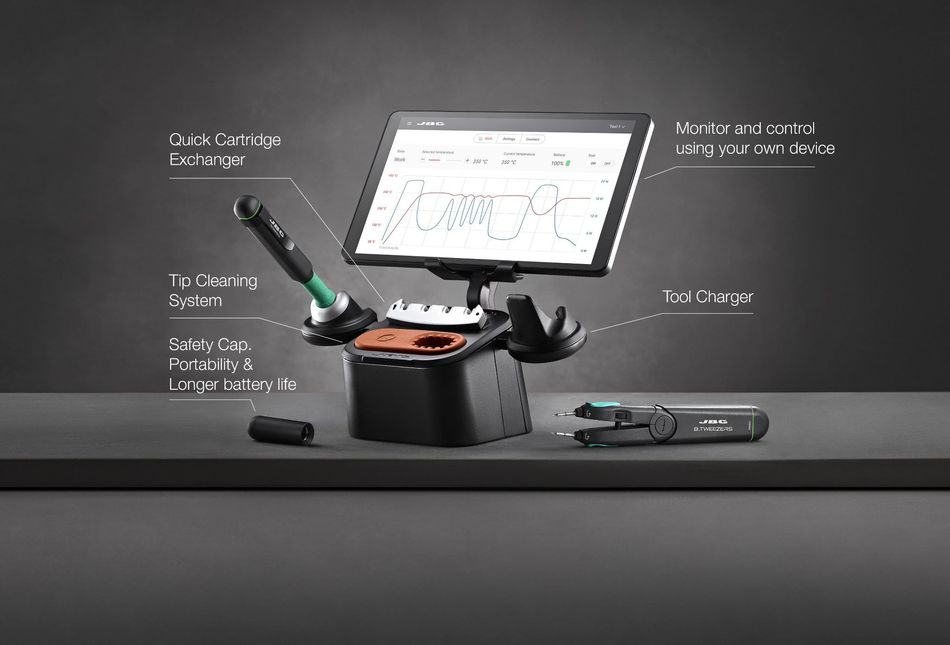
B.IRON incorporates intelligent standby features, including automated Sleep and Hibernation Modes. When the tool is placed in its stand, it rapidly drops its temperature to conserve battery life and prevent tip oxidation. By minimizing unnecessary prolonged exposure to heat, the system reduces flux degradation while extending tip life up to five times longer and lowering consumable costs over production runs.
Battery-Powered Platform
The structural architecture relies on an integrated charging stand paired with onboard lithium-ion battery technology within the tool itself. The handpiece charges continuously while resting on the stand, keeping the tool ready for operation. This architecture supports an uninterrupted workflow, as brief pauses between soldering joints allow the internal battery to top off automatically.
Design Features That Improve Precision and Productivity
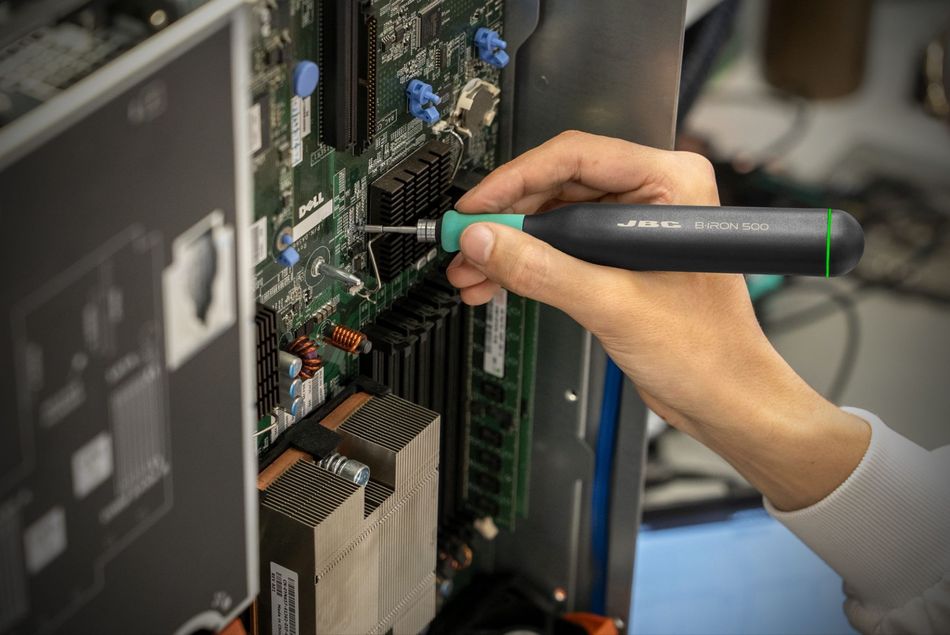
Mechanical design choices directly influence soldering quality. The absence of a trailing power cord offers complete freedom of movement, providing benefits when working on densely populated PCBs, maneuvering under microscopes, or conducting field service work inside tight equipment racks.
B.IRON tools enable fine motor control with a very short tip-to-grip distance. This proximity to the joint improves stability, minimizes natural hand tremors, and helps reduce operator fatigue during extended production shifts. To help preserve power, a dedicated safety cap automatically places the tool into a safe mode upon placement, helping prevent accidental heating or battery drain during transport. With the hot tip safely covered, the tool can also be carried more easily between work areas, even in a pocket.
A dedicated Bluetooth B.IRON application complements these hardware features. This digital interface enables real-time monitoring and parameter adjustment, allowing engineers to manage temperature settings, battery status, firmware updates, and tool configurations directly from their own device.
Choosing the Right B.IRON Configuration for Different Applications
B.IRON offers several flexible station configurations ranging from single-tool setups to dual workstations designed for high-throughput production lines, surface-mount device (SMD) rework stations, and specialized nano-soldering benches. These setups allow facilities to tailor their equipment layout to specific assembly requirements.
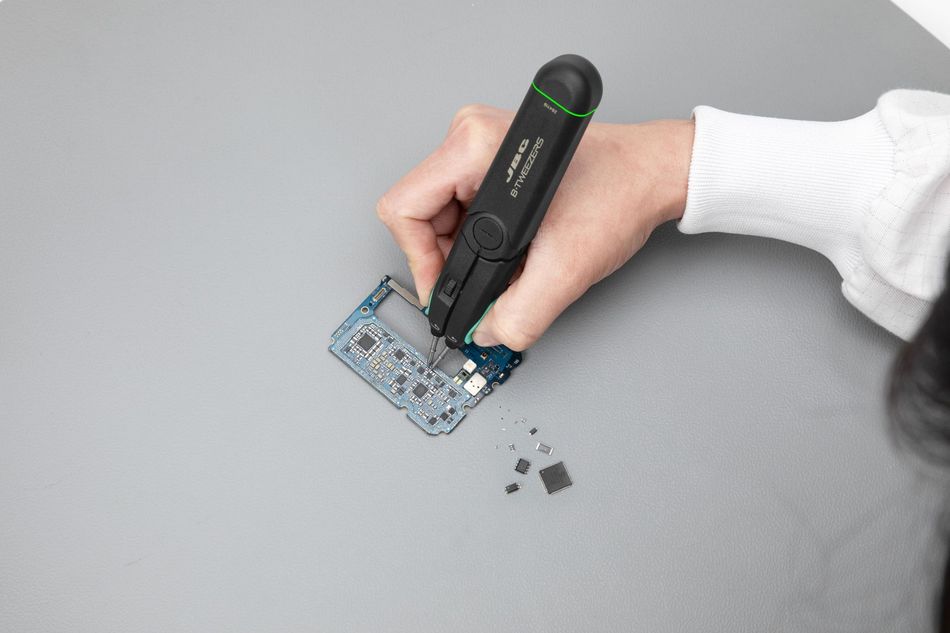
The system supports four distinct tools engineered for specific thermal and geometric demands. For instance, B.NANO is optimized for extremely fine-pitch micro-soldering and high-density assemblies requiring minimal physical clearance and precise heat delivery. B.TWEEZERS is designed for rapid, symmetrical heating during component placement and SMD rework.
B.100 is a versatile tool that provides a balance of precision and power handling for general electronics assembly and fine repair work. Similarly, B.500 is engineered for higher thermal demand applications requiring greater heat storage and rapid delivery to larger copper layers.
B.NANO and B.TWEEZERS are compatible with C115 Cartridge Range, while B.100 and B.500 use C210. Across both families, technicians have access to a range of tip geometries, including conical, conical bent, and chisel shapes, allowing them to select the most suitable one for different soldering and rework tasks. Cartridges can be swapped quickly and easily, helping operators work efficiently and minimize downtime.
Where Battery-Powered Precision Soldering Is Most Valuable
The operational advantages of cordless, high-precision soldering apply directly across a broad range of high-reliability industries including:
Aerospace
Automotive Electronics
Electronics Manufacturing
Field Repair and Maintenance
High-Density PCB Assembly
Medical Devices
Prototyping
R&D Laboratories
Battery-powered soldering tools combine mobility with the thermal performance expected from professional equipment. B.IRON demonstrates how advances in heating technology, battery management, and ergonomic tool design allow engineers to perform at a high-precision level wherever the work takes them. To learn more about JBC's B.IRON, visit their website.