Balancing Strength, Clarity, and Durability with 3D-Fuel's Pro PCTG
Explore how 3D-Fuel's Pro PCTG filament advances additive manufacturing, offering higher impact strength, improved environmental resistance, and reliable printability for functional and industrial 3D printing applications.

29 Sep, 2025. 7 minutes read
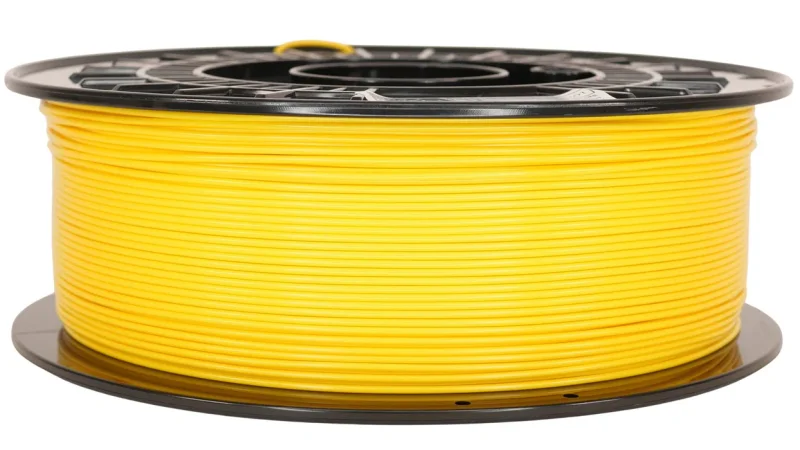
Pro PCTG is a filament that offers up to 90% light transmittance, produces sharper prints than PETG, and comes in over 40 color and finish options for transparent and functional parts. Source: 3D-Fuel.
Additive manufacturing is progressing through improvements in hardware and software, but also through advances in material science. The range of available filaments has a direct impact on the kinds of components that can be produced. As designers and engineers push 3D printing into more functional and industrial applications, the materials they rely on should keep pace with higher performance expectations.
3D-Fuel has recently introduced Pro PCTG as part of this effort to advance filament performance. This article discusses how Pro PCTG offers a practical progression from PETG by combining higher impact strength, better resistance to environmental factors, and more consistent printability, offering designers and engineers a material that can support a wider range of functional and industrial applications.
From PETG to Pro PCTG: Progress in Co-Polyester Filaments
Polyethylene terephthalate glycol-modified (PETG) has been one of the most common choices among 3D printing filaments. It is easy to print and offers a balance of strength, durability, and visual quality that makes it suitable for a wide range of applications. PETG provides the rigidity of materials like PLA and the flexibility of ABS, which makes it a standard option for functional parts and prototypes.
Despite this versatility, PETG has limitations that restrict its use in more demanding environments. Its impact resistance is moderate, leaving parts vulnerable under repeated stress or sudden shocks. PETG also tends to degrade in prolonged outdoor exposure due to sensitivity to ultraviolet light, which limits its suitability for components used in sunlight or weathered conditions. Similarly, its tendency to absorb moisture from the environment can affect print consistency and surface finish if the filament is not stored and handled carefully.
Pro PCTG was developed as a response to these shortcomings. It is a co-polyester filament that retains the accessibility and general-purpose nature that made PETG popular, and broadens its usable scope. Pro PCTG provides greater toughness, enhanced resistance to environmental exposure, and more stable printing behavior, making it a stronger candidate for functional parts where reliability over time is essential.
Mechanical Properties and Performance
Impact Toughness
Pro PCTG has high impact resistance. The measured toughness of Pro PCTG is between fifteen and thirty-five times higher than that of standard PETG, depending on the testing method and baseline used for comparison. In standardized evaluations, Pro PCTG achieves an Izod notched impact strength of 860 J/m (ASTM D256) or 93 kJ/m² (ISO 180). These figures place it far above what is typically expected from general-purpose co-polyesters. This means components made from Pro PCTG are less prone to sudden breakage under shock or repeated stress, making the material suitable for parts that will be handled extensively or subjected to impact during service.
Tensile and Flexural Strength
Pro PCTG also demonstrates robust tensile and flexural properties. Under ASTM testing, the tensile strength at yield reaches 460 kgf/cm² (approximately 45 MPa), with a break value of 540 kgf/cm² (around 53 MPa). Flexural strength is measured at 680 kgf/cm² (about 66 MPa), paired with a flexural modulus of 18,300 kgf/cm² (1,600 MPa). These results indicate the material’s ability to withstand significant static and bending loads without permanent deformation. This makes Pro PCTG appropriate for load-bearing parts such as brackets, mounts, or structural connectors where dimensional stability under stress is crucial. The combination of strength and elongation also ensures that parts retain their shape rather than fracturing prematurely when subjected to mechanical strain.
Layer Adhesion
As with all FFF-printed materials, interlayer bonding is a decisive factor for overall performance. Pro PCTG benefits from a molecular structure that promotes strong adhesion between printed layers, provided that the material is deposited at the correct speed and temperature. Good bonding reduces the likelihood of delamination and contributes directly to the consistency of mechanical performance across a printed object. For end-use applications, this translates into parts that are not only strong in-plane but also through the Z-axis, increasing reliability when they are exposed to multi-directional stresses. This characteristic is relevant in geometries that are subjected to torsional forces, where weaker layer adhesion could present a point of failure.
Environmental and Chemical Resistance
In some applications, exposure to light, chemicals, or humidity can degrade printed parts. Pro PCTG has the ability to withstand environmental and chemical challenges that limit the performance of conventional co-polyesters.
UV Resistance
PETG can lose its mechanical integrity and become brittle when exposed to prolonged sunlight. Pro PCTG, on the other hand, has enhanced resistance to ultraviolet radiation, which allows parts to retain their strength and dimensional stability for longer periods under outdoor or high-UV conditions. The improved UV resistance extends the usable life of printed components in environments such as outdoor fixtures, industrial housings, or equipment used in partially exposed settings.
Chemical Resistance
Pro PCTG also demonstrates strong resilience against a broad spectrum of chemicals, making it suitable for use in industries such as oil and gas, automotive, and robotics. Components printed with this material are less likely to degrade or lose structural integrity when in contact with oils, fuels, or cleaning agents commonly encountered in these sectors. This resistance broadens the range of functional applications, especially for end-use parts that endure routine exposure to harsh operating conditions without requiring frequent replacements or protective coatings.
Moisture Absorption
Another advantage of Pro PCTG over PETG is reduced moisture uptake, as it absorbs water at only about one-third the rate of PETG. This characteristic contributes to greater consistency in storage and use, as the filament is less prone to swelling, warping, or bubble formation during printing.
The material helps ensure consistent extrusion and surface quality across multiple prints by maintaining a more stable moisture profile, reducing the likelihood of failed jobs or variability in part performance. This results in less time spent drying spools before use and more predictable results, even when operating in environments with fluctuating humidity levels.
Thermal Properties
3D-Fuel’s Pro PCTG balances between mechanical toughness and thermal stability. The glass transition temperature (Tg) of 84 °C indicates that Pro PCTG maintains its structural rigidity under moderately elevated temperatures before the onset of dimensional changes that could compromise part performance. This is particularly important for applications where printed parts may be exposed to cycles of heating and cooling, as a higher Tg helps delay deformation or creep under load.
The heat deflection temperature (HDT) of Pro PCTG is recorded at 74 °C under a load of 0.455 MPa. HDT is a threshold at which the material begins to deform under stress in heated conditions, providing a benchmark for its use in functional components that are subjected to mechanical forces in warm environments. Compared to high-quality PETG, Pro PCTG demonstrates approximately 5 °C higher heat resistance, which translates into a noticeable performance advantage in real-world conditions.
This enhanced heat resistance expands the range of applications where Pro PCTG can be considered a dependable choice. For instance, for outdoor uses, where surfaces may be exposed to direct sunlight and elevated ambient temperatures, the combination of a higher Tg and HDT reduces the risk of softening and deformation. Similarly, in automotive contexts, particularly under-hood components that experience fluctuating but elevated temperatures, Pro PCTG’s stability provides a safeguard against warping and loss of functionality. Although it is not designed to withstand extreme heat conditions like high-heat polymers, it fills an important middle ground by providing adequate resistance for many real-world applications.
Clarity and Aesthetics
Pro PCTG can achieve up to 90% light transmittance, giving printed parts optical clarity. This makes it ideal for projects where transparency or visual inspection is important, such as visual prototypes, housings for illuminated components, and clear protective covers.
The higher clarity also supports functional uses that benefit from see-through or low-distortion surfaces, such as lenses, light guides, and transparent enclosures. Compared to standard PETG, Pro PCTG produces results with greater definition and sharpness.
Moreover, Pro PCTG is available in a wide range of finishes. More than 40 color and finish options are offered, spanning clear and translucent variants, toolbox-style colors for industrial use, as well as aesthetic choices like matte black and glitter blends. This variety provides flexibility for both professional and creative projects, allowing parts to be tailored to their intended environment without compromising the material’s performance.
Lubricity, Processing and Printability
PETG is often characterized by a degree of tackiness, which can make parts prone to dragging or sticking when used in assemblies with moving interfaces. Pro PCTG, by contrast, presents a smoother, wax-like surface finish that improves part interaction and makes it better suited for sliding mechanisms, pivots, and components designed to move against one another without excessive friction.
From a processing perspective, Pro PCTG is designed for stable, predictable printing conditions as it does not generally require using an enclosure, which allows it to be printed on a wide range of desktop and professional systems without additional thermal control. The filament also holds up well in storage, with slower moisture uptake, which allows spools to maintain usable dryness for longer periods and reduces the need for frequent drying before use.
Another advantage is the reduced tendency toward warping and brittleness, which contributes to reliable results across different print geometries. These traits, combined with the availability of pre-configured printer profiles for widely used machines such as Prusa, Bambu Lab, and Creality, allow for consistent output with minimal calibration effort.
Application Areas
Pro PCTG’s combination of mechanical toughness, chemical resistance, and dimensional stability makes it well-suited for various end-use applications. For instance, one of its most practical uses is in the production of functional parts that withstand daily mechanical stress without premature wear. Unlike materials that may only serve well in prototyping, Pro PCTG provides the durability needed for components for long-term service. This distinction allows designers to move beyond test pieces and confidently deploy 3D printed elements in working assemblies.
In robotics, Pro PCTG’s high impact tolerance and strong layer adhesion make it valuable for housings, brackets, and moving components that experience repeated stresses during operation. Similarly, in prosthetics and orthotics, the balance between strength and clarity supports both structural reliability and visual quality.
In oil and gas environments, exposure to chemicals is a concern. In this regard, the chemical resistance characteristics of Pro PCTG reduce the risk of degradation, offering a material option for fittings, fixtures, and replacement parts in demanding field conditions. Automotive applications also benefit from these traits, as the filament can be used for clips, enclosures, or parts that face a mix of mechanical loading and environmental exposure.
Many polymers either lack the toughness required for repeated flexing or are too brittle to hold their shape under strain. Pro PCTG’s high elongation at break allows for secure and repeatable fastening without cracking or loss of form, making it suitable for snap-fit assemblies that must be disassembled or replaced during maintenance.
Conclusion
PETG has long served as a versatile and accessible filament, but its limitations in toughness, UV stability, and moisture resistance create challenges for demanding projects. Pro PCTG from 3D-Fuel is not just an upgrade to PETG but a transformative material option that expands opportunities for demanding 3D printing projects. It addresses the shortcomings of traditional co-polyester filaments by balancing between mechanical strength, environmental resistance, optical clarity, and printability. For users seeking to push beyond the limitations of traditional co-polyesters, Pro PCTG represents a practical step forward.
For more detailed specifications, color options, and printer profiles, the Pro PCTG product page on 3D-Fuel’s website provides additional resources and guidance.
References
3D-Fuel. Fuling your creativity. [Online] Available at: https://www.3dfuel.com/ (Accessed on September 18, 2025)
Pro PCTG, Midnight Black, 1.75mm. [Online] 3D-Fuel. Available at: https://www.3dfuel.com/collections/1-75mm-pro-pctg/products/pro-pctg-midnight-black-1-75mm (Accessed on September 18, 2025)