Always-On Intelligence at the Edge
BrainChip AkidaTag Reference Platform addresses how always-on intelligence can run locally, continuously, and efficiently within strict power budgets.

06 Oct, 2026. 4 minutes read
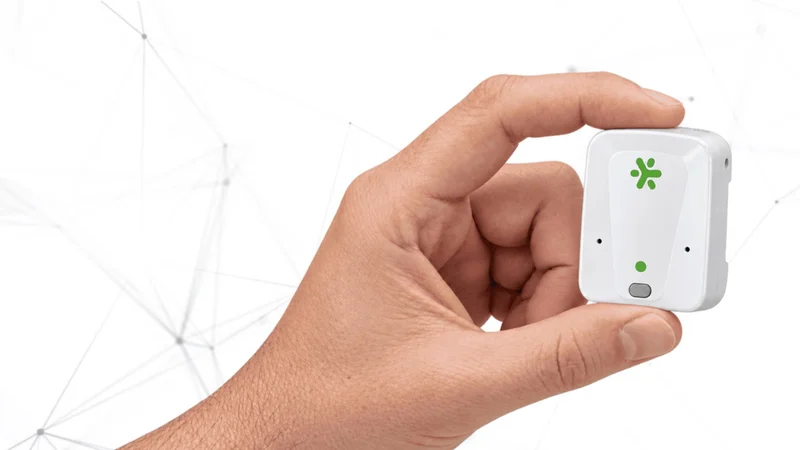
Wearable devices are expected to do more with less. Smaller form factors, longer battery life, and continuous sensing place tight limits on compute, energy, and system design. At the same time, expectations around intelligence are increasing, as devices are expected to track data, interpret signals, detect anomalies, and adapt to individual users in real time.
This creates a fundamental engineering constraint. Advanced AI workloads require significant computational resources, which directly translate into power consumption. In compact, battery-powered systems, this trade-off has historically limited the level of intelligence that wearable devices can deliver.
BrainChip’s AkidaTag© Reference Platform addresses this constraint directly. It demonstrates how always-on intelligence can run locally, continuously, and efficiently within strict power budgets. The result is a new class of wearable systems that operate for days or weeks while executing real-time AI workloads on-device.
The Power Behind Wearable AI
Wearable systems operate under tight energy limits, where battery capacity is constrained by size, weight, and user comfort. Even small increases in power consumption can reduce usable time from days to hours.
Traditional AI architectures are not optimized for this environment. CPUs and GPUs process data continuously, regardless of signal relevance, which leads to unnecessary energy use in applications that require persistent monitoring.
To compensate, developers often simplify models or reduce sampling rates. While this lowers power consumption, it also degrades performance. In applications such as health monitoring or anomaly detection, reduced fidelity can limit usefulness.
Cloud-based processing introduces an alternative approach, but it adds latency, dependency on connectivity, and privacy concerns. For many wearable use cases that require immediate response or handle sensitive data, relying on remote infrastructure is not practical.
Running meaningful AI continuously within the power limits of compact, battery-powered wearables remains a core engineering constraint.
Event-Based Intelligence for Continuous Operation
BrainChip’s Akida architecture approaches this problem differently. It is designed to process temporal data efficiently using state-space models. These models capture how signals evolve over time, allowing the system to focus on meaningful changes while maintaining continuous awareness of the signal context.
In wearable applications, this translates into significant efficiency gains. Periods of inactivity consume minimal power, and processing scales with signal relevance rather than time.
The AkidaTag© Reference Platform translates this architecture into a complete, deployable system that combines hardware, software, and models into a validated blueprint for evaluation and development.
A Reference Platform Built for the Real-World
The AkidaTag is a compact, battery-powered wearable platform designed to demonstrate always-on AI in practice. It integrates BrainChip’s AKD1500 neuromorphic processor with a Nordic Bluetooth microcontroller, along with sensing components such as a microphone and accelerometer.
This configuration supports continuous data acquisition and local inference within a tightly controlled power envelope. Typical power consumption during inference remains below 50 milliwatts, enabling operation over extended periods without frequent recharging.
Latency is also optimized for real-time interaction, with keyword spotting tasks completing in under 50 milliseconds and anomaly detection tasks below 100 milliseconds. These response times support immediate feedback in user-facing applications.
Rather than serving as a single-purpose device, the platform provides a development foundation that demonstrates how multiple AI workloads can coexist within the same system, all operating locally and continuously.
Anomaly Detection and Adaptive Learning
Anomaly detection is a core capability of the platform, particularly in wearable systems that monitor dynamic signals such as motion, sound, or physiological activity.
Instead of relying on predefined thresholds, the system learns baseline patterns and identifies deviations, which help detect subtle changes that may indicate emerging conditions or events.
On-device learning allows the model to adapt incrementally as new data is observed without requiring full retraining or cloud-based updates, enabling continuous personalization directly within the device.
This becomes especially relevant in health monitoring, where baseline behavior varies significantly between individuals. As the system adapts over time, it improves prediction accuracy and reduces false alerts, while keeping all learning and inference local and independent of external connectivity.
Extending Battery Life Without Reducing Capability
Battery life remains a primary focus in wearable system design, where limited capacity must support continuous sensing and real-time AI processing without frequent recharging. This places sustained pressure on system efficiency.
The AkidaTag platform addresses this by reducing the amount of computation required during operation and minimizing energy per processing step, with energy per operation measured in the picojoule range. Combined with its temporal processing approach, this enables multi-day or multi-week operation depending on usage conditions.
This level of endurance supports continuous monitoring in real-world scenarios, where devices can operate persistently in the background while delivering timely insights without requiring user intervention.
Applications for Always-On Wearables
The reference platform supports a range of wearable applications that require continuous sensing and real-time, on-device inference within strict power limits, and can be adapted across industrial, consumer, and healthcare environments.
In industrial settings, anomaly detection can be applied to vibration data for continuous equipment monitoring, enabling early identification of irregular patterns that indicate wear or failure, while low power consumption supports deployment across distributed sensor networks.
In consumer devices, keyword spotting enables always-listening voice interfaces that operate locally, ensuring low-latency response and preserving user privacy, with processing triggered only by relevant audio patterns.
In health monitoring applications, the platform supports real-time analysis of physiological and behavioral data, where continuous operation allows detection of patterns not visible in intermittent measurements, and on-device learning enables adaptation to individual users over time.
Across these domains, systems must sustain continuous data acquisition, deliver immediate inference, and operate within limited energy budgets, all of which are addressed within a single integrated platform.
Reducing Development Complexity
Developing wearable AI systems requires alignment across integration, optimization, and validation, particularly in areas such as power management, model deployment, and system-level performance.
The AkidaTag Reference Platform provides a validated foundation that integrates hardware, software, and AI models into a unified system, allowing developers to evaluate performance under realistic conditions without building from scratch, while supporting adaptation to product-specific requirements through a broader ecosystem.
In both consumer and industrial contexts, this approach shortens development cycles, supports faster iteration, and reduces the risks associated with deploying always-on AI in constrained environments.
Explore the Akida Wearables Platform
The AkidaTag Reference Platform provides a practical foundation for evaluating and developing always-on wearable AI under real-world scenarios, combining low-power operation, on-device learning, and integrated system design in a deployable form factor.
Developers and system architects can explore the platform to assess performance, accelerate prototyping, and adapt the reference design to specific application requirements across health, industrial, and consumer domains.
For more information, visit: https://brainchip.com/akida-tag-lp/