Why EDA Workloads Need Specialized HPC Management
Explore how specialized HPC management helps EDA workloads handle millions of jobs, improve throughput, and optimize costly software licenses.

19 Nov, 2026. 7 minutes read

What happens when an electronic design automation (EDA) environment has enough compute capacity, but design jobs are still waiting to run?
The bottleneck may not be CPU or GPU availability. It can be scheduler latency, workflow dependencies, license contention, or limited access to specialized verification resources.
EDA workloads place unusual demands on high-performance computing (HPC) infrastructure because semiconductor design flows can generate millions of simulation, verification, synthesis, and analysis jobs with widely different runtimes and resource requirements. Intel reports that its silicon design engineers run more than 273 million compute-intensive batch jobs every week, with individual jobs ranging from a few seconds to several days.
At this scale, maximizing compute utilization alone does not guarantee maximum design throughput. This article explains why EDA needs specialized HPC management to improve design and verification throughput.
EDA Workloads Require a Different Scheduling Model
EDA workloads are not uniformly short-running, nor are they fundamentally incompatible with general-purpose HPC schedulers. The distinction is that the workload distribution and resource constraints change what efficient scheduling needs to optimize.
Consider a conventional engineering workload such as a large computational fluid dynamics (CFD) simulation. A single simulation can consume substantial compute resources for hours or days. In that environment, the time spent dispatching the job is generally short compared with its total runtime.
EDA environments can contain a very different mix. A design flow may generate huge numbers of jobs with highly variable runtimes. Some tasks complete in seconds, while others can run for hours or days.
The table below highlights the key differences that make throughput, resource coordination, and workflow awareness especially important in EDA scheduling.
Dimension | Conventional long-running HPC workload | EDA workload |
Job volume | Often relatively small numbers of large jobs | Potentially millions of jobs across design flows |
Runtime | Frequently dominated by long-running simulations | Highly variable, from seconds to days |
Primary objective | Efficient execution of individual jobs and cluster utilization | Maximum design and verification throughput |
Scheduling overhead | Usually small relative to job runtime | Can become significant when repeated across high job volumes |
Resource model | Primarily compute, memory, storage, and accelerators | Compute plus licenses, tool environments, workflow dependencies, and specialized verification resources |
Workflow | Often simulation- or application-centric | Highly iterative, dependency-rich design and verification flows |
Shared-resource constraints | Primarily infrastructure capacity | Infrastructure plus expensive software and scarce verification resources |
The distinction is important because CPU utilization is only one measure of EDA infrastructure efficiency. A cluster can have available compute capacity while jobs are waiting for licenses. Conversely, licenses can be available while required compute capacity is saturated.
The same principle applies to hardware-assisted verification. Compute resources can be available while engineers wait for emulator access. The scheduling problem therefore becomes coordinating the resources required to complete useful design work.
Why Throughput and Startup Speed Matter More in EDA
When a design flow generates millions of jobs a day, the time spent queuing, allocating, and starting each job can become a major performance constraint. For instance, a job that may run for five seconds but wait thirty seconds to start spends six times longer waiting than executing. At EDA scale, that overhead adds up across every regression and verification run.
For EDA teams, the impact is direct. Lower scheduling latency means more jobs can be completed within the same design window. Similar dynamics show up in other high-throughput HPC domains. A 2025 study of hybrid AI-HPC scientific workflows on the Frontier supercomputer found that specialized task runtimes achieved throughput of up to 930 tasks per second, with a combined configuration exceeding 1,500 tasks per second.
These results are not specific to EDA, but they show how task-launch and scheduling overhead can become a significant factor when HPC workloads involve many tasks.
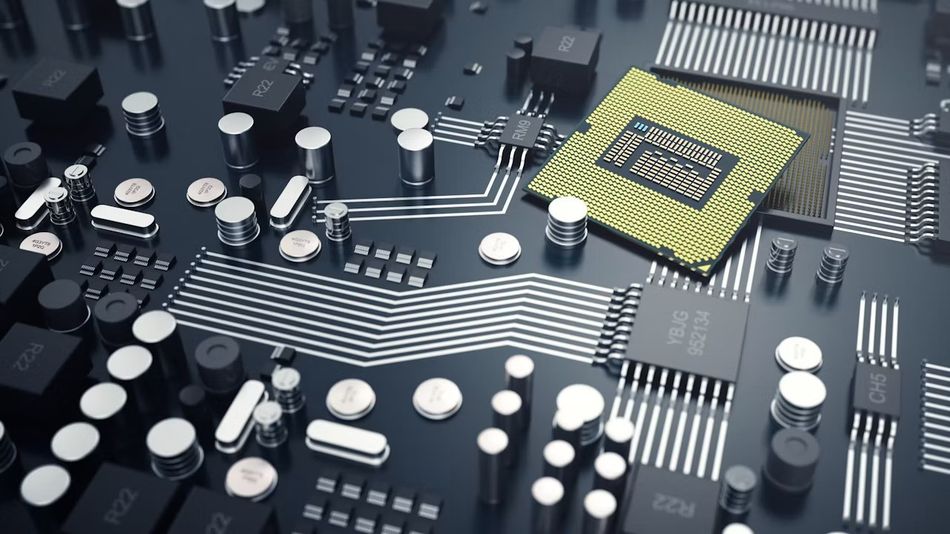 HPCWorks Flowtracer. Source: AdobeStock.
Where Conventional HPC Scheduling Falls Short for EDA
The problem with applying a conventional HPC model to EDA is not that generic schedulers can't handle EDA jobs. The problem is that EDA introduces constraints that matter more as workloads scale.
Those constraints become clearer when you look at how EDA workloads are structured. Three characteristics are particularly important:
1. Jobs Are Not Truly Independent
A conventional batch model can schedule jobs effectively as individual units, but EDA flows often require the scheduler to understand relationships between those jobs. A design process can involve compilation, simulation, regression, analysis, reporting, and subsequent verification stages. One stage's output can determine whether another stage can start.
If the scheduler only sees individual jobs, it has limited visibility into the larger flow. This matters particularly when failures occur. If one stage fails, the objective is not necessarily to restart the entire workflow. Dependency-aware systems can identify the affected portion of the flow and resume from an appropriate point. Siemens describes this capability in HPCWorks™ Flowtracer™ software, which tracks dependencies and enables users to resume execution after corrective action.
2. Compute Is Not the Only Resource
A basic compute-centric scheduling model focuses on nodes, CPUs, memory, GPUs, and related infrastructure. EDA requires a broader resource model. For example, a job may need:
A particular number of CPU cores
A defined memory allocation
A specific EDA tool
A compatible tool version
One or more available software licenses
Access to particular storage or data
A specialized emulator or accelerator
A particular time window
A server can be available, but the job still can't start because another required resource is unavailable. That makes license and specialized-resource awareness part of workload scheduling, not a separate administrative concern.
3. Competing Priorities Complicate Scheduling
EDA teams routinely manage competing workloads. A large regression can contain thousands of tasks, while a smaller but time-critical design iteration may need to take priority. At millions of jobs per day, fairness, reservations, preemption, and priority policies must operate efficiently without creating additional scheduling bottlenecks.
This requires more than assigning jobs a fixed priority. The scheduler may need to account for factors such as fairshare between teams, reserved capacity for critical workloads, and preemption when higher-priority work needs resources. HPCWorks Velocity™ software provides these controls for high-throughput environments, including fairshare, reservations, and preemption.
The core argument, then, is not that EDA needs more HPC management. It needs a resource model and scheduling architecture that reflect how EDA actually works.
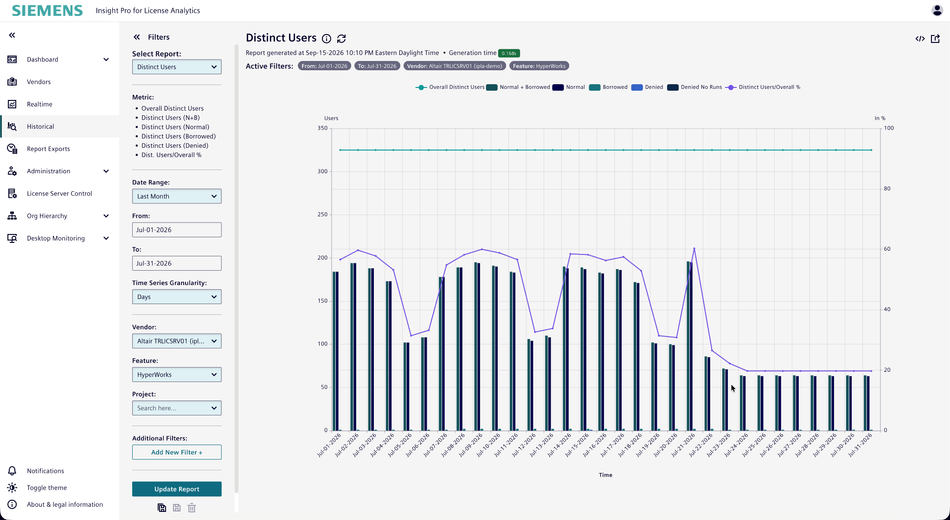
License Utilization: The Hidden Cost Driver in EDA
Compute availability does not guarantee that an EDA job can run. Many EDA workflows depend on floating software licenses for simulation, synthesis, verification, and analysis tools. If a required license is occupied, the job remains queued even when CPU and memory resources are available.
This creates a scheduling problem that conventional HPC resource models do not fully capture. The scheduler must consider compute capacity and license availability together.
Consider a verification regression with thousands of simulation tasks. The cluster may have enough cores to start another batch, but the required simulator licenses may already be in use. Those compute resources remain idle while jobs wait for licenses. The reverse can also occur when licenses are available while compute capacity is occupied by workloads that could have been scheduled differently.
License-Aware Scheduling Changes the Optimization Target
License-aware scheduling can coordinate these resources by considering license requirements when selecting and dispatching jobs. This helps prevent:
Idle compute: Resources waiting for available licenses.
License bottlenecks: Jobs accumulating behind limited license pools.
Poor prioritization: Lower-value workloads consuming licenses needed for time-critical runs.
Inefficient capacity planning: License demand being evaluated separately from compute demand.
Research on license-aware EDA scheduling demonstrates the potential impact. One 2025 IEEE CloudCom paper reported a 65% reduction in average wait time, with missed deadlines reduced from 62.5% to 12.5%, through license-aware task clustering and adaptive workflow scheduling. These results are specific to the study's evaluation environment, but they show why licenses should be treated as schedulable resources rather than an administrative constraint.
The important point is that license utilization should be evaluated alongside compute utilization. A highly utilized cluster can still deliver poor EDA economics if expensive licenses are idle or if compute resources are waiting for them.
What Specialized HPC Management Means for EDA Teams
For EDA teams, specialized workload management ultimately improves engineering throughput rather than simply increasing infrastructure utilization.
The benefits fall into several connected areas:
Higher job throughput: More EDA tasks can be dispatched and completed within the same time window. Siemens reports 6–10x throughput improvements for hierarchical-scheduling deployments without additional compute capacity.
Lower scheduling overhead: Fast dispatch is particularly valuable when workloads contain large numbers of short-running jobs.
Better compute utilization: Work can be dispatched more efficiently instead of leaving capacity idle while the scheduler processes queues or waits on other constraints.
Higher license utilization: License-aware scheduling can coordinate software availability with compute demand rather than treating licenses as an afterthought.
Better emulation utilization: Shared emulation resources can be scheduled using policies such as fairshare, reservations, limits, and preemption.
Improved workflow control: Dependency-aware orchestration helps teams manage complex flows without treating every task as an isolated batch job.
The larger benefit comes from combining these capabilities. Compute, licensing, workflow dependencies, and emulation are interconnected constraints in EDA. These measures connect infrastructure performance to what matters most: how quickly engineers can complete design and verification work.
How HPCWorks Hero Brings Specialized Workload Management to EDA
Software licenses are not the only non-compute resources that can constrain EDA workflows. Verification teams also depend on specialized hardware such as emulation platforms, where limited capacity may need to be shared across multiple users, projects, and designs.
The Siemens HPCWorks portfolio addresses different parts of this resource-management problem rather than treating all EDA workloads as a single scheduling category.
Specialized Scheduling for Hardware Emulation
EDA verification introduces another resource-management problem. Hardware emulation platforms are expensive, and shared resources don't behave like ordinary compute nodes.
HPCWorks Hero™ software addresses this by treating emulation resources as schedulable, shared resources. It provides scheduling policies such as fairshare, reservations, limits, and preemption, while coordinating workflows from design compilation and emulator selection through software and regression testing.
HPCWorks Hero currently supports multiple hardware-emulation environments, including Veloce™ Strato CS, Cadence Palladium and Protium, and Synopsys ZeBu and HAPS.
That multi-vendor support is strategically important for organizations with heterogeneous verification environments. They can apply consistent resource-sharing and scheduling policies across different emulation platforms rather than building a separate management model around each vendor.
Managing Veloce Strato CS as a Shared Resource
Siemens' Veloce Strato CS hardware is designed for large-scale integrated circuit (IC) verification and supports multi-user operation across teams and designs. That makes resource allocation a key consideration when multiple verification workloads compete for the same emulation capacity.
Integrating emulation into the workload-management layer allows teams to treat this specialized verification capacity as a managed resource rather than an isolated appliance.
This extends the scheduling model beyond compute. The goal is not simply to keep processors busy, but to ensure the resources required for design and verification work are available when needed.
Conclusion
EDA teams cannot solve every throughput problem by adding more compute. When scheduling overhead, license contention, workflow dependencies, and shared emulation resources limit execution, additional capacity may not address the real bottleneck.
Specialized workload management helps align these resources around the work that matters most. This includes completing more design and verification jobs in less time. HPCWorks Velocity provides high-throughput scheduling for EDA workloads, while HPCWorks Hero efficiently manages shared hardware-emulation resources.
If scheduling or resource contention is limiting your EDA environment, contact Siemens to explore how HPCWorks can help improve workload throughput and resource utilization.