Quantum Dot-Based Infrared Cameras by Emberion: Enabling Single-Sensor, Multi-Wavelength Vision
Traditional IR cameras are restricted to a limited set of wavelengths. They use multiple detectors to gather data across spectral bands. Emberion's design uses a single sensor and allows for a wide range of spectral sensitivity. This approach simplifies the system's complexity and reduces costs.

22 Apr, 2026. 5 minutes read
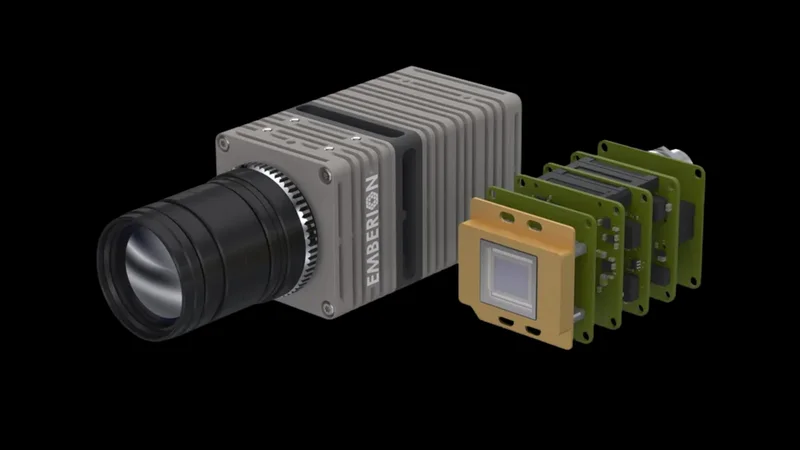
Why Infrared Vision Needs an Architectural Reset
Infrared (IR) sensing was once considered a specialized capability for niche scientific applications. It is now a core part of imaging technologies used in many areas, such as consumer products, industry, automation, and defense. IR imaging captures information beyond the visible spectrum, enabling visibility in low-light and obscured conditions.
As the industries mature and applications get more demanding, raw performance metrics are no longer sufficient. The imaging systems must be scalable, robust, long-lasting, and adaptable at the system level. Many imaging sensors available in the market often compromise on integration simplicity and manufacturability to maximize sensitivity within a limited wavelength band, often for narrow, application-specific use cases. Therefore, deploying a traditional IR vision system involves complex sensor stacks, specialized materials, and careful considerations for thermal management.
All these things make one thing clear: the issue is not incremental but architectural. Addressing them requires rethinking how IR sensors are designed, manufactured, and integrated rather than optimizing the existing options.
Structural Challenges of Traditional Infrared Sensors
IR sensors, available in the market and widely used in the industries, are complex at both device and system levels. They rely on wafer bonding as their fabrication technique, where the photodetector layer and the readout integrated circuit (ROIC) are fabricated on different wafers and physically bonded. The use of group III-V semiconductors for IR detection makes wafer bonding necessary but limits scalability for applications targeting high-volume deployment.
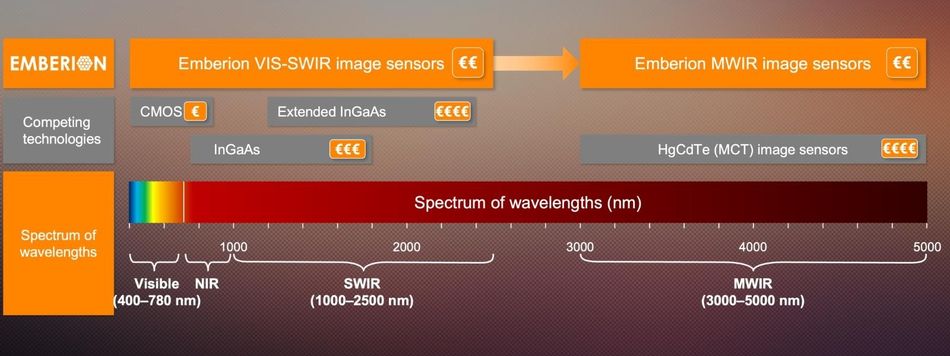
Traditional sensor materials are designed to be sensitive to specific wavelengths. Silicon-based sensors, for instance, are appropriate for the visible spectrum, whereas materials such as InGaAs are employed for short-wave infrared (SWIR) detection. Each material is engineered to function within a limited spectral range, thereby necessitating the integration of multiple sensors by system designers to achieve wider spectral coverage. Such design requirements cascade to increase the size, weight, and power (SWaP) of the sensor and reduce its flexibility to adapt to a new wavelength range or application.
Since these challenges stem from the core architecture of the IR sensors, solving them requires a drastically different approach.
Emberion’s Quantum Dot-Enabled Single-Sensor, Multi-Wavelength Infrared Imaging
A different approach to infrared sensing is emerging through the use of colloidal quantum dots (CQDs) as the photodetecting material. Quantum dots are tiny semiconducting crystals that can change their bandgap and spectral sensitivity by changing their size and composition. Unlike traditional IR detectors, CQD-based devices detect a wide range of wavelengths without using multiple materials. By depositing a thin film of CQD directly onto an ROIC, a complex wafer bonding process is no longer required, simplifying manufacturability and scalability.
With a vision of expanding machine vision solutions beyond the visible spectrum, Emberion brings the VS20 VIS‑SWIR family of affordable, high-performance cameras covering wavelengths from the visible range to SWIR (400 nm up to 2500 nm) with specific tunable peaks. In future, Emberion will also introduce quantum dot-based MWIR sensors.
Emberion's CQD-based VS20 VIS-SWIR cameras offer high-speed imaging at VGA resolutions and high dynamic range (>120 dB with non-saturating performance using logarithmic mode ROIC design implementation). The cameras support interfaces such as GigE, Camera Link, and SDI.
Table 1: Products by Emberion
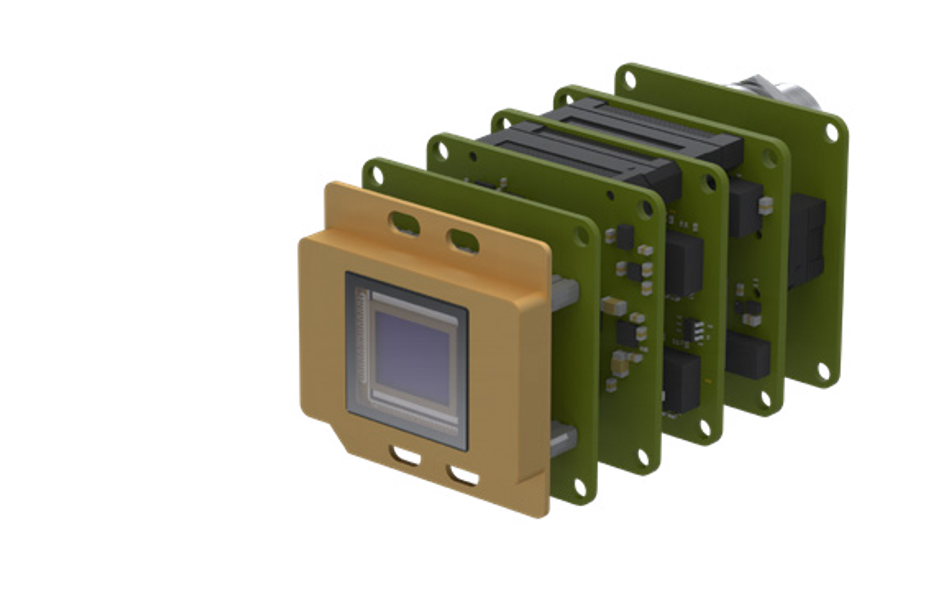 Emberion VS20 VIS-SWIR Camera Core Series
| 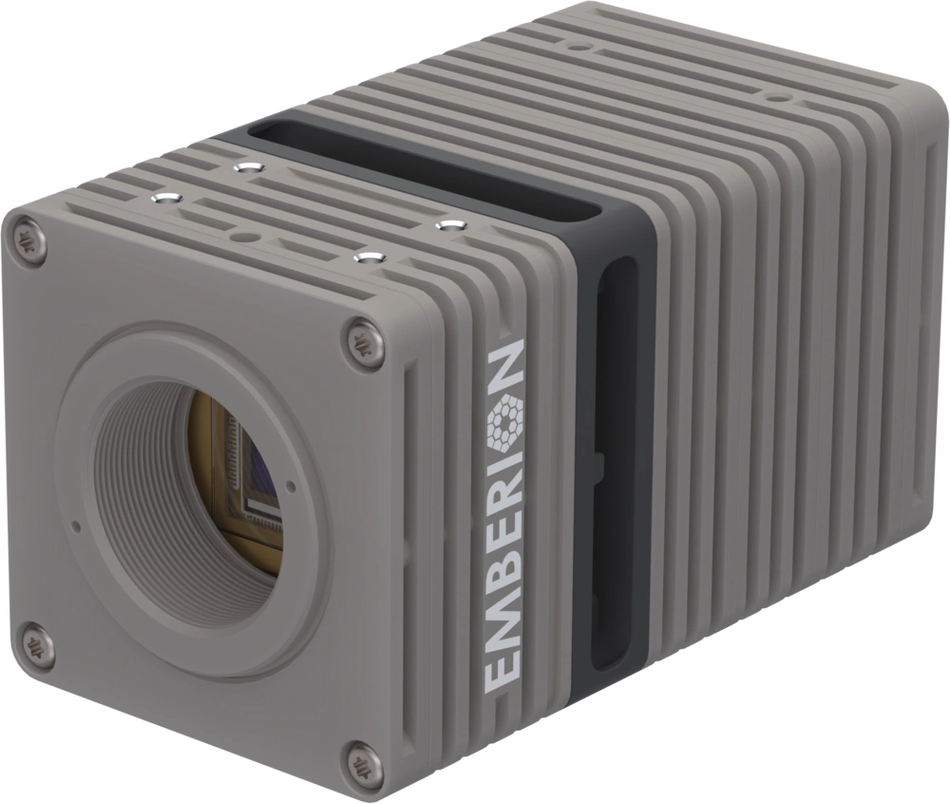 Emberion VS20 VIS‑SWIR Camera Series
|
Key Applications and Use Cases
IR imaging reveals information inaccessible in the visible spectrum. Some applications include:
Autonomous and Automotive Systems
Autonomous and advanced driver-assistance systems (ADAS) require constant sensing in a variety of environmental conditions. IR imaging enabled by Emberion’s cameras enables visibility in low light, glare, fog, smoke, and various other adverse weather conditions.

Defense and Surveillance Systems
In defense and security applications, IR systems must operate reliably in obscured environments. Multi-wavelength capability improves visibility through smoke, haze, and camouflage while also supporting operation in less commonly used wavelengths.

Industrial, Manufacturing, and Healthcare
IR imaging plays a critical role in industrial and manufacturing applications by enabling non-invasive inspection and material analysis. It is mainly used for quality control tasks but can also be extended for various other applications.
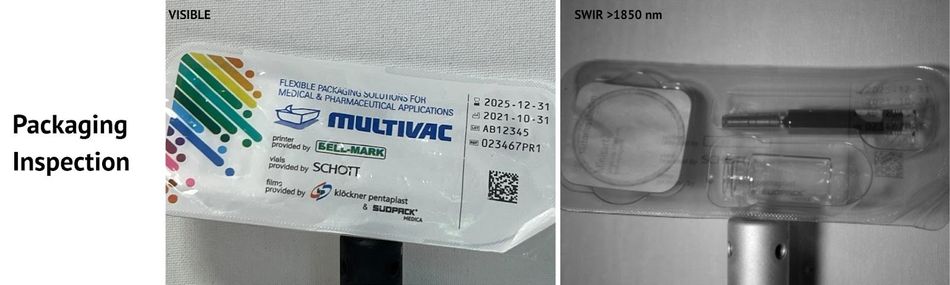
SWIR is used in hospitals for observing the skin surface and a few centimeters below it. It can be applied for diagnosing critical diseases like skin cancer. In the pharmaceutical sector, IR-based imaging enables seeing through opaque packaging for quality assurance and inspection.
Semiconductor Inspection
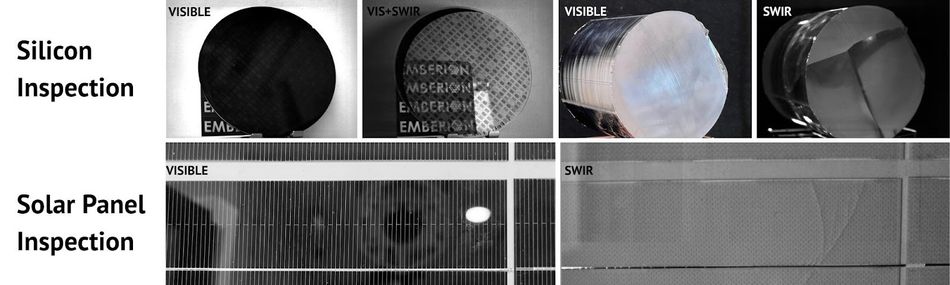
Silicon wafers are highly reflective in visible light, but under SWIR, their opacity reduces, which allows engineers to examine the internal structures and defects of the silicon wafer. SWIR also exposes cracks and defects on solar panels that are completely invisible to the naked eye.
Applicability Across Use Cases
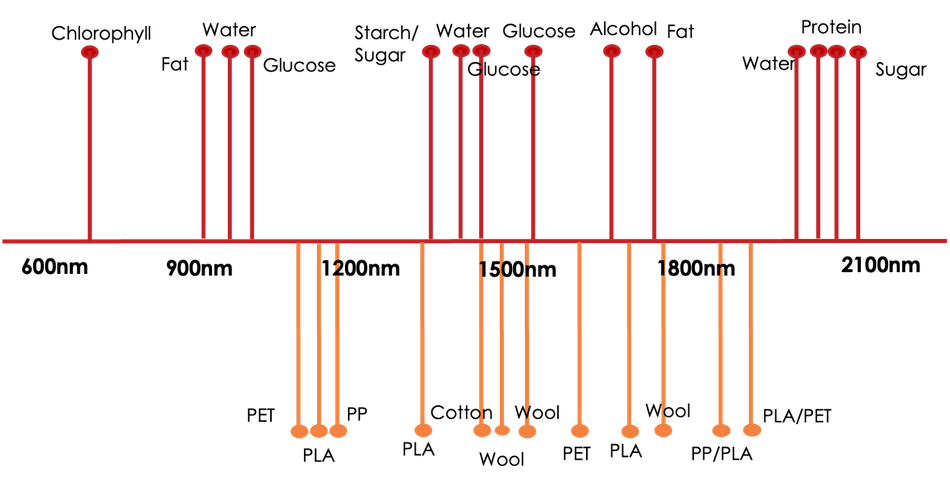
Beyond these examples, IR imaging enables a wide range of additional use cases. Other applications include food quality assessment, where fruits or packed items are inspected for moisture or contamination. SWIR is used for accurate face detection when visible rays are blocked by objects like dark sunglasses. In plastic recycling, different polymers exhibit distinct spectral signatures, allowing accurate sorting with SWIR imaging. Liquids and powders also look different under IR, which makes analysis and identification possible.
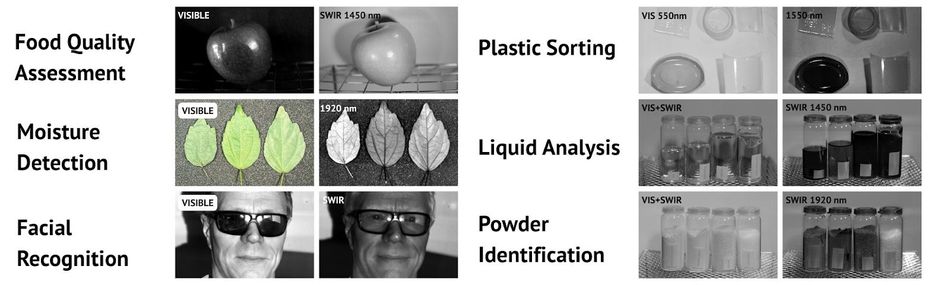
The applications discussed here are just examples to showcase the possible use cases. IR sensing can be extended to a range of different use cases beyond those explicitly listed here.
System-Level Benefits of the New Sensor Architecture
Emberion’s VS20 series simplifies how IR systems are designed, integrated, and scaled. The architectural changes in the sensor fabrication directly impact the system complexity, manufacturability, and long-term deployment.
At the system level, several practical advantages are evident, including:
Reduced complexity: With a simplified overall system design, the number of components required can be fewer, reducing the bill of materials (BOM). This eventually also reduces the efforts required for integration.
Improved scalability: CMOS-compatible fabrication enables access to mature semiconductor processes, which makes the products easily scalable to higher volumes.
Simplified mechanical design: As the product will eventually be more compact and integrated, mechanical and cooling constraints are reduced, supporting highly SWaP-optimized designs.
Easier to customize: As requirements change, the wavelength range in which the device needs to operate can be adjusted without a complete system redesign.
Rethinking IR Vision
Traditional IR solutions are available as multi-sensor designs that rely on wavelength-specific materials and require a complex wafer bonding fabrication process.
Emberion’s VS20 series follows a CQD-based approach to enable a single sensor to carry out multi-wavelength imaging on a CMOS-compatible platform, drastically cutting the costs and simplifying the system architecture. It aligns closely with today’s needs, where flexibility, scalability, and long-term adaptability are as important as raw performance.
Visit Emberion's official webpage to find out how Emberion’s IR solutions can help you build simpler, more affordable, and more scalable IR systems.