Overcoming the body's oxygen gap in cell-based therapies
A multi-institution team has developed an effective intervention to shield a sufficient number of cells from the host immune system, while also providing access to oxygen and nutrients.

31 Mar, 2026. 3 minutes read
This article was first published on
engineering.cmu.eduMedical implants of living cells that act as long-term drug producers could revolutionize treatment for chronic conditions like diabetes or autoimmune disorders. These devices have previously faced challenges associated with ensuring dosage needs while also maintaining cell functionality. When packed into the high densities required for a clinical dose, the cells often suffocate, particularly in the poorly oxygenated space under the skin.
Researchers from Carnegie Mellon are part of a multi-institution team that have developed the Hybrid Oxygenation Bioelectronics system for Implanted Therapy (HOBIT), which shields a sufficient number of cells from the host immune system in a small volume while also providing access to oxygen and nutrients.
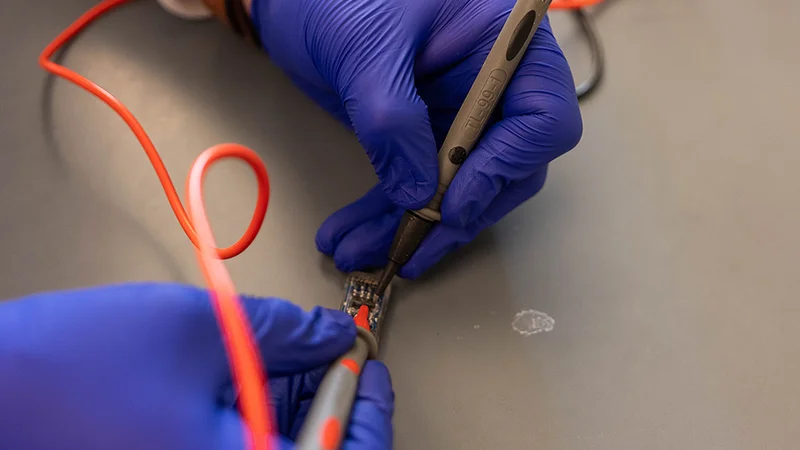
Working alongside collaborators at Rice University and Northwestern University, Tzahi Cohen KarniOpens in new window facilitated the development of a miniaturized electrocatalytic oxygenator (ecO<sub>2</sub>) component that refined the device’s core and enhanced its capabilities.
"Our collaborative efforts are highly unique, a combination of energy research with bioengineering, toward efficiently providing oxygen to the cell factories."
<cite><strong>Tzahi Cohen-Karni, Professor, Biomedical Engineering and Materials Science and Engineering</strong></cite>
“Our collaborative efforts are highly unique, a combination of energy research with bioengineering, toward efficiently providing oxygen to the cell factories,” said Cohen-Karni, professor of biomedical engineering and materials science and engineering at Carnegie Mellon.
The oxygen-making machine uses an iridium oxide-based surface with electricity supplied by an on-board battery to split water present in surrounding tissue in order to generate oxygen locally, without producing harmful byproducts, such as chlorine or hydrogen peroxide. The compact device is designed to be placed under the skin, an area that can be accessed through minimally invasive surgery but tends to be poorly oxygenated compared to more vascularized tissues.
“When they are packed into dense clusters, cells compete with each other for oxygen,” said Chris Wright, a Rice University doctoral student who is a first author on a recent publication reporting the findings. “Under the skin, there simply is not enough local supply to support the number of cells you would need for a clinically meaningful dose.”
Earlier versions of the chip required external wiring, but in the new study, the oxygenator, battery, and electronics are fully integrated into a wireless, implantable system that can be remotely adjusted to modulate oxygen production.
“We are producing oxygen directly where the cells need it,” said Jonathan Rivnay, professor of engineering at Northwestern University. “That allows us to support much higher cell densities in a much smaller space.”
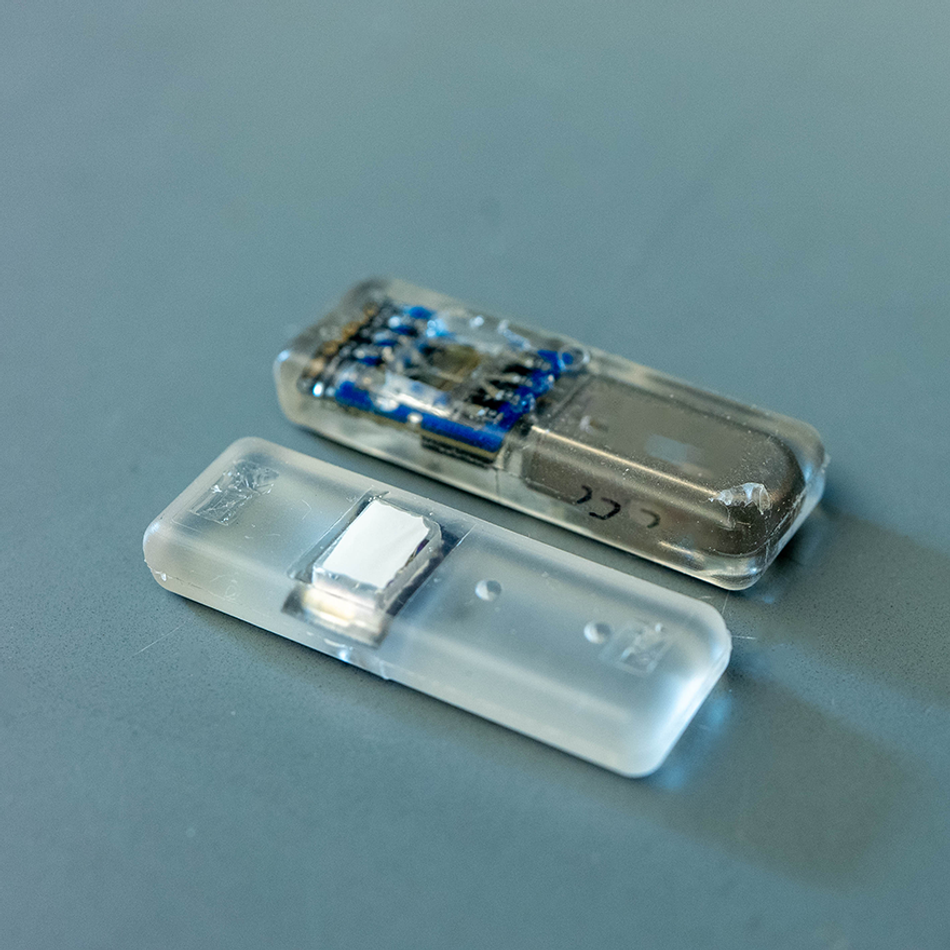
The microfabricated device uses a two-stage encapsulation approach to protect cells from the host immune system while also allowing for nutrients and secreted biologics to flow unimpeded. The engineered cells are first microencapsulated in alginate hydrogel beads and then loaded into a larger chamber with a semipermeable membrane. The encapsulated cells were engineered to continuously produce three biologic molecules representing different therapeutic classes and half-lives: an antibody, a hormone, and an exenatide, which is a GLP-1-like molecule.
“In addition to solving the oxygenation and cell density problem, the HOBIT platform is also proof of concept that cell factories can be engineered to produce multiple biologic molecules simultaneously,” said Omid Veiseh, a professor of bioengineering at Rice who is a corresponding author on the study.
The HOBIT device was proven effective in a 30-day study in rats implanted with oxygenated and non-oxygenated control devices. While cells in non-oxygenated control devices saw viability drop to 20%, 65% of the cells in the HOBIT device remained healthy and productive throughout the study. Data collected showed the sustained delivery of three types of biologics simultaneously in the experimental device, while short-half-life biologics became undetectable by day seven in animals implanted with the control device.
The research team aims to further accelerate the translation of this technology into life-saving clinical treatments by pursuing larger-animal studies and disease-specific applications, such as diabetes, where transplanted pancreatic islets have high, yet variable, oxygen demands.
CMU graduate students Inkyu Lee and Alex Ezerins were also contributors on this recent publication. The research was supported by Breakthrough T1D (3-SRA-2024-1564-S-B), the U.S. Defense Advanced Research Projects Agency (FA8650-21-2-7119), the Carnegie Mellon University Department of Materials Science and Engineering Materials Characterization Facility (MCF-677785) and the Claire and John Bertucci Nanotechnology Laboratory. The content in this press release is solely the responsibility of the authors and does not necessarily represent the official views of funding entities.