Injection Molding Solutions for Scientific Instrument Development
Scientific instrument development requires precision, consistency, and reliable plastic part performance. From laboratory devices and diagnostic equipment to analytical instruments, every component must meet strict requirements for fit, function, appearance, and long-term reliability.

14 Sep, 2026. 2 minutes read
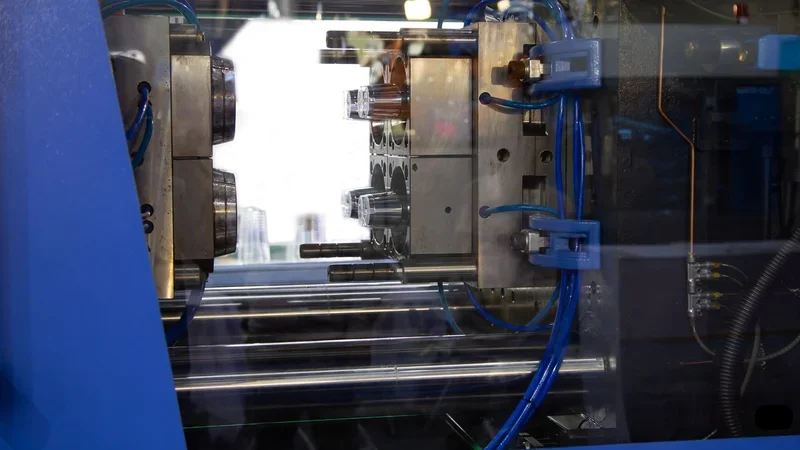
This is where injection molding plays an important role. It enables scientific instrument teams to produce complex plastic components with stable quality and repeatable performance, supporting both early development and later production needs.
Why Injection Molding Matters for Scientific Instruments
Scientific instruments often include plastic housings, internal structural parts, transparent components, clips, covers, and functional assemblies. These parts may require tight dimensional control, chemical resistance, clean cosmetic appearance, and reliable assembly performance.
Injection molding is well suited for these needs because it can produce detailed plastic parts with consistent quality across batches. With the right tooling strategy, material selection, and process planning, injection molding helps teams move from design validation to pilot builds and production with fewer risks.
For early-stage development, molded sample parts can provide more production-representative results than visual prototypes. They help engineers test assembly fit, material performance, surface requirements, and functional details before moving to larger-scale production.
The Role of DFM in Reducing Production Risk
A successful injection molding project starts before the tool is made.
DFM analysis helps identify potential molding risks early, such as wall thickness imbalance, sink marks, warpage, undercuts, gate location issues, draft angle concerns, and assembly interference.
For scientific instrument parts, DFM also supports decisions around material selection, surface finish, transparency, texture, and post-processing requirements. By solving these issues earlier, teams can reduce costly design changes and prepare more confidently for production.
RPWORLD Injection Molding Support for Scientific Instrument R&D
RPWORLD provides rapid tooling and injection molding support for scientific instrument development, helping teams move faster from validation to production preparation.
Fast molded parts for urgent timelines
With rapid tooling support, RPWORLD can deliver molded parts in as fast as 7 days. This helps teams respond quickly to testing, customer demos, exhibition preparation, pilot builds, and design iterations.
DFM support before tooling
RPWORLD provides DFM analysis before tooling begins. This helps identify risks in part design, material selection, surface finish, assembly fit, and manufacturability — reducing the chance of late changes.
100+ material options
RPWORLD offers 100+ material options, including engineering-grade plastics for different performance needs. Options can support requirements such as strength, dimensional stability, transparency, chemical resistance, heat resistance, and cosmetic quality.
Consistent quality across batches
For scientific instruments, stable part quality is critical. RPWORLD supports consistency through controlled molding processes, multiple inspection steps, and professional inspection equipment.
One-stop manufacturing support
Beyond molding, RPWORLD also supports finishing, inspection, and basic assembly. This helps reduce supplier handoffs and makes the project workflow easier to manage.
From Development to Production Support
Injection molding is more than a production method. For scientific instrument development, it helps teams validate design intent, test production-representative parts, improve manufacturability, and prepare for scalable production.
With rapid tooling, molded parts in as fast as 7 days, DFM support, 100+ material options, and multi-step quality control, RPWORLD helps scientific instrument teams move faster from concept validation to reliable production support.