Injection Molding Solutions for Faster Scientific Instrument Development
In the competitive world of scientific and medical innovation today, speed, accuracy, and reliability determine success. From diagnostic equipment and analytical devices to lab testing tools, manufacturers need solutions that bring designs to life quickly, without compromising precision.

22 Dec, 2025.
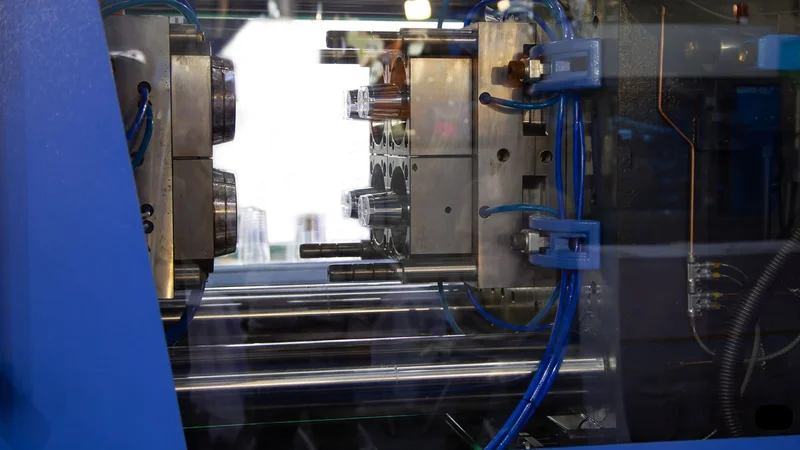
In today’s competitive world of scientific and medical innovation, speed, accuracy, and reliability determine success. From diagnostic equipment and analytical devices to lab testing tools, manufacturers need solutions that bring designs to life quickly, without compromising precision.
That’s where injection molding proves invaluable. Known for its repeatability, material flexibility, and cost efficiency, injection molding enables engineers and product designers to develop high-quality scientific instruments at scale and speed.
How Injection Molding Transforms Scientific Instrument Development
1. Accelerated Prototyping and Production
Traditional manufacturing methods can delay testing and validation. With Custom Injection Molding Solutions, prototypes and production-grade parts can be molded in days, significantly reducing development time and helping teams move from concept to market faster.
2. Exceptional Dimensional Accuracy
Scientific instruments often require micro-level precision. Injection Molding for Medical Devices ensures exact replication of complex designs, maintaining consistency across thousands of identical parts, essential for laboratory performance and reliability.
3. Wide Range of Material Options
Injection molding supports numerous engineering-grade materials such as ABS, polycarbonate, PEEK, and polypropylene. This flexibility allows manufacturers to select materials with the right balance of strength, biocompatibility, and chemical resistance.
4. Cost Efficiency in Large-Scale Production
Once the mold is ready, the per-unit cost of production becomes extremely economical. Industrial Injection Molding Applications are ideal for high-volume manufacturing, reducing waste while maintaining exceptional quality standards.
5. Enhanced Design Flexibility
Complex geometries, intricate details, and thin-walled parts are all achievable through advanced injection molding techniques. This makes it easier to create compact, lightweight scientific instruments with optimized ergonomics and functionality.
Applications of Injection Molding in Scientific and Medical Industries
Injection molding plays a key role in developing components for:
Diagnostic and testing instruments
Laboratory automation devices
Sensor housings and optical components
Medical cartridges and fluid-handling parts
Enclosures for electronic and analytical tools
Each of these relies on Injection Molding for Medical Devices for dependable accuracy and performance under demanding conditions.
Why RPWORLD is the Trusted Partner for Scientific Instrument Molding
RPWORLD is a leading provider of Custom Injection Molding Solutions designed to meet the exact requirements of medical and scientific industries. Their state-of-the-art molding facilities, skilled engineers, and strict quality control systems ensure every component meets international standards.
From rapid prototyping to full-scale production, RPWORLD delivers complete molding support, covering material selection, tooling design, mold fabrication, and post-production finishing. Their expertise helps companies accelerate development cycles while maintaining top-tier quality and consistency.