Injection Molding for Medical and Scientific Instruments: Materials, Tolerances, and Low-Volume Production
Medical devices and scientific instruments require precise, reliable plastic components. Injection molding delivers consistent quality, repeatability, and efficient production of complex, durable parts for diagnostic equipment, laboratory instruments, fluid handling systems, and housings.

06 Jul, 2026. 3 minutes read
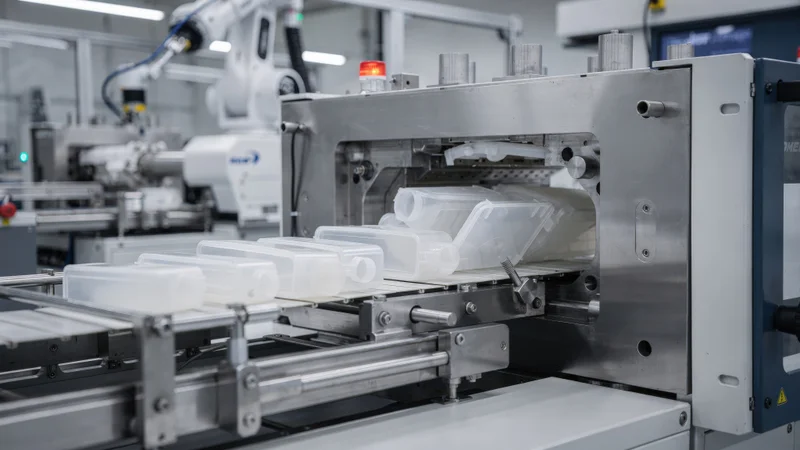
Medical devices and scientific instruments require consistent performance, precision, and reliable part quality. From diagnostic systems and laboratory equipment to fluid handling components and instrument housings, plastic parts used in these applications must meet demanding standards for fit, function, and durability. For many of these components, injection molding is a practical manufacturing solution because it supports repeatability, complex geometries, and efficient production.
Why Injection Molding Is Used for Medical and Scientific Components
Injection molding is widely used to produce plastic parts for medical and scientific applications because it offers strong dimensional consistency and repeatable part quality. It is suitable for components such as housings, enclosures, connectors, covers, and internal functional parts that require stable performance across multiple builds.
Compared with less repeatable processes, injection molding is better suited for programs that require tighter control over part consistency, appearance, and assembly fit. It also supports efficient production once the design, material, and tooling approach are defined.
Material Selection for Medical and Scientific Applications
Material selection is a key factor in the development of medical and scientific instrument components. Different applications may require strength, chemical resistance, sterilization compatibility, dimensional stability, or biocompatibility. Commonly used materials include polycarbonate, polypropylene, polyethylene, and PEEK, depending on the performance requirements of the part.
Choosing the right material is not only a functional decision. It also affects manufacturability, long-term reliability, and compliance expectations. For this reason, material selection should be evaluated together with part design, application environment, and production goals.
The Importance of Tolerances and Part Consistency
Tolerances are especially important in medical and scientific instruments, where small dimensional changes can affect assembly, sealing, alignment, or overall product performance. Injection molding can support tight and repeatable tolerances when combined with proper mold design, process control, and inspection planning.
For components that must fit into complex assemblies or interact with other critical parts, stable dimensions and repeatable quality are essential. This is one of the main reasons injection molding is often selected for production-intent plastic parts in these industries.
Low-Volume Production for Development and Specialized Programs
Not every medical or scientific project requires high-volume production. Many programs begin with validation builds, pilot runs, or limited production volumes. In other cases, the end application itself may require only small quantities, such as research instruments, custom systems, or specialized medical devices.
Low-volume injection molding can help teams move closer to production-intent parts while controlling cost and reducing development risk. It allows companies to evaluate real molded parts earlier, refine designs more efficiently, and prepare for future scale-up when needed.
Producing Complex Plastic Parts with Repeatable Quality
Medical and scientific instruments often include detailed part features, functional interfaces, and demanding cosmetic or assembly requirements. These designs may be difficult to achieve consistently without a stable molding process and well-controlled tooling.
Injection molding supports the production of complex plastic components with strong repeatability, making it suitable for programs where consistent part quality matters across every batch. This is particularly important for components used in regulated, precision-driven, or performance-sensitive applications.
RPWORLD’s Injection Molding Support for Medical and Scientific Instruments
RPWORLD supports medical and scientific instrument programs with injection molding services designed for precision, flexibility, and consistent execution. This includes support for material selection, DFM review, tooling strategy, and low-volume to scalable production.
For customers developing housings, enclosures, connectors, and other plastic components, RPWORLD helps improve manufacturability while maintaining part quality and project responsiveness. With experience in handling complex requirements and lower-volume production needs, RPWORLD supports teams working through development, validation, and ongoing production stages.
RPWORLD’s injection molding capabilities are especially suited to customers who need:
Support in selecting suitable engineering plastics
Reliable part consistency for functional assemblies
Low-volume production for validation or pilot builds
A smoother transition from development to production
One supplier for coordinated manufacturing support
Conclusion
Injection molding is an important manufacturing solution for medical and scientific instruments because it supports repeatability, material flexibility, complex geometries, and production-intent part quality. It is particularly valuable for programs that require tight tolerances, reliable performance, and low-volume production during development or specialized manufacturing stages.
By combining injection molding expertise with flexible production support, RPWORLD helps customers develop and produce plastic parts for medical and scientific applications with greater confidence and control.