How True Multiphysics Simulation Helps Engineers Design Better Products Faster
Explore the principles and importance of unified simulation frameworks and how COMSOL enables engineers to model within a single computational environment.

20 Oct, 2026. 9 minutes read
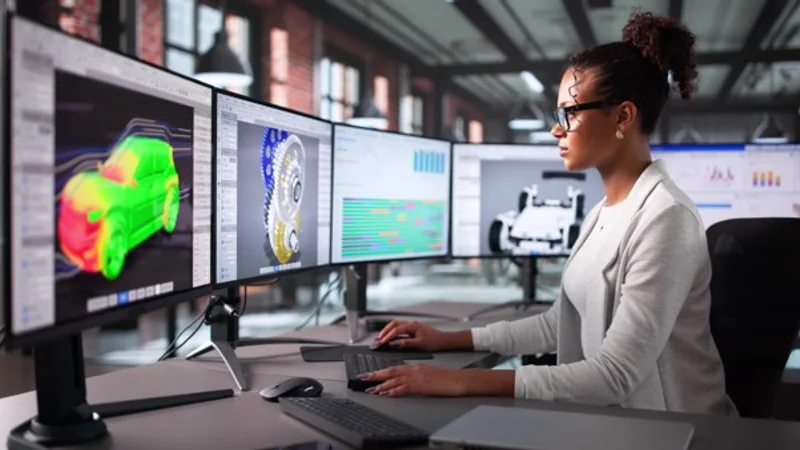
In modern engineering systems, thermal, structural, fluid, electromagnetic, and chemical effects usually interact simultaneously. Engineers are expected to optimize performance, efficiency, safety, reliability, cost, and sustainability at the same time. Traditional development approaches relying heavily on prototyping can be costly and time-consuming. In this regard, simulation has become an essential component of modern product development, through which engineers can evaluate design concepts and identify potential issues in virtual environments before manufacturing. However, accurately predicting real-world behavior for interconnected physical phenomena requires more than analyzing individual physics separately. It requires understanding how different physical phenomena influence one another throughout a product's operation.
Hence, adopting true multiphysics simulation, where multiple interacting physical processes are solved within a single computational framework, is imperative. COMSOL has built its platform from the ground up around this exact concept, providing an integrated environment where different physics domains are resolved together within a unified numerical architecture. This article discusses the principles of true multiphysics simulation, the importance of unified simulation frameworks, and how COMSOL enables engineers to model complex, interconnected multiphysics phenomena within a single computational environment.
The Role of Simulation in Modern Engineering
Building Products Through Virtual Engineering
Simulation has progressed from a late-stage verification tool used to check final designs into an active tool used for upstream design exploration and optimization. In the past, engineers would design a product based on empirical formulas, build a physical prototype, and then run a simulation to diagnose why it failed. Today, simulation is deployed at the very beginning of the product lifecycle.
Engineering teams use simulation across all stages of development, from initial concept evaluation to detailed design, optimization, and failure analysis. Engineers can modify geometries, change materials, and adjust environmental conditions with faster iteration cycles in minutes instead of waiting weeks for a new prototype. This directly translates to reduced development costs and the early identification of potential design issues, which ultimately leads to improved product performance and field reliability.
Why Complexity Is Increasing
Products are becoming more sophisticated as industries pursue higher efficiency, greater functionality, and improved sustainability. Trends such as rapid electrification, miniaturization, pervasive connectivity, and sustainability requirements mean that engineers cannot isolate single variables. A product that once required only basic mechanical design is now expected to integrate onboard electronics, handle thermal dissipation within a tiny enclosure, communicate wirelessly, and minimize environmental impact throughout its lifecycle.
Hence, engineering teams need software tools capable of modeling these interconnected multiphysics phenomena rather than analyzing components in isolation.
Why Real-World Products Are Inherently Multiphysics
Real products involve continuous, bidirectional interactions between multiple physical phenomena. Decisions made within one design domain almost always influence performance in another, creating a web of dependencies. Engineers cannot truly optimize a system without capturing how these domains couple.
Electric Vehicle Battery Systems
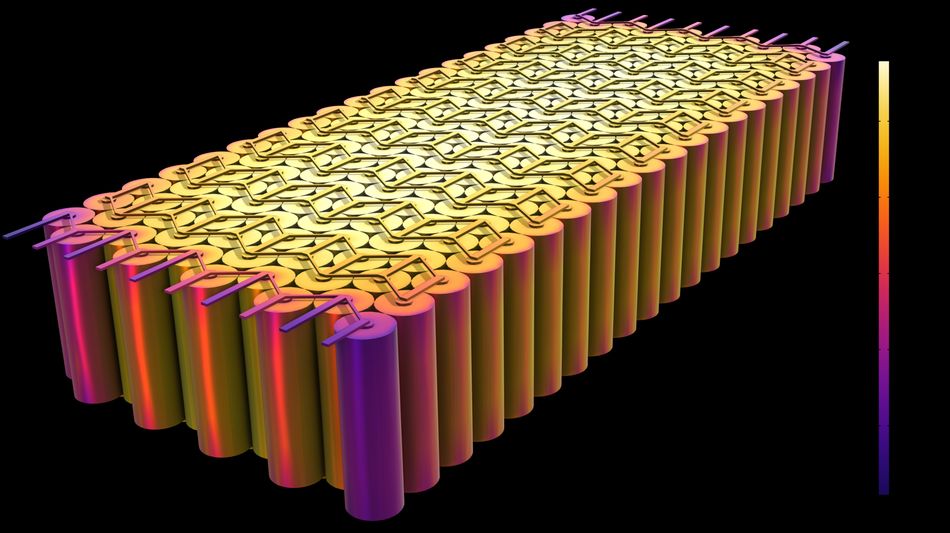
An excellent example of this interconnectedness is found in electric vehicle battery packs. Engineers account for several overlapping physics domains to design a battery system. Electrochemistry determines the core battery capacity, state of charge, and long-term degradation kinetics. As the battery charges and discharges, these electrochemical reactions generate heat. This heat generation directly affects safety and overall performance, as operating outside a narrow temperature window can cause thermal runaway or accelerate aging.
Moreover, temperature changes lead to thermal expansion, and the swelling of battery cells during cycling introduces mechanical stresses that influence the structural durability of the battery housing. These factors are managed by integrated cooling systems, which introduce complex fluid dynamics considerations. All of these phenomena occur simultaneously and continuously influence one another.
Speaker and Microphone Design
Another common multiphysics challenge occurs in acoustic transducer design, such as speakers and microphones. These seemingly simple consumer products involve several coupled physics domains. Developing these devices requires analyzing the interaction between electromagnetic forces, structural vibrations, and acoustics. In a typical dynamic loudspeaker, an electrical current passes through a voice coil, generating an electromagnetic force. This force moves the coil, vibrating a structural cone. The vibration of the cone then displaces the surrounding air, generating acoustic waves.
Design constraints usually require balancing multiple performance objectives simultaneously, such as minimizing total harmonic distortion, maximizing sound pressure level, and ensuring the device fits into a constrained consumer electronics housing.
Additional Industry Examples
Multiphysics challenges span almost every major industry. For instance, aerospace requires rigorous thermal and electrical analysis because thin air reduces convective cooling efficiency, making power-dense circuit boards prone to overheating and structural failure from thermal cycling. Microelectromechanical systems (MEMS) integrate miniature structural components with electrical circuits and, in many applications, interact directly with surrounding fluids or gases. Similarly, industrial processing equipment simultaneously involves fluid flow, heat transfer, chemical reactions, and structural loading that change together throughout operation.
The Difference Between Coupled Analysis and True Multiphysics Simulation
The Traditional Industry Approach
Many engineering organizations have attempted to address multiphysics challenges by connecting separate simulation tools through sequential workflows. In these approaches, engineers perform one simulation, such as thermal analysis, and transfer the resulting temperature distribution into another software package for structural analysis. Additional simulations may then evaluate fluid flow, electromagnetics, or other phenomena using exported data from previous calculations. These exchanges can also be automated and iterated to convergence through scripts or co-simulation frameworks. Nevertheless, the different physics domains usually remain confined to separate software tools connected through external data transfer.
Limitations of Sequential Approaches
Although sequential workflows can capture certain interactions, they also introduce practical limitations. Each transfer between software packages requires additional model preparation, data conversion, mesh compatibility checks, and validation of transferred results. These extra steps increase project complexity and create opportunities for user error. As more physics disciplines become involved, workflow management becomes progressively more difficult.
Sequential approaches usually struggle to represent tightly coupled interactions where multiple physical phenomena continuously influence each other throughout the simulation. Real engineering systems exhibit feedback effects that cannot be adequately represented by one-way data transfer between isolated analyses. Moreover, as additional physics domains are introduced, maintaining consistency across multiple software environments gets more challenging, potentially extending development time and increasing project risk.
What Defines True Multiphysics Simulation
True multiphysics simulation approaches these challenges differently. Instead of solving each physical phenomenon separately, multiple governing equations are solved simultaneously within the same computational model. Thermal, structural, electrical, fluid, chemical, and other physics interfaces interact directly during the solution process, allowing the simulation to capture the mutual influence between different physical effects. The integrated formulation also supports more sophisticated material behavior, constitutive models, and boundary conditions that naturally couple multiple physical phenomena. Hence, engineers obtain a more realistic representation of how products behave under real operating conditions.
Why Architecture Matters
The underlying software architecture is critical for true multiphysics to work effectively. The software must be developed from its inception within a single, unified framework. A unified architecture provides a completely consistent user experience across different physics disciplines. Moreover, it provides the freedom to combine any number of physics interfaces without encountering unexpected compatibility limitations or file format errors.
How COMSOL Was Built Around Multiphysics from the Ground Up
A Unified Simulation Framework
The effectiveness of a multiphysics simulation platform depends not only on the numerical methods it employs but also on the architecture that supports them. Simulation software should allow multiple physics disciplines to interact naturally without requiring users to navigate separate applications or complex data-transfer workflows.
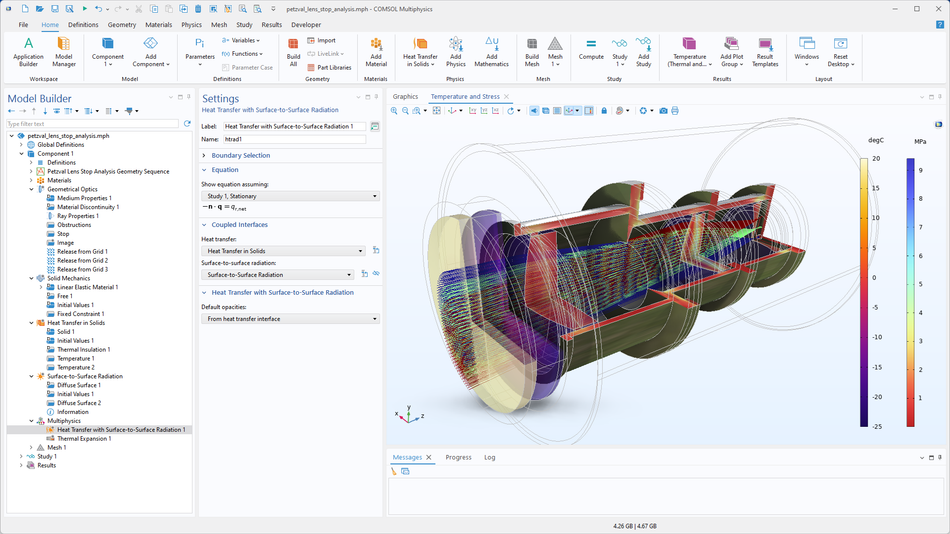
COMSOL Multiphysics was designed around this principle from its inception. Rather than expanding through the acquisition of independent simulation packages, the platform was developed as a unified environment in which every physics interface operates within the same computational framework. This unified framework provides consistency and compatibility.
Engineers working on different applications encounter familiar modeling procedures regardless of the physics involved. Geometry creation, material assignment, boundary conditions, meshing, solver configuration, and post-processing follow a common workflow across disciplines. The integrated architecture enables engineers to construct models that closely reflect how physical processes interact in real engineering systems. This consistency reduces the learning curve for engineers who work across multiple application areas and makes collaboration easier for multidisciplinary teams.
Flexibility Without Artificial Boundaries
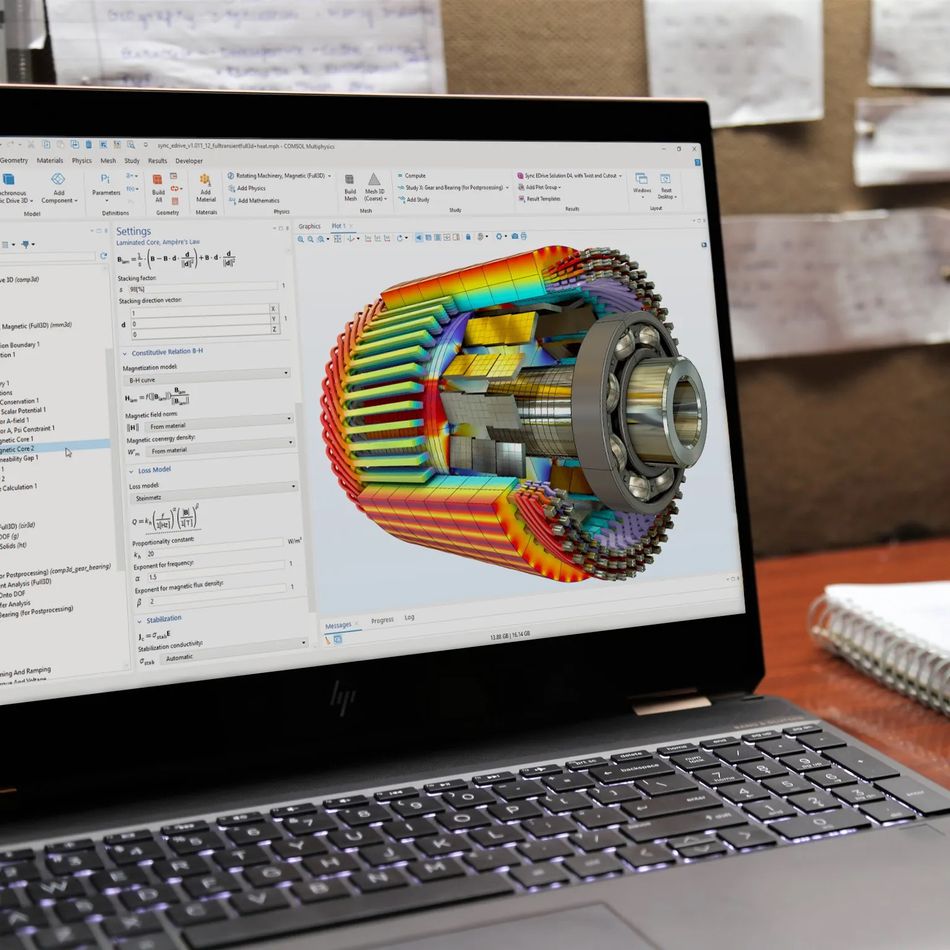
The integrated architecture also provides flexibility when combining different physical phenomena. Engineering projects do not always fit neatly into predefined categories. For instance, a designer developing an electric motor may need to combine electromagnetic analysis with thermal management and structural deformation. A biomedical engineer may need to model fluid flow, chemical transport, and tissue heating within the same device. As the various physics interfaces are developed within a common framework, engineers can introduce additional phenomena as project requirements change instead of discovering compatibility limitations late in development.
Supporting Diverse Engineering Teams
A unified platform offers major organizational benefits to cross-disciplinary engineering teams. It reduces the learning curve when engineers move between different simulation domains. For instance, a structural specialist can easily collaborate on a thermal management project because the toolsets and interface language are identical. This common environment bridges communication gaps between distinct engineering departments, encourages collaboration, and enables teams to model complex engineering challenges collectively.
Making Simulation Accessible Past Simulation Specialists
The Challenge of Scaling Simulation Expertise
Historically, advanced simulation expertise has resided within a specialized group of analysts inside an organization. These specialists often face severe backlogs, as design engineers frequently request minor modifications, geometric updates, or routine parametric checks. Organizations look for ways to achieve broader access to simulation-driven decision-making to allow design teams and field engineers to run validated models themselves without bottlenecking the core simulation experts.
Simulation Applications
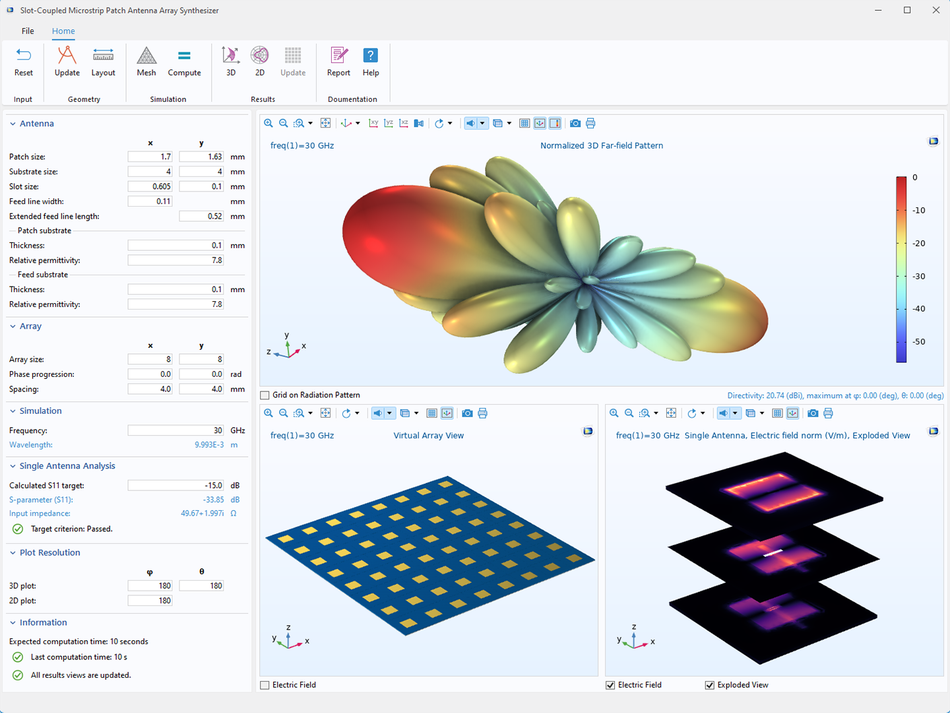
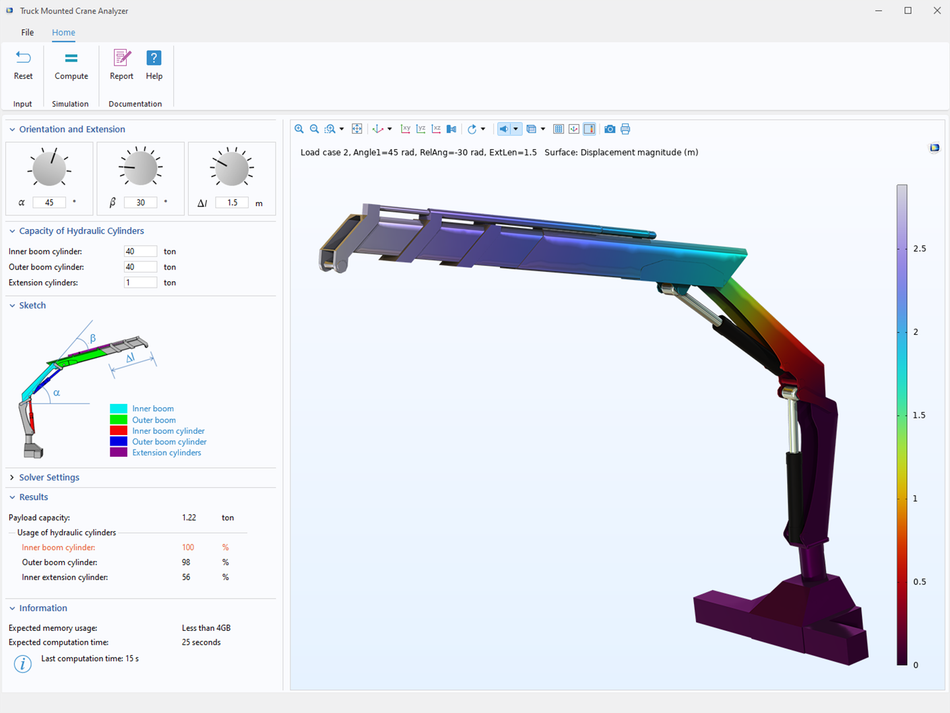
COMSOL introduced the Application Builder and specialized management tools to solve this bottleneck. The Application Builder allows simulation specialists to take a physics model and transform it into a simplified, custom user interface. The app creator can hide the underlying mathematical complexity, exposed equations, and detailed meshing options, leaving only the relevant input parameters and desired visible. These compiled, standalone applications allow non-specialists to utilize validated simulation tools independently.Alternatively, applications can be deployed to COMSOL Server, allowing organizations to centrally manage and share validated simulation tools across departments through a browser-based interface. .
AI-Enabled Workflows
Artificial intelligence is already beginning to influence engineering simulation by improving efficiency, expanding accessibility, and accelerating repetitive tasks. In this regard, an important development by COMSOL is the use of surrogate modeling that precompiles calculations for quick querying using AI.
COMSOL also provides workflows that integrate large language models to assist users with model setup, scripting, and navigation of simulation tasks. AI-assisted interfaces can help users locate relevant modeling features, generate code for repetitive operations, explain software functionality, and guide engineers through complex workflows. COMSOL's comprehensive and consistent API also enables simulation models to be incorporated into agentic AI workflows.
Real-World Impact
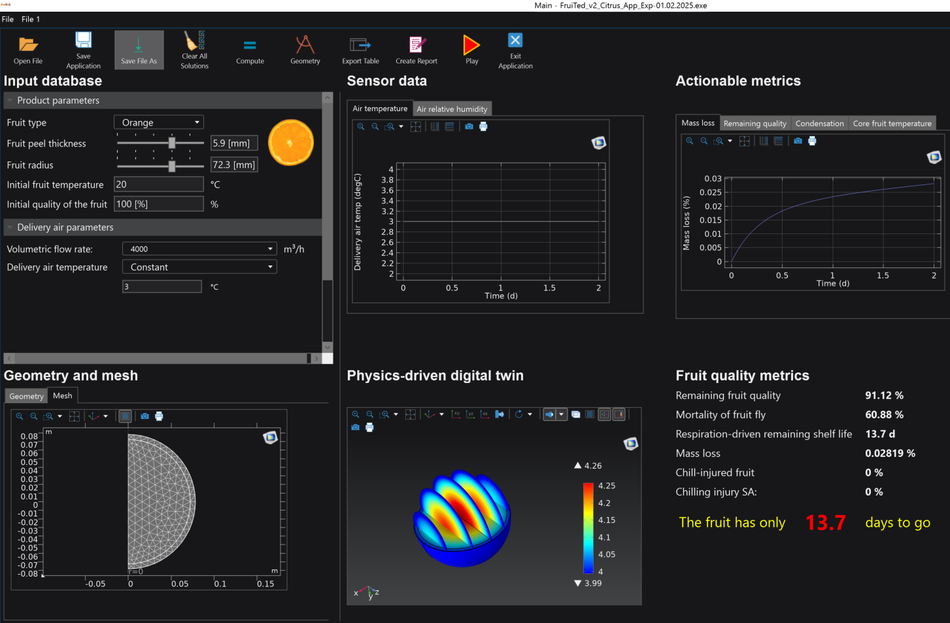
The real-world impact of making simulation accessible through targeted applications is demonstrated across diverse industries. For instance, researchers at the Swiss research organization Empa developed a dedicated simulation app that feeds data directly into a smartphone. It allows smallholder farmers to predict the remaining shelf life of fruits and vegetables based on real-time sensor readings, optimizing food storage and reducing waste without requiring farmers to understand finite element analysis.
In civil engineering applications, companies like Heidelberg Materials use simulation to predict the chemical processes, temperature variations, and early-age strength development of concrete on active construction sites. Because cement hydration generates significant heat that alters structural curing, a dedicated application allows field contractors to input local weather conditions and insulation strategies. This ensures concrete structures achieve structural maturity safely without cracking.
Similarly, Swiss consultancy Zeugin Bauberatungen utilizes wave-based acoustics and frequency-dependent impedance modeling to optimize open-plan office layouts. These tools turn complex acoustic room impulse response models into actionable design guidance, helping architects position sound-absorbing barriers and panels effectively while balancing office aesthetics with optimal sound mitigation to reduce workplace distractions.
Engineering's Future Is Multiphysics
As engineering products are getting more interconnected, isolated single-physics simulations are insufficient for predicting true product performance. Relying on disconnected tools or sequential data transfer workflows adds unnecessary project risk, limits innovation, and inflates development timelines.
Utilizing true multiphysics modeling enables organizations to accelerate iteration cycles, reduce reliance on physical prototypes, and confidently bring optimized designs to market. COMSOL’s natively unified architecture was designed from its inception to meet these exact challenges, providing a scalable, mathematically rigorous platform that empowers both advanced specialists and broader engineering teams to accelerate engineering innovation. Engineers who want to know more about COMSOL and their solutions can visit their website.
References
P. Namy et al. (2024) Using Artificial Intelligence (AI) within COMSOL Multiphysics to Create Machine Learning Tools. [Online] COMSOL. Available at: https://www.comsol.com/paper/using-artificial-intelligence-ai-within-comsol-multiphysics-to-create-machine-learning-tools-134222 (Accessed on July 8, 2026)
Modeling with ChatGPT®. [Online] COMSOL. Available at: https://www.comsol.com/support/learning-center/article/modeling-with-chatgpt-86731 (Accessed on July 8, 2026)
Chinmay Shrivastava et al. (2025) AI Copilot for Automating Simulation Setup in COMSOL Multiphysics. [Online] COMSOL. Available at: https://www.comsol.com/paper/ai-copilot-for-automating-simulation-setup-in-comsol-multiphysics-145242 (Accessed on July 8, 2026)
Bjorn Sjodin (2025) Using the Chatbot Window in COMSOL Multiphysics®. [Online] COMSOL. Available at: https://www.comsol.com/blogs/using-the-chatbot-window-in-comsol-multiphysics (Accessed on July 8, 2026)
Synthetic Multiphysics Data for AI Training — On Demand. [Online] COMSOL. Available at: https://www.comsol.com/events/webinar/synthetic-multiphysics-data-for-ai-training-136012 (Accessed on July 8, 2026)
Bjorn Sjodin (2026) Surrogate Models for Faster Simulations and Apps. [Online] COMSOL. Available at: https://www.comsol.com/blogs/surrogate-models-for-faster-simulations-and-apps (Accessed on July 8, 2026)
José Gregório (2025) Modeling Spatial Plasma with Deep Neural Network Surrogates. [Online] COMSOL. Available at: https://www.comsol.com/blogs/modeling-spatial-plasma-with-deep-neural-network-surrogates (Accessed on July 8, 2026)
- Rachel Keatley (2023) Forecasting Fruit Freshness with Simulation Apps. [Online] COMSOL. Available at: https://comsol.com/story/forecasting-fruit-freshness-with-simulation-apps-119431 (Accessed on July 8, 2026)
- Alan Petrillo (2023) Bringing Multiphysics Simulation to Construction Sites. [Online] COMSOL. Available at:https://comsol.com/story/bringing-multiphysics-simulation-to-construction-sites-119421 (Accessed on July 8, 2026)
- Alan Petrillo (2023) Harmonizing Sound and Style in Open-Plan Offices. [Online] COMSOL. Available at: https://comsol.com/story/harmonizing-sound-and-style-in-open-plan-offices-118851 (Accessed on July 8, 2026)