How to Maintain Material Quality in Digital Manufacturing
How digital manufacturing platforms are increasingly turning to stringent QA frameworks to ensure customers receive parts made from high-quality materials

26 Mar, 2026. 5 minutes read
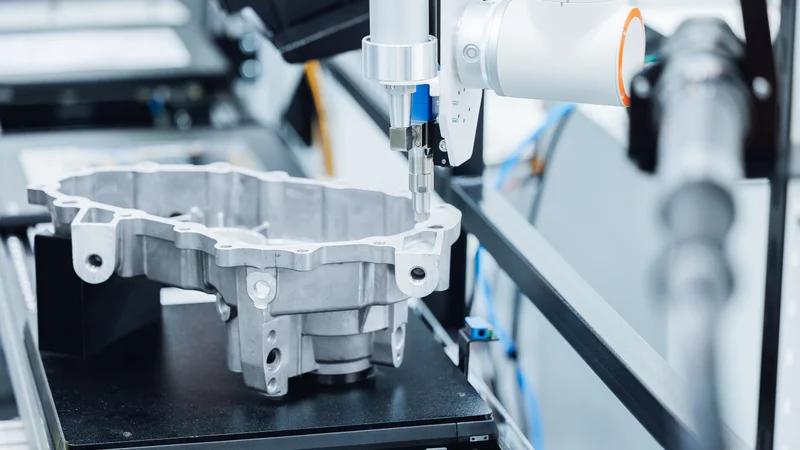
While manufacturing processes and procurement workflows are continually evolving, one thing has remained a constant when it comes to producing parts: material quality matters. Even sophisticated, high-tolerance components can result in failures if material properties are not up to standard—a reality that can have serious consequences in terms of performance and safety. For that reason, the quality of materials is a priority not only for those ordering parts, but also the digital manufacturing platforms responsible for making them.
Today, digital manufacturing platforms like FACTUREE are facilitating part procurement by offering a one-stop digital interface for ordering custom parts from a network of qualified manufacturers. This approach to procurement has several benefits, including more efficient part ordering, competitive quotes, and faster lead times. At the same time, it comes with new challenges, like ensuring that each manufacturer in the network is up to standard, not only when it comes to production and inspection processes, but also raw material quality.
Digital manufacturing leader FACTUREE, which has a network of over 2,000 qualified manufacturers, understands the importance of delivering parts made from high-quality materials. It has therefore created a robust digital framework for ensuring material quality across its vast production network, resulting in high-quality, validated, traceable parts.
The Criticality of Material Quality
The risks of manufacturing parts from substandard materials really can’t be overstated. Whether you are ordering CNC machined, additively manufactured, injection molded, or sheet metal components, the success of a part comes down in large part to the quality of the raw material. For example, defects in metal alloys can translate to unpredictable stresses, corrosion, thermal expansion, or distortion that can compromise part integrity, performance, and longevity.
A thorough inspection workflow in place should catch these defective components before they go into service. However, solving the problem so far downstream does nothing to address the consequent reality of wasted resources and extended lead times. Moreover, low-quality raw materials can impact production processes themselves, leading to issues like faster tool wear in CNC machining, and sintering inconsistency in additive manufacturing.
For all these reasons, sourcing and maintaining high-quality materials from the get-go, before production begins, is the more effective approach.
A Digital Control Framework for Material Quality
In order to support material quality assurance, digital manufacturing platforms for procuring custom parts are implementing digital quality control frameworks. These systems help to ensure material quality in a way that fits the speed and scale of digital production. At FACTUREE, for example, this is based on digital tools, specifically intelligent, data-driven control mechanisms that monitor material quality across the entire procurement chain.
A central component in this digital control framework is the qualified supplier network. Working with over 2,000 manufacturers specializing in a range of different production processes and materials, FACTUREE maintains a qualification process for each member in its network. For one, each manufacturer must meet the ISO 9001 standard for Quality Management Systems. FACTUREE also regularly audits its manufacturing partners to ensure that raw materials are being stored, processed, and documented properly.
Traceability is another key part of a solid material quality assurance strategy. By working with its production partners, the digital manufacturing platform can ensure that every batch of raw material is tracked through the proper documentation and certification (in line with EN 10204) to prove material origin and material properties.
Documentation for every material batch also means that any issues related to material quality can be rapidly identified, traced, and managed upstream. For FACTUREE customers, material documentation is available on request to prove that materials used to make parts comply with relevant industry standards.
Underlying these control systems at FACTUREE is a proprietary AI, a data-driven system trained on over 600,000 internal data points per supplier. When a procurement specialist submits a request for a custom part, it is FACTUREE’s AI that matches the request to the best suited manufacturer based on factors like material availability and experience. For example, if a manufacturer has substantial experience and is well rated for making corrosion-resistant Inconel parts, the AI will prioritize them for future Inconel parts.
Similarly, if a customer is seeking a custom part for an industrial food production line, FACTUREE’s AI will ensure food-safe material requirements are met (EU Regulation 1935/2004) through its manufacturer selection process. Ultimately, this ensures that customers benefit from a manufacturer’s knowledge of and experience with specific materials and user-industry requirements.
The AI is always being trained on new incoming data, continually strengthening the digital manufacturer’s framework for material quality monitoring. It is also supported by an experienced team who work diligently to monitor the AI output and material quality data. This holistic approach to material quality maintenance, which combines human expertise, AI tools, thorough documentation, and traceability, is a critical piece in the broader quality assurance puzzle.
FACTUREE’s Three-Stage Quality System
Material quality assurance sits within a broader three-stage quality system at FACTUREE, applicable across a range of regulated industries.
This three-stage quality system consists of the following elements:
AI-supported supplier selection
Continuous production monitoring
Double final inspection
The supplier selection process, described above, evaluates manufacturers on experience, performance, and specialization—including material-specific expertise, production tolerances, and industry familiarity.
The second stage in the quality system is continuous production monitoring. This is carried out by FACTUREE engineers and quality management experts, who provide guidance and oversight at every step, from design feasibility analysis, to in-process inspections of production machines, to facility and material audits. Continuous monitoring is further reinforced by an Industry 4.0 digital chain that tracks production from 3D model to end product, flagging any process inconsistencies and in many cases fixing them in real time.
Capping off the three-stage quality system is a double final inspection. As part of its quality commitment to customers, FACTUREE ensures that every finished part undergoes a double inspection. The first is completed by the manufacturer and the second is undertaken by FACTUREE.
As the company explains, this double check guarantees that final parts meet all requirements, from tolerances to material properties. Further inspections by external parties can also be arranged for even more rigorous QA.
On a broader level, FACTUREE also offers a suite of other capabilities that contribute to a strong quality assurance foundation and a seamless procurement workflow. Among these capabilities are its proprietary AI agent FACTUREE Navigator free test certificates, secured design data (ISO 27001 certified), and smart material substitution.
Conclusion
Maintaining material quality across a large production network requires a combination of structured processes, clear documentation, and consistent oversight.
As for FACTUREE, it is central to the company’s mission of delivering high-quality custom parts in a scalable, consistent, and cost-competitive manner. Key to this is the company’s advanced digital infrastructure, which monitors and connects all stages of production, providing transparency, traceability, and documentation from end to end.
In combination with FACTUREE’s human expertise, this framework ensures that risks associated with low-quality materials are kept to a minimum and that if they do occur, the problem is solved before production begins.
Learn more about the various manufacturing materials FACTUREE offers, from engineering plastics to specialized metal alloys or make a part request directly.