Building Deployable Edge AI: Future Electronics' Guide to Practical Robotics Intelligence
A guide to help engineers bring Edge AI closer to deploying the next generation of autonomous robotics systems.

02 Sep, 2026. 7 minutes read
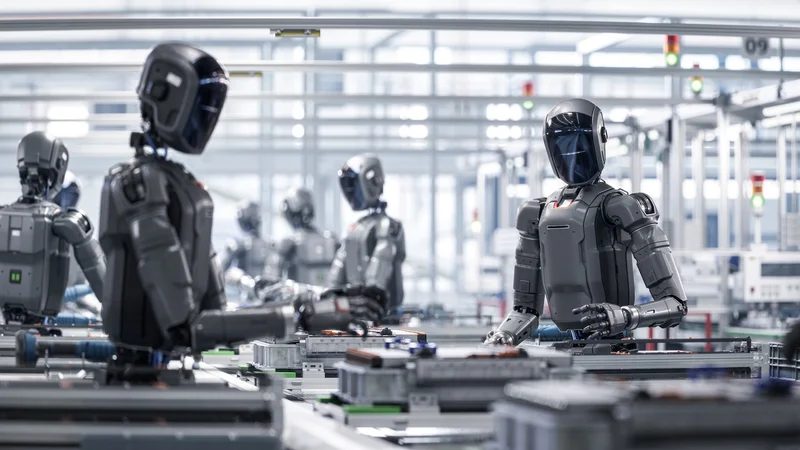
Edge AI is becoming a practical design challenge and opportunity for engineers building the next generation of autonomous robotics systems. The technology has moved well beyond time series data pattern recognition and image classification. Today, engineering teams are evaluating systems that can combine vision, audio, time series data, environmental sensing, and natural language interfaces to understand what is happening in the physical world, act on that information locally, and answer questions about the environment without relying on connection to the cloud.
This shift is changing the questions engineers need to ask at the beginning of a project. As Edge AI becomes more than just adding inference to a device, the need to design a complete system around the task, the data, the model, and the hardware constraints becomes more important.
Edge AI is an expanding discipline from systems that handle focused sensor and vision tasks such as anomaly detection, predictive maintenance, object detection, gesture recognition, and pose estimation. With neural processors now appearing across MCUs (hundreds of GOPS), MPUs (tens of TOPS), and companion accelerators (tens to hundreds of TOPS), and with large-language models (LLMs) and vision-language models (VLMs) being optimized for local execution, engineers can build systems that interpret richer context, interact through voice or text, and act more autonomously in the physical world.
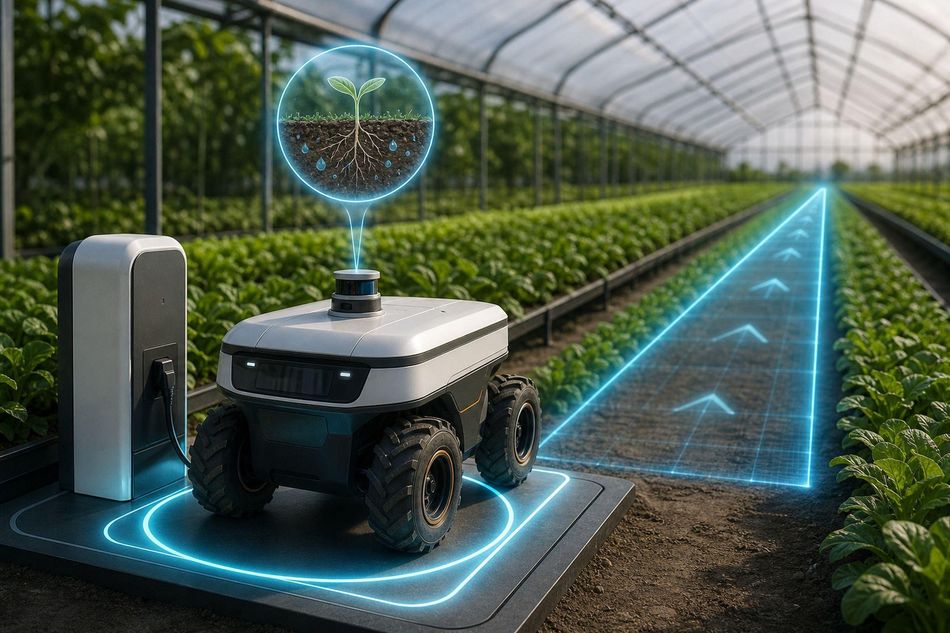
Edge AI Is Becoming a System Design Challenge
When a customer approaches Future Electronics with the goal of adding AI at the edge, the conversation starts before component selection. Future first works to understand the reason for adding AI, the specific task the system must perform, and how the engineering team will define success.
That early clarification matters because Edge AI projects can quickly become too broad. A team may know it wants a smarter machine, robot, drone, sensor node, or industrial device, but the implementation path depends on much more specific information. Future looks at the available data sources, such as cameras, microphones, vibration sensors, accelerometers, temperature sensors, or other inputs. It also looks at whether the customer has clean, well-labeled datasets that reflect real operating conditions.
The deployment environment is just as important. A system running on a factory floor has different requirements from one operating outdoors, inside a vehicle, in a medical office, or in a mobile robot. Size, speed, power, temperature, connectivity, safety, and lifecycle expectations all shape the architecture.
This approach turns the planning into a structured engineering discussion. The Edge AI model is only one part of the system. The use case, sensor stack, dataset, compute platform, software tools, and production constraints all influence the final design.
CNNs Still Have Work to Do
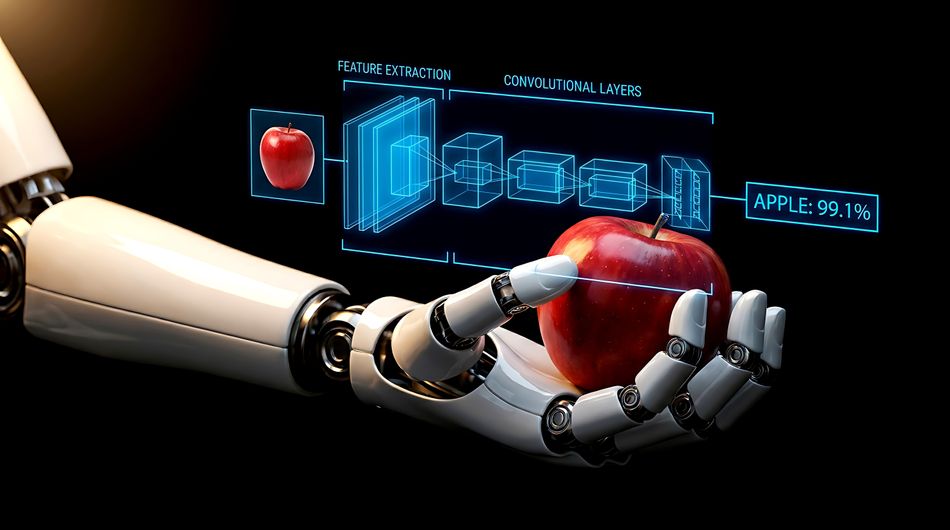
Much of the recent discussion around Edge AI has focused on transformer models, VLMs, and generative AI. There is still an important role for CNN-based vision systems, especially where the task is focused, the memory budget is limited, and efficient feature extraction is the priority.
CNNs remain widely used because they can extract patterns and features from local image regions with mature, efficient architectures. For many detection and classification workloads, this remains the right engineering choice. A drone identifying a landing marker, a smart camera detecting a known object, or a machine vision system inspecting a defined feature may not require a larger transformer-based model.
Transformer models add value when the system needs broader contextual understanding. They can find relationships across a wider region in the image or combine text, vision, and sound to interpret what is happening in a scene. That capability can support robotics, drones, surveillance, inspection, and industrial systems that need more than object detection. Running a compact CNN on an MCU-class platform may require only hundreds of milliwatts, while VLM deployments typically require Linux-class processors and accelerators, external memory, and system power that can extend up to the 10-20 watts range. The tradeoff is more power, greater compute demand, and memory bandwidth that can extend beyond 20x higher depending on model efficiency.
Hybrid approaches are a practical path. CNNs and transformer-based models can be used separately, sequentially, or in parallel depending on the application. The right choice depends on the workload and the application requirements.
The Dataset Can Decide the Project
Based on real world engagements, one of the most common gaps between a successful AI demo and a production-ready system is the dataset. Robust dataset development is one of the most challenging parts of Edge AI implementation.
In a machine vision application, for example, reliable object recognition requires more than a few clean, well-labeled images. The dataset may need to include the object from multiple angles, under different lighting and weather conditions, at different distances, and against varied backgrounds. If the system will operate in changing environments, the training data has to represent those conditions. If the system needs to make safety-relevant decisions, the dataset requirements become even more demanding. Synthetic data generation may be used to complement limited real-world datasets for model training.
This is where teams often underestimate production readiness. A model trained on clean or limited data may struggle when deployed in environments that introduce real-world variation the training set did not capture. In addition, new variations in the production environment may occur over time, requiring updated datasets and model retraining. Future can support teams at different levels of AI maturity, from hardware selection and workload benchmarking to design services and partner connections for teams that need additional help with data preparation, model development, or implementation.
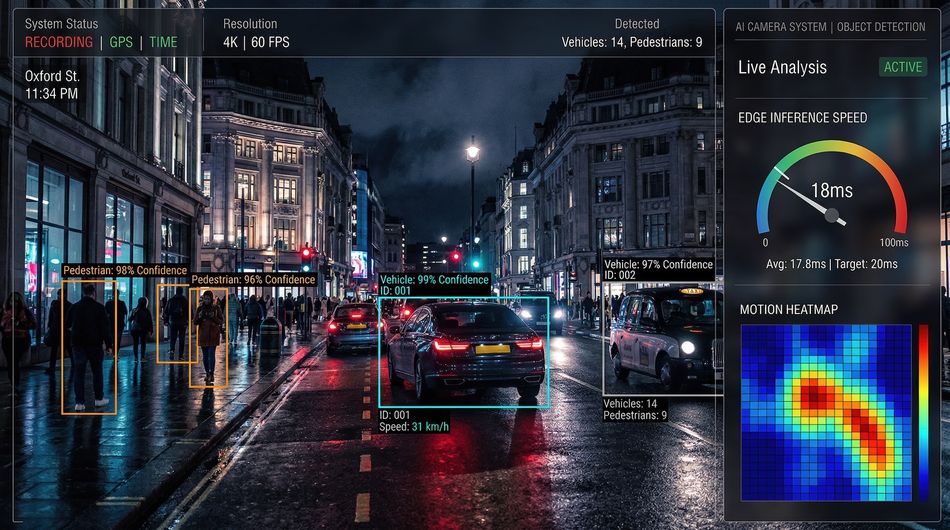
Hardware Selection Starts with the Workload
Choosing between a microcontroller, microprocessor, SOM, or discrete neural processor starts with the workload. Starting with model size, memory requirements, and inference time targets helps target proactive hardware selection.
Microcontrollers are well suited to low-power, cost-sensitive designs. They can support workloads such as anomaly detection, predictive maintenance, keyword spotting, activity recognition, simple vision, and some real-time audio or HMI functions. Newer AI-capable MCUs are also expanding into applications such as object detection, face detection, pose detection, sound classification, and multimodal sensing.
Such advanced MCUs with multimedia features and embedded neural processors are increasing the amount of AI that can run without moving immediately to a larger processor class. They can also help reduce system cost and power consumption, especially in designs that avoid external DRAM.
Application processors become more relevant when the system needs Linux or Android, more memory, advanced connectivity, multiple camera streams, higher-resolution video, faster frame rates, or shorter inference times. They also open the door to more demanding workloads, including local conversational AI using streamlined LLMs, retrieval-augmented generation (RAG) domain knowledge, and VLMs that interpret visual scenes and respond in natural language.
Discrete neural processors can be added when the system needs more AI acceleration headroom. That can include multiple simultaneous models, higher frame rates, autonomous systems, larger parameter counts, or generative AI workloads.
TOPS can help compare devices, but real-world performance also depends on memory architecture and bandwidth. The fastest advertised accelerator may underperform if the system cannot feed data efficiently, manage memory pressure, or sustain the workload within the thermal and power envelope.
Machine Vision Depends on the Full Signal Chain
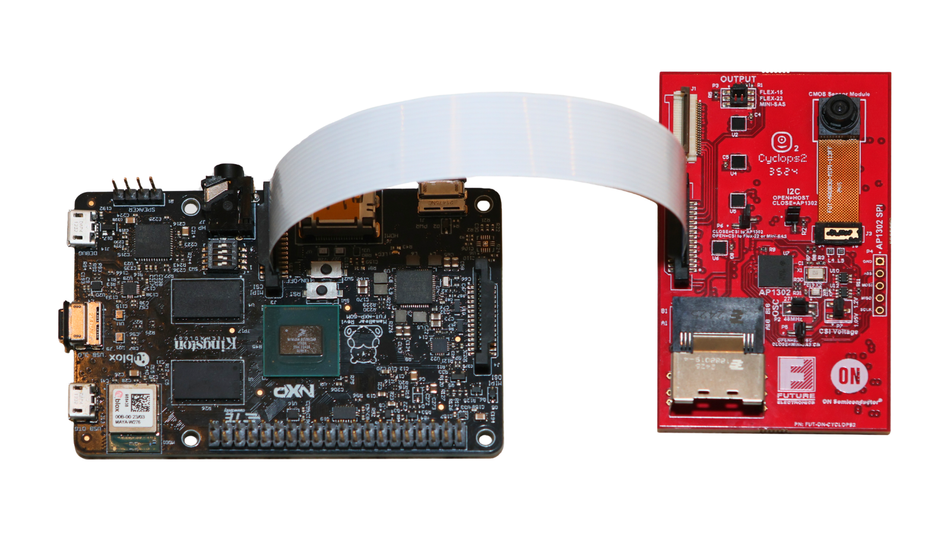
Future’s Cyclops2 adapter and Mama Bear board illustrate an important point in Edge AI design: vision performance depends on the full signal chain. The processor matters, but so do the camera module, interface, image signal processor, memory path, and software integration.
The camera module directly affects image quality, the image signal processor affects the quality and usability of the image pipeline, and the applications processor affects object detection performance. Connecting a camera module to a processing platform and getting the desired outcome can be difficult, especially when the project involves MIPI interfaces, image tuning, inference performance, and system-level integration.
Reference designs help reduce that burden, as they give engineers a practical starting point, showing how proven combinations of sensors, processing platforms, interfaces, and software can work together. This can shorten the path from concept to proof of concept in machine vision or robotics applications.
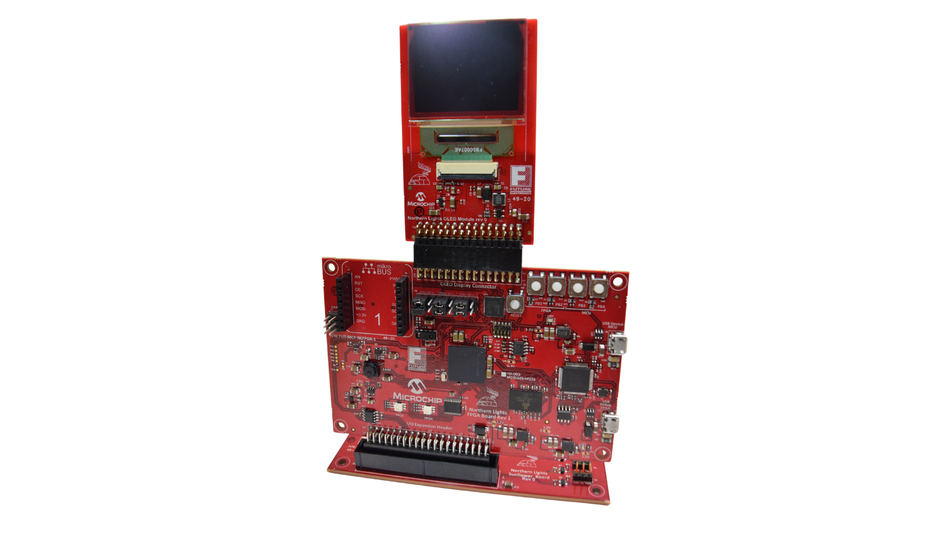
Future’s Northern Lights platform adds another useful example because it connects machine learning, vision, and motor control. This platform includes a display module with color OLED panel, a video board with color CMOS image sensor and low power FPGA with CNN for digit recognition, as well as a motor control board with digital signal controller for servo control. The demo features a 5-axis robotic arm moving a foam block to a numbered position, responding to a hand-drawn digit captured by the platform’s image sensor. That matters for robotics, where perception has to translate into motion. Detecting an object is only useful when the system can respond through control logic, actuators, navigation, or manipulation.
Sensor Fusion Gives Machines Better Context
Robots, drones, and autonomous machines increasingly rely on more than one sensor type. Cameras provide rich visual information, but they may struggle in darkness, glare, dust, fog, or occlusion. Radar, LiDAR, IMUs, microphones, proximity sensors, and environmental sensors can add information that makes the system more robust.
Compare sensor fusion to human perception. People rely heavily on vision, but they also use hearing, touch, smell, and other cues to understand their surroundings. Machines can use the same principle by combining complementary sensors to extend functionality and improve reliability.
This has direct implications for hardware selection. Engineers need to consider current operating conditions, likely future use cases, and the mission-criticality of the product. A warehouse robot, inspection drone, industrial cobot, and autonomous mobile platform may all use Edge AI, but each one places different demands on latency, redundancy, safety, compute, and sensing.
As these systems evolve, intelligence derived from multiple sensor types and multiple AI models will become the norm. Local LLMs and VLMs will add natural language interfaces and contextual awareness, while efficient domain-specific models will continue to support real-time perception and control.
Future’s Role Is to Shorten the Path to Deployment
Future’s support comes into focus at the point where architecture decisions start to affect development risk. Reference designs give customers proven implementation paths to study and adapt, while workshops help engineers gain experience with product features, development tools, HMI design, video processing, and AI model deployment.
Specialist FAEs add depth across analog and power, wireless connectivity, displays, FPGAs, advanced microcontrollers and microprocessors, interconnect, lighting, sensors, and other portfolios. Future Design Centers can then support deeper development work, from component selection and concept development to prototype builds and product-level design.
That support can help teams benchmark workloads, choose the right compute class, validate sensor-to-model performance, and understand the tradeoffs before committing to a production architecture.
These systems depend on careful alignment between model, sensor input, compute platform, software environment, and product constraints. Future’s role is to help engineers make those decisions earlier, with reference designs, specialist support, and proof-of-concept guidance that bring Edge AI closer to deployment.