Water Treatment Works. Deployment Is the Hard Part
Understanding the constraints of implementing safe water treatment systems.

17 Nov, 2026. 6 minutes read
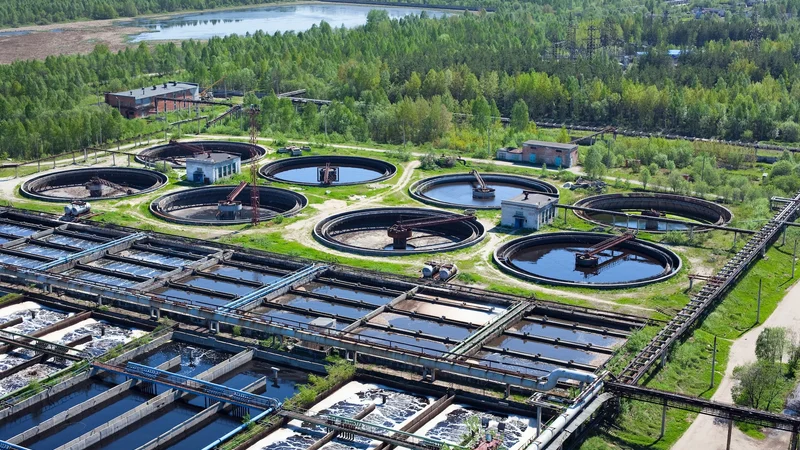
Produced water from oil and gas extraction varies widely in appearance and composition. Iron can turn it rust-red, iron sulfides can turn it jet black, and it is typically dense with dissolved solids and loaded with organics, inorganics, radionuclides, heavy metals, and salts. In the Permian Basin of West Texas, the most productive oil-producing region in the United States, the average salinity of the water is three to four times greater than seawater. The oil and gas industry generates billions of gallons of this water every year.
For decades, the standard disposal method has been to inject it back underground.
In 2024, a research team deployed a treatment system inside a 20-foot shipping container in the heart of the Permian Basin, designed to produce water clean enough for crop irrigation. The feedwater was about four times as salty as seawater, well beyond the range of conventional desalination. The system is centered on membranes with an active separation layer less than a micron thick, which fail quickly when pretreatment is inadequate. Protecting them required a separate 53-foot trailer dedicated to pretreatment.
The system operated for several months in the Texas desert as part of a research effort led by Produced Water Resources, LLC. Colorado State University evaluated the treated water in irrigation trials, comparing plant health, soil composition, and soil microbiology against local water sources.
The results were favorable: the treated water grew crops, the system held, and the membranes did not fail. This outcome was not guaranteed. Scaling, fouling, mechanical failure in extreme heat, and feedwater variability were all credible risks. That the data came back clean supports a broader conclusion: for many water sources once dismissed as untreatable, treatment is no longer the limiting step.
The bottlenecks are elsewhere. Understanding where they are, and why they persist even when the technology is ready, is now the more important problem.
Measurement Fails First
Effective treatment begins with knowing what is in the water, at what concentrations, and how those concentrations change over time. Occasional sampling is not the same as visibility. Roughly 15 percent of Americans, more than 43 million people, rely on private wells that fall outside the Safe Drinking Water Act, and testing is voluntary. Even in treatment plants, some contaminant groups may be checked only once or a few times a year, leaving long stretches when conditions can shift unnoticed.

Perfluoroalkyl and polyfluoroalkyl substances (PFAS) show the problem clearly. A US Geological Survey study estimates that at least 45 percent of the nation's tap water may contain one or more of these compounds. They were present long before instruments could reliably detect them. The contamination did not suddenly emerge; our ability to see it improved. PFAS are also hard to treat, because their carbon-fluorine bonds are among the strongest in organic chemistry, and the technologies that can remove or destroy them are often energy-intensive. For now, the first step is simply knowing they are there. When monitoring requirements or enforcement weaken, the contamination does not go away. The ability to detect it does.
The problem does not stop at the plant. Water can leave a facility in good condition and pick up contaminants through corroded pipes, biofilm, and decades-old lead service lines. Researchers at Baylor University recently showed that machine learning can help Waco, Texas, predict where lead pipes are most likely to remain before any excavation begins, cutting unnecessary road openings. Machine learning can fill gaps between samples, but it cannot replace direct measurement. High-frequency, high-sensitivity monitoring is part of the treatment system itself.
Disconnected Systems Turn Signals into Failures
In wastewater treatment facilities, biological process failures can occur suddenly if key operational parameters shift without warning.
The pH in one biological reactor at the Permian Basin facility began to drop, slowly at first, then more quickly. The alarm did not trigger until the pH crossed a safety threshold, but by then, the microbial community responsible for treatment had been damaged beyond recovery. It took two months to rebuild the biology and stabilize the process.
Historical data often reveals clear warning signals days before an alarm triggers. However, operators managing complex plants in real time cannot catch every emerging pattern when dealing with disconnected data systems.
Upstream operational shifts, such as municipal drinking water adjustments, can directly impact wastewater treatment processes. Without integrated tracking, critical operational data remains siloed until disruptions occur. Data should serve as a proactive detection mechanism rather than just a historical log, enabling facilities to anticipate and prevent process failures.
Even systems with extensive monitoring often fail to use their data for real-time decisions across the entire connected chain. Individual components provide measurements, but the system rarely turns those measurements into action.
There are better models. Some utilities now deploy sensors in sewer collection systems upstream of treatment plants that transmit real-time data about what is moving toward the facility. Operators can see hours in advance when incoming sewage will be stronger or weaker than normal and adjust accordingly.
The same principle applies on a larger scale. In Denver, average water demand on the hottest days of the year is around 300 million gallons per day, but for a few hours during peak summer mornings, demand can double. Managing swings like that requires real-time anticipation, drawing on demand data, weather forecasts, and distribution system pressure, with effects that extend upstream through treatment plants and river diversions.
Drinking water distribution, sewer collection, and wastewater treatment are usually managed as separate systems even though they continuously affect one another. Each system generates data. Few combine those data in ways that support predictive operation across the full chain. For a treatment plant, a few hours’ notice can mean the difference between routine intervention and an unplanned shutdown. At the regional scale, integrating these systems can mean the difference between managing water as a circular resource and managing it as a one-way stream.
When Technology Outpaces Policy
Utility providers are understandably cautious. They operate critical public infrastructure under regulatory oversight and legal liability. Failure is not a technical inconvenience, but rather a public health event. As a result, utility providers rarely want to be early adopters. They want proof that a system works at real scale, over time, under real operating conditions.
One way to show that proof is a visible demonstration. But demonstration only goes so far. Water is governed less like a normal commodity and more like a political necessity. Many people argue that water should be nearly free, which makes it hard to fund the infrastructure, monitoring, operations, and institutional capacity that safe water requires, especially as systems age and contaminants become harder to manage. Few elected officials want to raise water rates or commit a city’s supply to a technology the public does not yet trust. As a result, adoption often happens only under duress, when scarcity makes inaction impossible.
The limiting factor is not treatment. It is the regulatory framework around it.
The pattern looks different in places where institutional conditions aligned earlier. Namibia’s capital, Windhoek, has operated a direct potable reuse system continuously since the late 1960s, the longest-running of its kind. The city’s system demonstrates that public trust in reused water is not merely a barrier to be lowered, but one that can be eliminated through decades of consistent, transparent operation.
The European Union has taken a regulatory approach, establishing minimum quality standards for agricultural water reuse across member states, addressing the same legal fragmentation that stalls reuse projects in Colorado and elsewhere. In parts of South Asia, Southeast Asia, and sub-Saharan Africa, where centralized infrastructure is absent and unlikely to arrive, modular and solar-powered systems are moving from pilot projects to operational deployments, driven less by policy reform than by the lack of alternatives. Israel reuses nearly 90 percent of its treated wastewater for irrigation. Singapore’s NEWater program supplies roughly 40 percent of the country’s water. Australia built out desalination and reuse capacity during severe drought and retained those assets as baseline infrastructure. The United States, by comparison, reclaims only about 7 to 8 percent of its municipal wastewater effluent.
What separates the leaders is not treatment chemistry. It is a combination of water stress that is severe enough to overcome political inertia, regulatory frameworks that support reuse, and sustained public investment in demonstration programs that build trust before adoption is required. Where those conditions exist, reuse becomes routine. Where they do not, proven technology remains the exception.
The Final Barrier: Decisions, Not Chemistry
Outside the lab, a mobile treatment system is turning municipal wastewater into potable water while generating roughly 1.5 million data points a day. Elsewhere, a family relying on a private well may still have no clear idea of what is in their water. Solar-powered modular systems are making treatment possible in places that centralized infrastructure will never reach. The gap between those realities is not chemistry.
Measurement, integration, and institutional commitment are too often treated as optional when they should be treated as fundamental.
Safe water is not a byproduct of good technology; it is the system’s purpose. The distance between what technology can do and what our institutions choose to support is no longer primarily technical. It is increasingly a matter of decision-making.