ATCx Digital Twin 2025: From Idea to Reality
Discover why Digital Twins have become essential in design, manufacturing, and operations. Learn how AI, advanced simulation, and high-performance computing are turning proof-of-concept projects into enterprise-ready solutions, and explore practical insights from ATCx Digital Twin 2025.

02 Oct, 2025. 8 minutes read
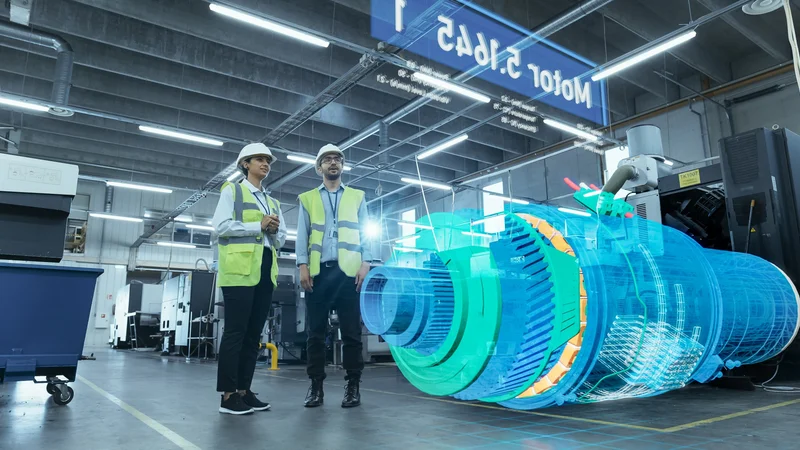
Digital Twins have shifted from being a futuristic vision to a practical tool that shapes how organisations design, manufacture, and operate. In industries such as aerospace, automotive, and energy, they are no longer optional experiments but essential parts of engineering workflows. What has changed is not the idea itself, but the maturity of the ecosystem around it: improved simulation, the rise of AI, and accessible high-performance computing have all turned theory into practice.
Yet for many, the challenge is not creating a Twin but scaling it. Proof-of-concept projects demonstrate potential, but translating that into enterprise-wide adoption is difficult. ATCx Digital Twin 2025 is designed to explore how organisations can transition from early ideas to operational reality.
Reserve your spot today – register here.
What to Expect from ATCx Digital Twin 2025
This ATCx is structured to deliver practical, transferable learning rather than just product demos. Expect two complementary streams of content: one dealing with digital twins in design and development, and the other discussing digital twins for operations, allowing you to follow the lifecycle from end to end.
Sessions will emphasise how to shorten design loops with AI-assisted surrogate models (such as AI-assisted Reduced Order Model (ROM) models, offered with Altair’s solution romAI) integrate multi-physics earlier in the process, and validate models against live data once products are in operation.
On the operational side, participants will see how Digital Twins are applied to estimate Remaining Useful Life (RUL), plan predictive maintenance, and monitor additive manufacturing processes for anomaly detection and efficiency. These examples show not only what is possible but also how performance improvements are measured in practice.
Panels such as “Digital Twins in the World of AI: Myths vs. Opportunities” will separate hype from practical application, highlighting trade-offs like model fidelity versus compute time, openness versus vendor lock-in, and experimentation versus governance. Martin Ortega, Design Manager at Mabe, will be one of the panelists cutting through the hype to present real opportunities in the convergence.
“AI is helping digital twins grow up. We lean on physics for what we know and trust, then bring in ML where things are unknown or too complex to model. With lightweight, physics aware surrogates, we get 100–1000x faster results. That means broader design exploration, with a focus on quality data and ongoing validation.”
To gain access to all sessions, register here.
Why Projects Stall — and How to Move Beyond Pilots
Despite the promise, many organisations remain stuck at the pilot stage. Projects stall because of fragmented data systems, misaligned teams, or the complexity of scaling from a single asset to a fleet or a global operation. The lesson is that technology alone is not enough. Progress requires organisational alignment, shared ownership, and a growth-oriented strategy.
The ATCx program tackles these issues directly. Several sessions emphasise how to connect simulation outputs to live data streams, how to integrate across design and operations teams, and how to build governance structures that prevent Twins from becoming siloed experiments. By addressing both cultural and organisational hurdles, as well as technical ones, the event highlights a path beyond the proof-of-concept stage.
From Model to Decision Support
A simulation can tell you how something should work in theory. A Digital Twin, fed with live data, tells you how it actually performs in practice and what might happen next. This transformation from static model to dynamic decision-support tool is where value emerges.
The event’s design-focused sessions will highlight how surrogate modeling and hybrid simulation approaches shorten development cycles without compromising accuracy. By combining system-level analysis with targeted high-fidelity simulations, engineers can make better decisions earlier. Operational insights are then fed back into these models, making them living frameworks for decision-making rather than static references.

The Convergence of Simulation, AI, and HPC
Convergence is a recurring theme across the agenda. Simulation ensures physical fidelity. Data from sensors ensures relevance. AI extends predictive capability, creating models that run orders of magnitude faster. High Performance Computing (HPC) allows these insights to scale.
Mitsubishi’s romAI example demonstrates how combining AI with simulation can significantly reduce computation. Rolls-Royce will demonstrate how HPC enables them to run multiple system-level analyses at speed. MABE, a leading home appliance manufacturer, will share how combining simulation with real product data helped them optimise performance and reduce waste.
For attendees, the insight is practical: convergence isn’t a buzzword but a requirement for making Twins both feasible and scalable.
Digital Threads: Connecting the Lifecycle
Digital Twins alone can deliver valuable insights, but without Digital Threads to connect data across design, production, and operations, much of their potential is lost. Threads create traceability and ensure that lessons learned in one stage feed into the next.
At ATCx, speakers will discuss how to embed Twins into Digital Threads so that decisions are not limited to isolated use cases. By integrating requirements management, simulation data, operational feedback, and maintenance records, companies can achieve closed-loop optimization. This approach enables organisations to align engineering intent with business outcomes throughout the product lifecycle.
Outcomes That Define Success
The purpose of a Digital Twin is not simply to mirror reality but help to improve it. Measurable outcomes, such as reduced downtime, faster design cycles, lower costs, or improved sustainability, define success.
At the event, case studies will highlight results, including significant reductions in simulation time due to surrogate modelling, increased uptime achieved through predictive maintenance, and improved product performance based on real-world operational data. These outcomes provide benchmarks for participants to measure against and clarity on what “success” should mean in their own organisations.
Emerging Opportunities
Looking forward, Digital Twins are expanding into domains where predictive modelling can deliver transformative results. In healthcare, patient-specific Twins are being developed to test treatment pathways virtually. In energy, Twins of renewable systems help balance intermittent supply with demand, supporting grid stability. In manufacturing, real-time monitoring of additive processes is opening new opportunities for efficiency and quality control.
By surfacing these opportunities, the ATCx program encourages organisations to think beyond immediate applications and prepare for the next stage of adoption.
Lessons for Overcoming Adoption Barriers
Scaling Digital Twins requires deliberate planning. Sessions will explore how organisations design pilots with scalability in mind, selecting models and platforms that can scale beyond their initial use cases. Presenters will also emphasise the importance of interoperability — avoiding tool lock-in and ensuring seamless data flow across departments.
Governance and ownership are recurring themes. Who maintains the Twin? Who validates its accuracy? How is ROI defined? The event’s discussions emphasise that addressing these questions early prevents Twins from being perceived as experimental add-ons and helps integrate them as core enterprise assets.
A Forum for Shared Learning
ATCx Digital Twin 2025 is structured as a platform for exchange, not a showcase. With speakers from Altair, Rolls-Royce, Mitsubishi, Siemens, and MABE, the sessions will combine perspectives from software providers, industrial leaders, and innovators across various domains.
By focusing on use cases, adoption strategies, and measurable results, the event aims to offer lessons that are transferable.
For access to these insights, secure your place here.
Introducing the Experts
Two voices will be central to the conversation at ATCx Digital Twin 2025: Franck Delcroix and Livio Mariano, both from Altair. They will offer deep insights into the evolving role of Digital Twins, the critical convergence of technologies, and the importance of embedding these Twins into broader enterprise workflows. Their perspectives will provide attendees with a comprehensive understanding of how Digital Twins have transformed from conceptual models into integral tools across the product lifecycle.
Key Insights from Franck Delcroix and Livio Mariano:
Franck Delcroix sees Digital Twins as a natural evolution from basic models to comprehensive, lifecycle-spanning systems. Today’s Digital Twins unify design and operational phases, using real-time data to continuously optimize products and processes.
“The Digital Twin has morphed into a comprehensive solution, and this is only possible in an ecosystem where simulation, data, AI, HPC, and manufacturing are connected together,”
Franck Delcroix, VP, Math, Systems, and IoT, Altair.
This convergence is essential for making Digital Twins more than just theoretical models. Delcroix emphasizes that “Digital Twins are fundamentally rooted in the systems engineering domain,” allowing engineers to leverage early design iterations and high-level product behavior predictions. By incorporating tools like Reduced Order Modelling and AI-driven data analytics, engineers can accelerate optimization processes and meet market demands with greater agility.
Livio Mariano, Sr. Director at Altair, focuses on maximizing the ROI of Digital Twin investments by combining simulation, data, AI, HPC, and manufacturing. For Mariano, the goal isn’t just maximizing benefits but also minimizing creation costs: “These are the main ingredients of the recipe to maximize the ROI of digital twin investments,” he explains.
Mariano also highlights the importance of embedding Digital Twins within the broader enterprise data flow. This connection ensures data consistency and traceability across all stages of a product’s lifecycle—from design to operations. “Embedding digital twins into the enterprise data flow ensures traceability and data consistency across phases and departments,” Mariano affirms.
Both experts agree that Digital Threads, the data infrastructures that link design, manufacturing, and operations, are vital for ensuring Digital Twins can operate seamlessly across the entire product lifecycle. By integrating these threads, organizations can ensure that insights gathered from one phase are effectively leveraged in the next.
Why Should You Attend?
This year’s ATCx event is not just about showcasing new technologies. Its purpose is to help organisations overcome the very real challenges that prevent Digital Twins from reaching their potential.
By attending, participants will gain clarity on how to break down silos, integrate models with live data, and build governance structures that allow Digital Twins to scale. The sessions are structured around practical lessons rather than abstract concepts. Attendees will see how global leaders are applying Twins to reduce costs, improve product performance, and accelerate innovation.
The content spans the full lifecycle, from early design and simulation to operations and performance monitoring, so participants can connect decisions across every stage.
Ultimately, the event answers the question many organisations face: how to move from isolated pilots to enterprise-wide adoption.
Who Should Attend?
ATCx Digital Twin 2025 is designed for a broad but targeted audience.
Engineers and designers who want to accelerate design loops and integrate AI-based surrogate models into workflows.
Operations specialists seeking predictive maintenance methods, Remaining Useful Life estimation, and monitoring of additive manufacturing processes.
Managers and executives who need to define ROI, build strategies for scaling, and ensure Twins deliver measurable business outcomes.
Cross-functional leaders working to bridge engineering, IT, and business units so Digital Threads can function across the enterprise.
In short, the event is relevant for anyone who needs to bridge the gap between technical capability and organisational adoption.
Conclusion: From Idea to Reality
Digital Twins have evolved from a concept into a transformative tool that bridges design and operations, offering companies a pathway to optimize products and processes throughout the entire lifecycle. As industries move from pilot projects to full-scale adoption, key challenges such as data fragmentation, organizational alignment, and the integration of various technologies must be addressed.
The convergence of simulation, AI, HPC, and manufacturing is critical for building comprehensive Digital Twins, ensuring that these systems are both feasible and scalable. Additionally, embedding Digital Twins within a broader enterprise data flow through Digital Threads is vital for maintaining data consistency and traceability across the lifecycle.
Ultimately, the success of Digital Twins hinges on effective collaboration across teams and departments, supported by governance structures that ensure their seamless integration into business operations. The lessons from industry leaders and case studies presented at ATCx Digital Twin 2025 will provide invaluable insights for organizations looking to scale their Digital Twin initiatives and achieve measurable business outcomes.
By embracing these lessons and overcoming adoption barriers, companies can unlock the full potential of Digital Twins, driving efficiency, innovation, and long-term success in their respective industries.
Don’t miss the chance to hear these insights first-hand — register now to join the discussion.