Additive Manufacturing in Aviation and Aerospace: Innovations Taking Flight at Formnext 2025
Discover how additive manufacturing is transforming aerospace and aviation at Formnext 2025 — the global hub for innovation in 3D printing and engineering.

21 Oct, 2025. 5 minutes read
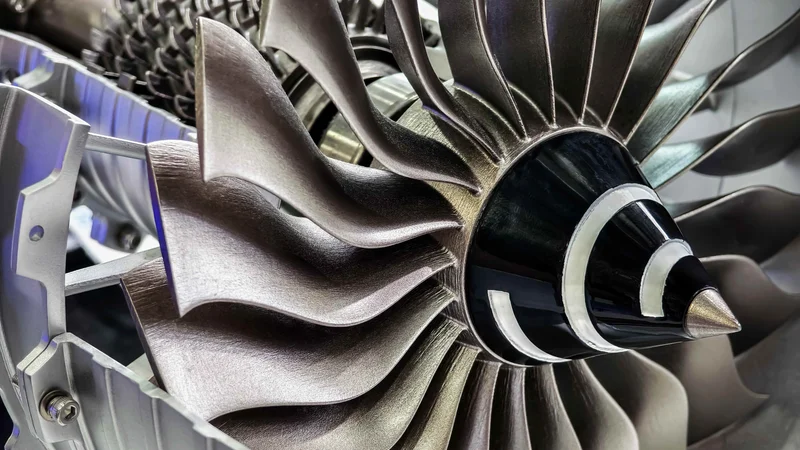
The aviation and aerospace industries are undergoing a transformation driven by additive manufacturing (AM). Once limited to prototyping, AM has now become an essential technology reshaping how aircraft and spacecraft are designed, produced, and maintained. Its ability to fabricate complex structures layer by layer using metals and advanced polymers enables new standards of performance, cost-efficiency, and sustainability [1]
At the centre of this innovation stands Formnext 2025, the world’s leading exhibition for additive manufacturing and industrial 3D printing. The event serves as a global meeting point for engineers, designers, and manufacturers who are redefining the future of flight. From lightweight components to fully functional propulsion systems, Formnext highlights how AM is transforming aviation and aerospace engineering [1].
Explore the latest breakthroughs, technologies, and industry leaders shaping the future of flight at Formnext 2025, the world’s premier event for industrial 3D printing and engineering innovation.
Register today.
Why Aerospace Leads the Additive Revolution
Aerospace has consistently led the adoption of cutting-edge technologies. The sector’s emphasis on precision, reliability, and efficiency makes it an ideal environment for implementing additive manufacturing.
Cost Reduction and Efficiency
Traditional production methods depend on expensive tooling and long manufacturing cycles. Additive manufacturing eliminates tooling requirements, shortens production times, and minimises material waste, making it particularly beneficial in low-volume manufacturing. Components can be printed directly from digital designs, reducing both inventory and logistics costs. This makes AM a practical choice for spare parts and customised aerospace components where small batches are common [2].
Streamlining production enables aerospace firms to accelerate their design-to-deployment cycles while maintaining strict quality standards.
Lightweighting for Performance
Weight reduction remains a key objective in aviation, where every kilogram saved directly translates into reduced fuel consumption and lower carbon emissions. Additive manufacturing enables the creation of lightweight lattice structures and integrated geometries that cannot be achieved through traditional machining methods.
A well-known example is GE Aerospace’s 3D-printed fuel nozzle, which consolidates 20 parts into a single unit. This innovation resulted in a 25% weight reduction while improving durability and performance. Similarly, Boeing’s 3D-printed satellite bus demonstrates the impact of AM in space applications, where mass efficiency is critical to mission success [1].
Design Freedom and Rapid Prototyping
Additive processes allow engineers to design without conventional constraints. Intricate internal channels, complex contours, and multifunctional parts can be realised with minimal assembly. This design flexibility accelerates the transition from prototype to flight-ready hardware. Shorter design iterations not only reduce development time but also foster continuous innovation in aerospace engineering [1].
Materials and Technologies Shaping the Future of Flight
The success of AM in aerospace is closely tied to advancements in material science. High-performance polymers and metals now offer the strength, heat resistance, and lightweight properties essential for flight applications.
High-Performance Polymers
Polymers such as PEEK, PEKK, and ULTEM are widely used in ducts, cabin components, and structural mounts. They are up to 55% lighter than aluminium and maintain their mechanical properties under high thermal loads, making them well-suited for both interior and exterior aerospace applications [1].
Advanced Metals
Metals like titanium, Inconel, and aluminium alloys remain the cornerstone materials for structural and propulsion systems. Titanium’s high strength-to-weight ratio and corrosion resistance make it ideal for critical load-bearing parts. Inconel, a nickel-based superalloy, withstands extreme temperatures in engine environments, while aluminium alloys continue to be used for lightweight structural frames [1].
Explore the latest breakthroughs, technologies, and industry leaders shaping the future of flight at Formnext 2025, the world’s premier event for industrial 3D printing and engineering innovation.
Register today.
Processes Driving Innovation
Aerospace manufacturers employ diverse AM processes, including Fused Deposition Modeling (FDM), Selective Laser Sintering (SLS), Direct Metal Laser Sintering (DMLS), Laser Powder Bed Fusion (L-PBF), and Wire Direct Energy Deposition (DED). Each process offers unique advantages depending on material choice, precision requirements, and part size [1].
Visitors to Formnext 2025 will have access to the AM Field Guide, a resource designed to help professionals navigate material-process compatibility and emerging industrial applications.
From Engines to Orbit: Key Aerospace Applications
Additive manufacturing’s applications span the entire aerospace domain—from propulsion systems to spacecraft components.
Engines:
GE’s 3D-printed fuel nozzles are a hallmark example of AM efficiency. Their integrated design enhances durability, reduces assembly time, and improves fuel economy [1].
Cabins and Structures:
The MIMOSA project, an EU-funded initiative, achieved a 51% weight reduction in structural components through hybrid AM processes. By combining printed and conventional parts, it demonstrates how aerospace structures can achieve both performance gains and environmental benefits [1].
Space Exploration:
Organisations like NASA are using AM to fabricate rocket engine components, habitats, and tools for lunar and Martian missions. Additive techniques allow parts to be built directly from regolith-based materials, supporting long-term off-Earth manufacturing capabilities [1].
At Formnext 2025, such applications will be showcased to illustrate how additive technologies are shaping the next generation of aerospace innovation.
Overcoming Challenges: Certification and Quality
Despite the advantages of AM, certification and quality assurance remain significant hurdles for the adoption of aerospace applications. Stringent standards from regulatory bodies such as the Federal Aviation Administration (FAA), European Union Aviation Safety Agency (EASA), and Nadcap ensure that every component meets exacting safety requirements.
Companies like Toolcraft AG have successfully navigated this landscape by developing closed-loop validation systems. Their certification process encompasses powder quality control, mechanical testing, and process traceability—essential for maintaining aerospace-grade reliability [1]
Digital tools, including digital twins and real-time monitoring, now support certification efforts by providing continuous oversight during production. These technologies ensure repeatability, traceability, and defect detection, aligning with the aerospace industry’s “zero-error philosophy” [1].
The Next Frontier: Automation and Serial AM
Additive manufacturing is moving beyond the prototyping stage into serial production. The integration of automation in DED and hybrid AM systems marks the next industrial leap.
Companies like Ponticon are leading the transition to automated AM, combining robotic handling, real-time monitoring, and digital quality control. These advancements enable the production of high-precision components at scale while minimising human intervention and material waste [1].
The move toward automation signifies a fundamental shift—from small-batch innovation to continuous, data-driven production that meets the volume and reliability requirements of aerospace manufacturing.
Join the Future of Aerospace Manufacturing
Additive manufacturing has become an essential pillar of aerospace innovation. Merging material science, digital design, and precision engineering enables aircraft and spacecraft to be lighter, stronger, and more efficient than ever before.
Events such as Formnext 2025 capture this evolution in real-time, bringing together pioneers who are redefining flight through technological advancements. The showcase of certified production systems, material breakthroughs, and automated solutions highlights the industry’s shift toward a sustainable, data-driven future.
As additive manufacturing continues to evolve, it is clear that for aerospace, the sky is no longer the limit—it is only the beginning. Those shaping the next era of flight can witness these innovations firsthand at Formnext 2025, where the future of aerospace manufacturing takes centre stage.
Reference:
Formnext, Additive Manufacturing in Aviation and Aerospace (White Paper). Frankfurt, Germany: Mesago Messe Frankfurt GmbH, 2025.